In Mewgenics, the cats you keep at home can produce kittens. Any two adult cats in the same room can attempt to breed at the end of a day, but you can't choose a guaranteed mate. You can still improve the odds by setting up a breeding room with high Comfort and Stimulation, picking parents for their starting stats and useful abilities, and keeping close relatives apart.
| Room stat | What it does for breeding | Scope |
|---|---|---|
| Appeal | Improves the quality of strays that arrive each day | Whole house |
| Comfort | Affects how often cats breed or fight | Each room |
| Health | Affects lifespan and the chance of disorders developing or healing each night | Each room |
| Stimulation | Improves the quality of newborn kittens | Each room |
| Mutation | Adds a chance for random mutations each night | Each room |
How Breeding Works in Mewgenics at the End of Each Day
Breeding is decided when a day ends. Any two adult cats in the same room can attempt to breed, and that check happens alongside other nightly events, including fights. A successful pair gives birth to one kitten, with a chance of twins, and two is the most a single birth can produce. Kittens arrive the next morning, but they need a full day to grow before they can go out on a run.
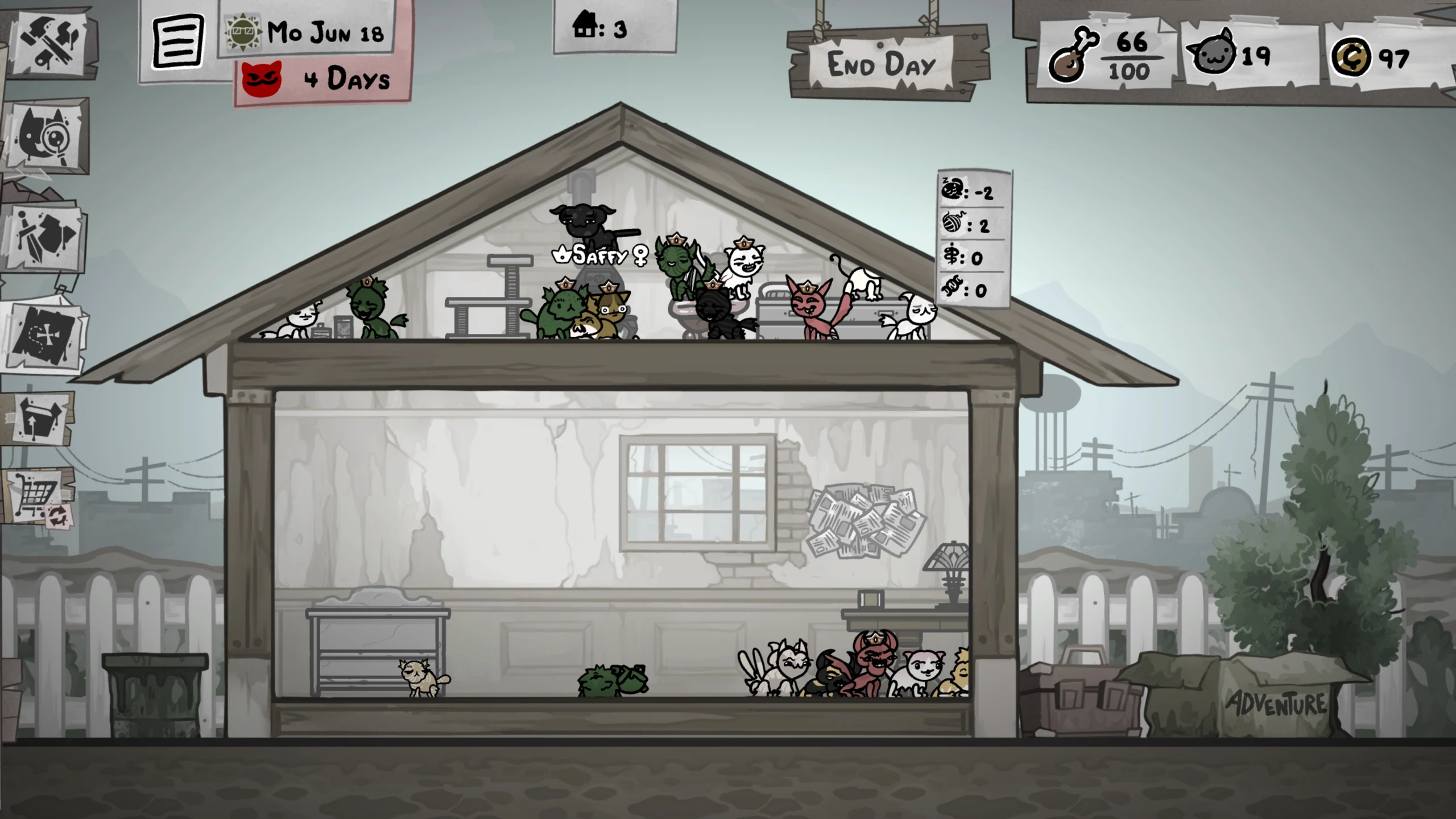
Whether a pair actually breeds depends on compatibility. The game checks each cat's Charisma and Libido, its sexuality and gender, and whether the two are already in an established lover relationship. Cats come in three genders (Male, Female and ?) and three sexualities (Straight, Gay/Lesbian and Bisexual), and same-sex pairs don't produce kittens.
Cats can also fall in love or become mortal enemies. Lovers left in the same room are more likely to breed, while enemies are more likely to fight. Same-sex pairs still have a use, though. Each of their breeding attempts raises the chance that a Gay Stray turns up at your house, and those strays can arrive with some of the breeders' stats and class-related abilities.
How Kittens Inherit Base Stats
Every kitten has seven core base stats: Strength, Dexterity, Constitution, Intelligence, Charisma, Speed and Luck. Each one comes from one of the two parents, so a kitten might get its Strength from one parent and its Luck from the other. Only the starting values are passed down, which means levels gained on runs and temporary boosts don't carry over.
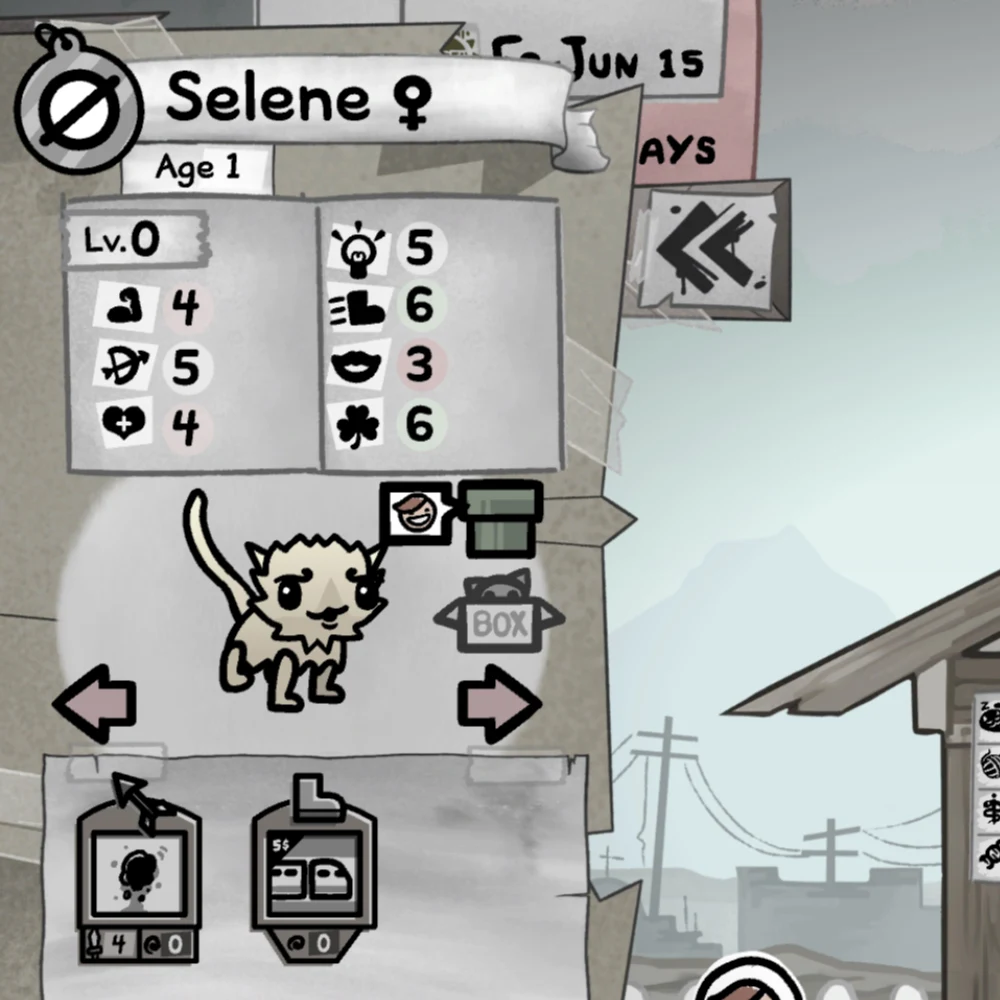
Stimulation shapes how this plays out. In a room with high Stimulation, a kitten is more likely to inherit the higher of its two parents' values for a given stat. That's a tilt, not a promise. At ordinary levels, Stimulation can't lock in a stat you want, so plan on checking several kittens before you get the cat you're after.
How Kittens Inherit Abilities, Mutations and Birth Defects
Kittens can inherit both active abilities and passives from their parents, and Stimulation improves those odds too. Abilities a parent learned on adventures can be passed down, but a kitten doesn't inherit its parent's class or collar. Passing on one specific ability is hard to plan, which is why stats are the more reliable goal.
A parent with Skill Share+ is the exception. Its other passive is guaranteed to pass to its kittens.
Mutations are changes to a cat's looks or body parts, and they can be inherited along with birth defects. Stimulation favors inherited mutations, and it also lowers the chance that a parent's birth defect gets passed on. Health matters for defects that have already appeared, since a room with Health of 10 or higher can cure defects a cat has picked up.
The Mutation stat rolls new random mutations each night. It doesn't reroll existing mutations or birth defects, so it won't remove a problem a cat already carries. Until Mutation goes above 10, it only rolls simple mutations that shift a stat by +2 or -1. Past 10, the chance of mutations with real effects rises.
How Inbreeding Changes Kitten Quality
Inbreeding describes how closely related a kitten's parents are. As you send kittens to Tink, he reveals each cat's breeding status, which shows how inbred it is. Close relatives, especially parent and child, raise the odds of birth defects. Unrelated strays have no family tree, so they are never inbred.
Stimulation can't fully cancel this out. The more inbred a kitten is, the less Stimulation helps it, and the more likely it is to inherit a parent's birth defect. A strong breeding room still helps, but it doesn't make close-family pairings safe.
How to Set Up a Breeding Room for Better Kittens
At the start, you have just one room, so breeding is mostly down to luck, and unwanted mutations from inbreeding are likely. Retired cats you send to Frank expand the house, and each new room has its own stats. Extra rooms let you separate your breeding group from kittens, strays and any cats you don't want pairing.
Furniture is what shapes a room's stats, so put pieces that raise Comfort and Stimulation in the breeding room. Keep the room clean, since cleanliness affects a room's stats and cats make plenty of mess. Hold on to any furniture you find on runs.
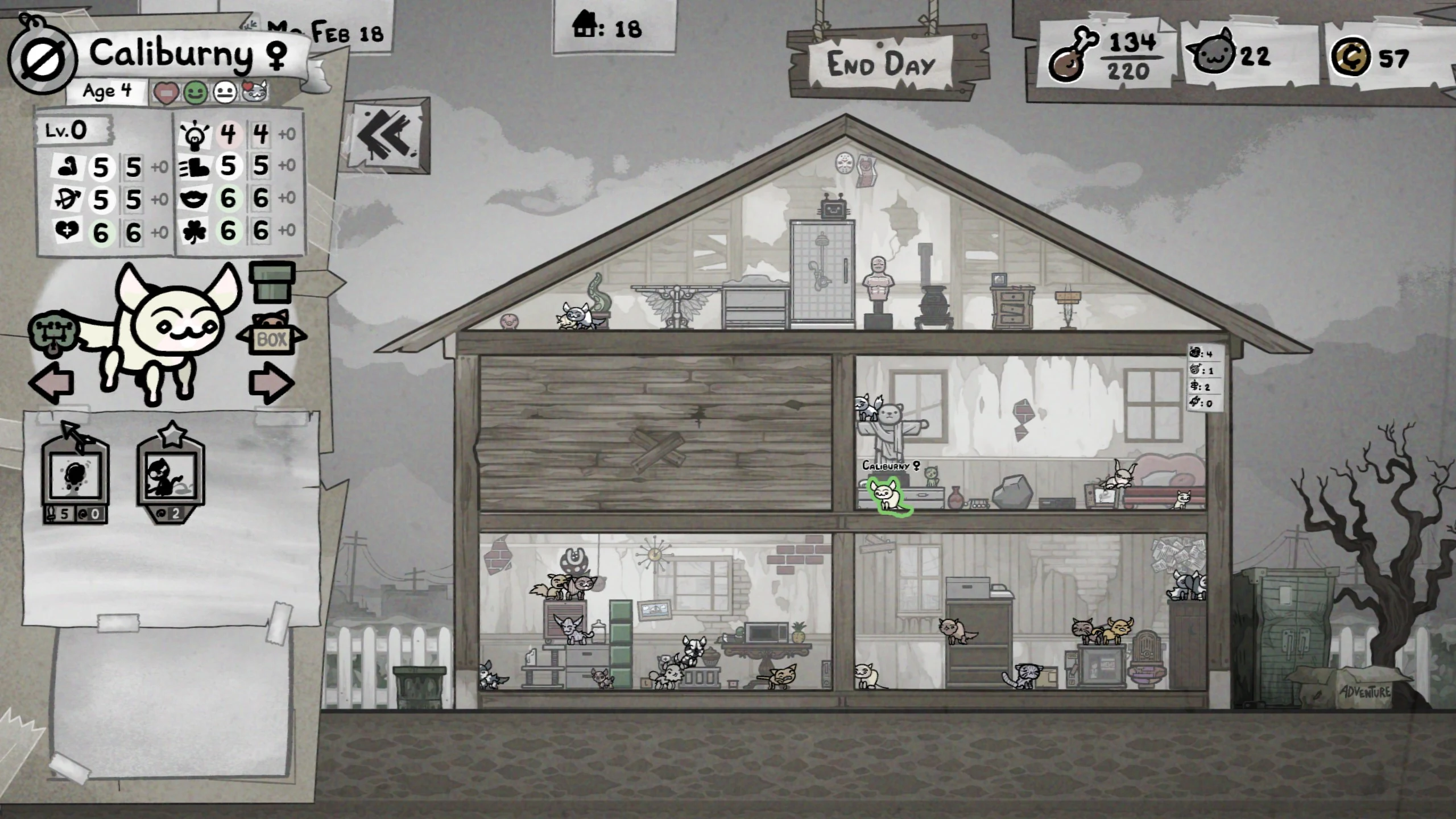
Don't overfill the room. Comfort drops by 1 for each cat above four in a room, and Comfort affects how often cats breed or fight, so a packed room works against you. Keep your breeding group to four cats or fewer.
How to Pick Breeding Pairs and Build Stronger Lines
Once the room is set up, the routine stays the same from one generation to the next:
- Send kittens to Tink early. He unlocks base stats, sexuality, libido, relationships and each cat's breeding status, so you know what you're working with sooner. Without those details, you're guessing.
- Keep high-stat adults together. Put cats with strong base stats in the breeding room so they're the ones pairing. This also makes it easier to manage which cats wear which class collars. Judge each adult by base values, and set aside any collar bonuses when you do.
- Choose for stats first. Specific abilities are hard to pass on deliberately, so base stats are the dependable target. Useful abilities are a bonus when they come through.
- Keep kittens away from their parents. Move kittens out of the room with their parents as soon as they arrive. If they stay together, they'll end up breeding with each other and producing inbred cats. Keep other close relatives apart too.
- Bring in unrelated strays. When a line starts to feel too close, pair your adults with unrelated strays. Strays have no family tree, so they add fresh ancestry without any inbreeding.
- Use Appeal and Mutation on purpose. Appeal is shared across the whole house, so raising it improves the quality of strays that arrive each day. Mutation is for new random mutations, not for fixing defects a cat already has.
- Check every kitten. After each birth, keep the ones with good stat and ability combinations, and pair them with suitable, less related partners. Then repeat the process with each new generation.