

Euro Truck Simulator 2 has no single shortcut, but the most reliable way to build cash fast is to grow in stages. You drive trucks across Europe and get paid for delivering cargo, and every bigger purchase adds costs before it adds income. Start with Quick Jobs, put your first skill points into Long Distance, and buy trucks, loans, garages and drivers only once your jobs can carry them.
| Option | Cost | Terms |
|---|---|---|
| Bank loan of €10,000 | €290 per in-game day | 35 days |
| Bank loan of €50,000 | €1,446 per in-game day | 35 days |
| Bank loan of €100,000 | €2,888 per in-game day | 35 days |
| Bank loan of €400,000 | €5,788 per in-game day | 70 days |
| Hiring one driver | €1,500 | One-time fee |
| Upgrading the starter garage to three bays | €180,000 | One-time purchase |
| Buying another garage (starts with three bays) | €180,000 | One-time purchase |
| Upgrading a three-bay garage to five bays | €100,000 | One-time purchase |
The loans are the only items here that take money every day, so they need steady income behind them before you take one. The garage and driver costs are one-time payments, but they only help when there's a truck and driver ready to use the space.
Start With Quick Jobs to Make Money While You Learn
Quick Jobs let you take a company truck without owning one. The company supplies the truck and a loaded trailer, and it pays for fuel, tolls and repairs. It does not cover ferry or train fares, or your personal traffic fines, so those come out of your own pocket.
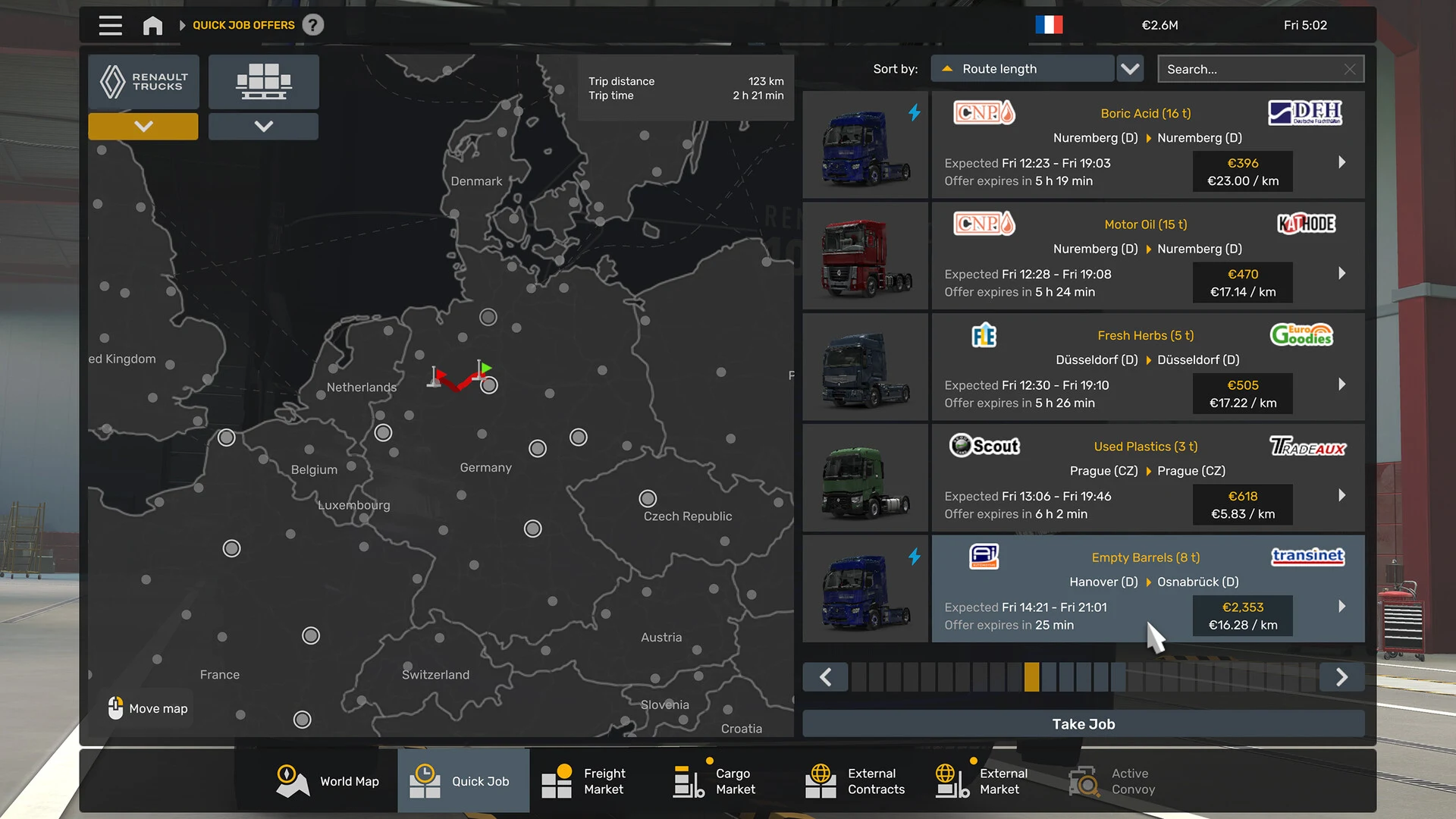
Quick Jobs are a low-cost way to learn the roads, the controls and the job board, but the pay is smaller. The game pays 0.67 of the base reward for a Quick Job, compared with 0.9 for Freight Market jobs and 1.0 for Cargo and External Market jobs. That's why they work best as training income rather than the long-term plan.
When you're choosing among offers, three checks help:
- Sort by price per distance. The offer list can be sorted this way, and it shows what each kilometre pays. That's a clearer comparison than the headline reward on any single job.
- Check the travel time. The best offer depends on the route and how long it takes, so a shorter job with a slightly lower rate can be the better pick.
- Skip ferry and train routes while cash is tight. Those fares come out of your pocket, so they can cut into what the job pays.
Spend Your First Skill Points on Long Distance
Skill points raise the rewards you earn and the jobs you're allowed to take. Long Distance is a strong first pick because it controls how far you can drive for pay, and longer routes come with bigger bonuses. Before you add any ranks, offers stop at 400 km.
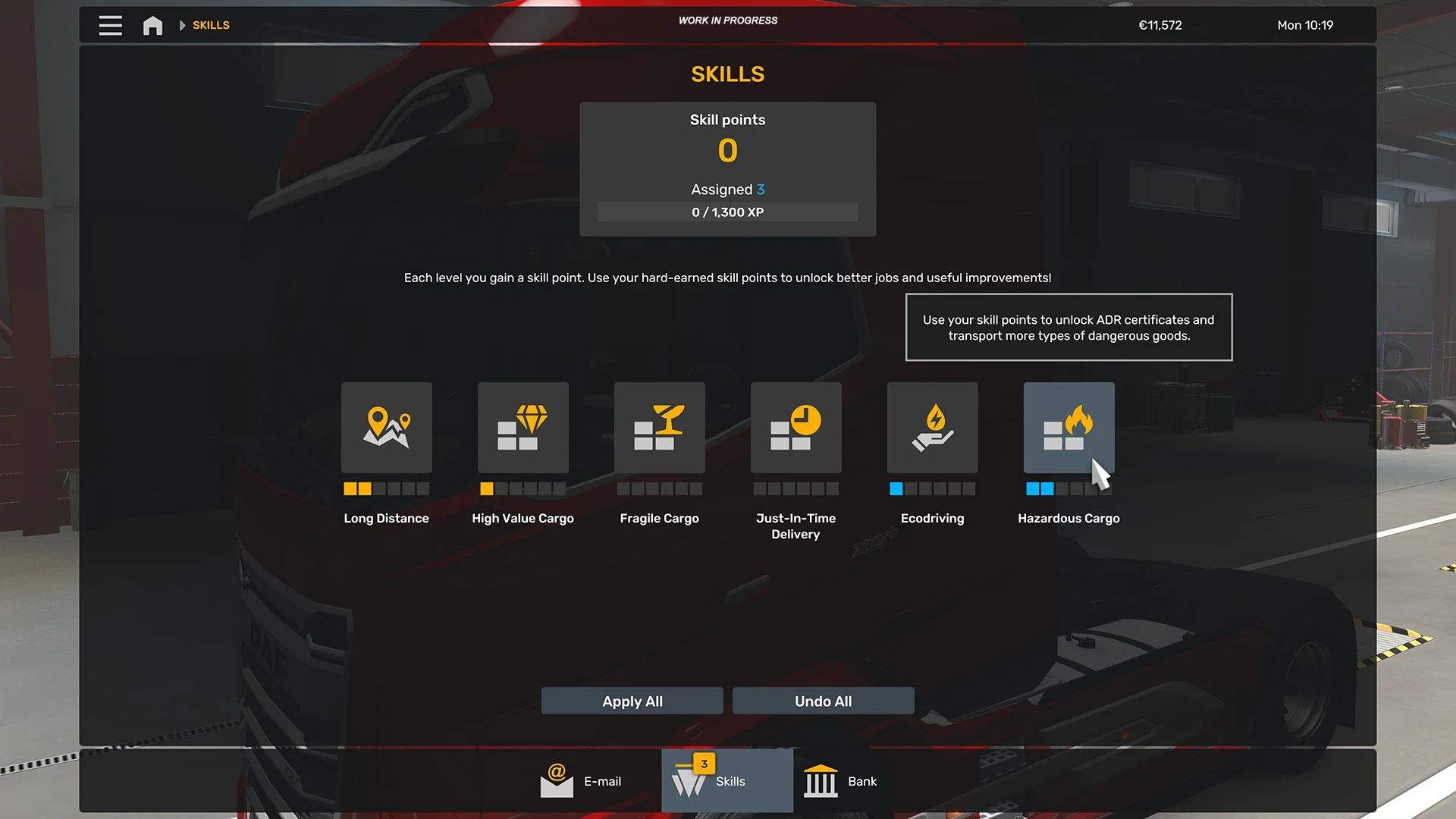
- Rank 1: offers up to 650 km, plus 5% more reward and 25% more XP (experience points) on deliveries over 400 km.
- Rank 2: offers up to 1,000 km, plus 10% more reward on deliveries over 650 km.
- Rank 6: offers any distance, plus 30% more reward on deliveries over 4,000 km.
Treat this as a practical order rather than a rule the game enforces. Taking Long Distance first gives you the largest pool of jobs from the start.
Add Cargo Skills That Open Higher-Paying Jobs
Cargo skills unlock specific types of load and add bonuses when you deliver them. Most follow the same pattern, where rank 1 opens the jobs and each rank after adds more reward.
- High-Value Cargo: rank 1 unlocks high-value jobs, with 5% more reward and 18% more XP on those deliveries. Each rank after adds another 5% reward, reaching 30% at rank 6.
- Fragile Cargo: rank 1 unlocks fragile goods, with 5% more reward and 22% more XP. It climbs the same way, to 30% more reward at rank 6.
- ADR: unlocks dangerous-goods classes 1, 2, 3, 4, 6 and 8, and you can pick them in any order. ADR cargo adds 21% more XP.
- Just-In-Time Delivery: rank 1 unlocks Important deliveries, with 3% more reward and 20% more XP. Rank 2 unlocks Urgent deliveries, and at that rank Important pays 6% more reward while Urgent pays 10% more reward and 30% more XP.
Take each skill when you become eligible for it, and let the jobs on the board guide your order. ADR works differently from the rest. It opens more cargo choices and adds XP, but it has no separate reward bonus, so expect more options rather than a bigger payout.
How to Pick a First Truck in Euro Truck Simulator 2 You Can Afford to Run
Hold off on buying until you've tried a few trucks. Quick Jobs let you test different brands and driving styles without paying for the truck itself, so use them to see what suits you. When you do buy, choose a modest new or used truck based on its condition and price.
There's no universal first-truck price. The available models, trims, condition and game updates all change what a truck costs, so judge each one on its own terms.
A more expensive truck doesn't earn more on its own. What counts is whether your clean job income covers its running costs, including fuel and repairs, with cash left over. If a loan is involved, its payments count too, so buy when the numbers have room to spare rather than when you can barely afford the price.
Borrow Only What Your Jobs Can Repay
The Bank offers fixed loan tiers, and each one comes with a daily payment. A loan makes sense only after you've finished several clean jobs and know your income can cover that payment. Borrow only what your expected job income can repay while still leaving cash for fuel, repairs and fines.
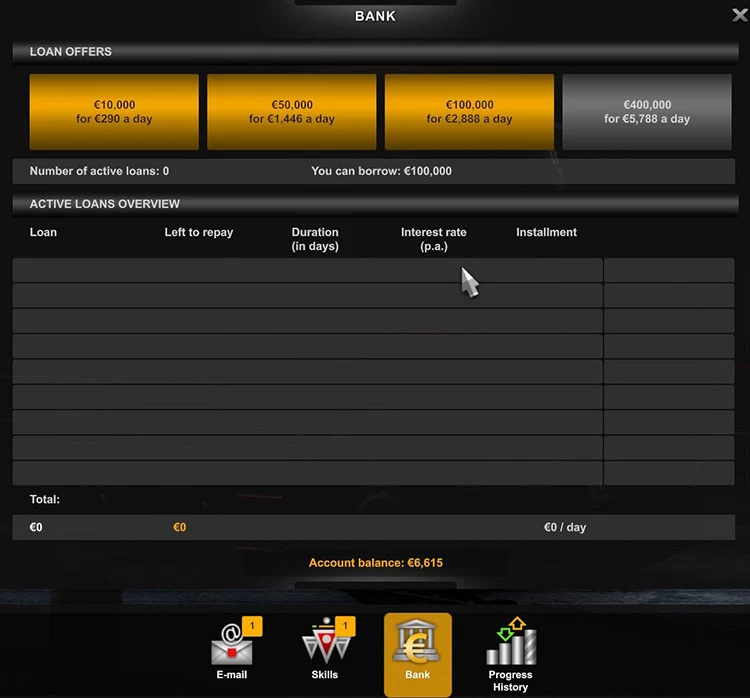
The smallest tier has the lowest daily payment, which makes it the easiest to fit into a new budget. The €400,000 tier is not starting money. Its daily payments only make sense when steady income already covers them. The bank's total credit limit is €500,000, but that ceiling doesn't make a large loan a sensible first move.
Keep Fines and Damage From Cutting Your Pay
Fines and damage come off the money a delivery pays, and late arrivals reduce it too. The main offences are speeding and running a red light, and each can bring its own fine. Speeding fines depend on how far over the limit you drive, so a small overage and a large one don't cost the same.
Keep your speed close to the limit, stop properly at red lights, and drive carefully enough to avoid collisions. Cargo damage and vehicle damage both reduce the pay, so a clean run keeps more of its payout.
Add Garage Bays and Drivers When the Company Can Carry Them
Your starter garage has one truck bay, and each bay is a slot for one truck and its driver. You have two ways to add bays, and they cost the same. Upgrading the starter garage adds two bays, while buying another garage adds three, so the second garage gives you more space for the same money. Those extra bays are only worth paying for once you have trucks and drivers ready to fill them.
Upgrading a three-bay garage to five costs €100,000, and the large garage adds a fuel pump that sells fuel 15% below the country's regular price. That discount helps keep running costs down once your trucks are on the road regularly.
Hiring a driver is a one-time fee, but the driver needs a free bay and an assigned truck before they can work for the company. Without both, a hire adds nothing. New drivers can take time to become profitable, so don't count on one paying for themselves right away.
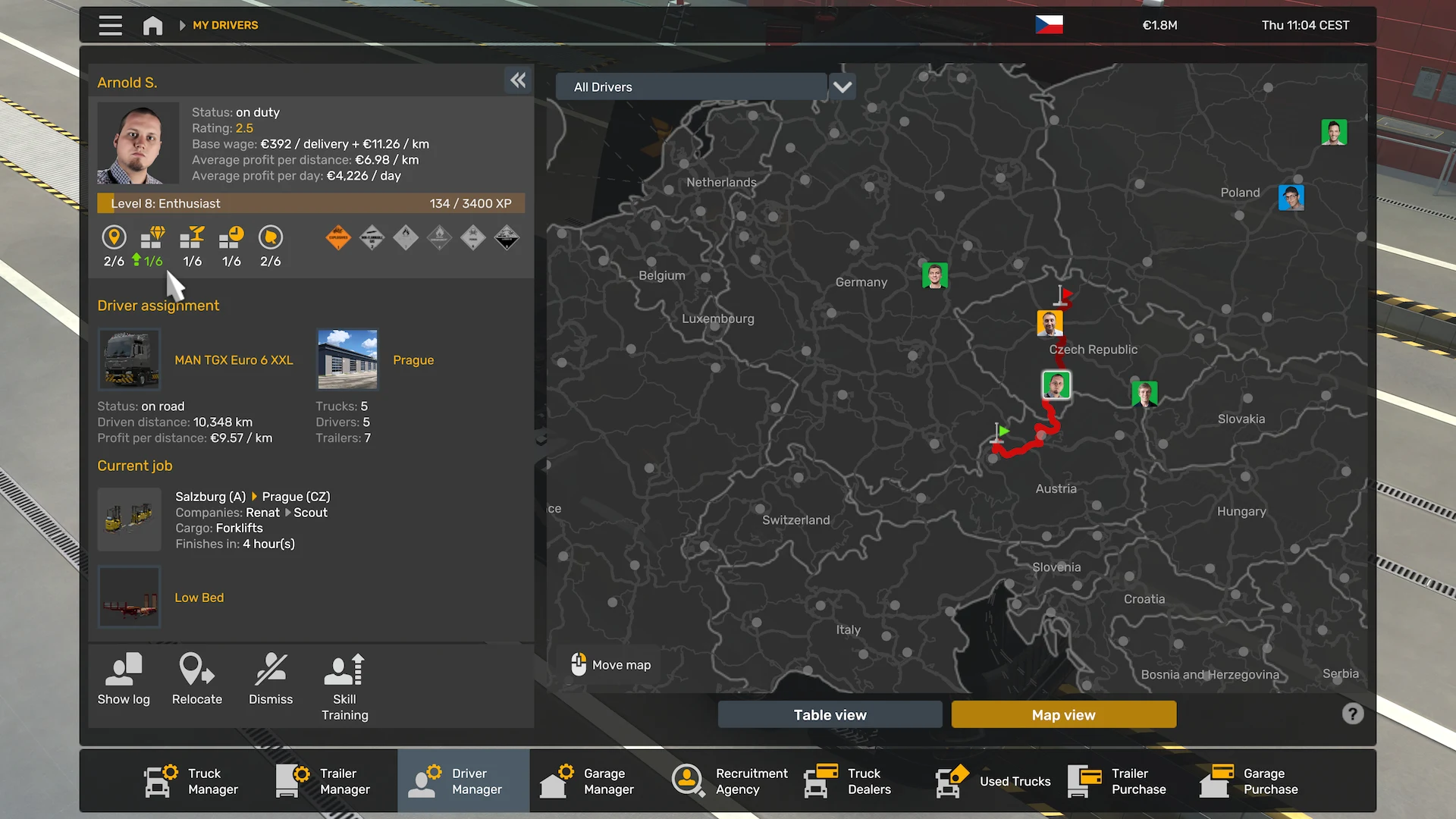
Add a driver once the truck, the bay, the hiring fee and a cash buffer for running costs are all covered. That order keeps the company growing without leaving you short for fuel and repairs.