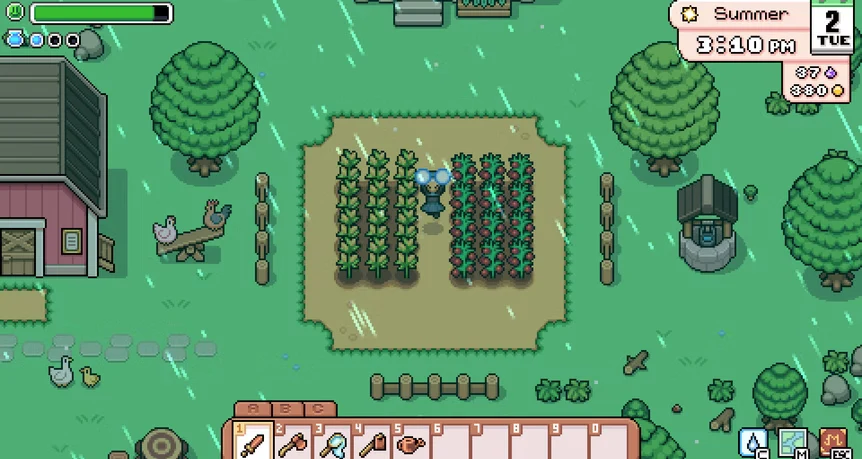
In Fields of Mistria, a farming and life sim, Tesserae (shown as t) is the money you use for seeds, tools and upgrades. Early on, you can build it up by filling requests, selling spare items and, once you can spare 500t, fishing with a Worn Fishing Rod. For farm income, plant quick, cheap crops while cash is tight, then move into regrowing crops once you can afford their seeds.
| Season | Quick crop (4 days) | Single-harvest crop (9 days) | Regrowing crop (5 days to first harvest, then every 3 days) |
|---|---|---|---|
| Spring | Turnip: 25t seed, sells for 40t | Cabbage: 70t seed, sells for 180t | Strawberry: 300t seed, 125t per harvest |
| Summer | Cucumber: 25t seed, sells for 40t | Watermelon: 70t seed, sells for 180t | Tomato: 300t seed, 125t per harvest |
| Fall | Sweet Potato: 25t seed, sells for 40t | Pumpkin: 70t seed, sells for 180t | Cranberry: 300t seed, 125t per harvest |
| Winter | Beet: 25t seed, sells for 40t | Daikon Radish: 70t seed, sells for 180t | Snow Peas: 300t seed, 125t per harvest |
Plant Quick, Low-Cost Crops to Build Tesserae When Cash Is Tight
Quick crops are the easiest place to start because the money comes back fast. Per tile, they return about 15t above their seed cost in 4 days, or roughly 3.75t a day. Single-harvest crops return about 110t above seed cost per tile, roughly 12.2t a day.
- Quick crop (4 days): about 15t above seed cost per tile, or roughly 3.75t a day
- Single-harvest crop (9 days): about 110t above seed cost per tile, or roughly 12.2t a day
These figures are gross per tile, before fertilizer and quality, so they show which crop works harder on each tile rather than what your whole farm will earn. The single-harvest crop earns more per tile per day, but it needs nearly three times the seed money and keeps that cash locked up for more than twice as long. With tight cash, a quick crop returns your seed money sooner, so you can plant again with it. With enough cash to fill a field with bigger seeds, and enough days left to finish a 9-day crop, the single-harvest crop earns more from each tile. A crop planted too late in the season may not finish before the season ends, so count the days before you buy seeds.
Check Requests and Your Needs Before You Ship Anything
Requests should come before the shipping bin. Turning an item in for a request usually pays noticeably more than shipping it, so never send an item that an open request is asking for. Before you load the bin, run through a short check:
- Active requests: Does an open request need this item?
- Museum: Is it part of a collection you haven't finished? Only eligible items can be donated, so not everything belongs there.
- Quests: Do you need it to finish a quest you're working on?
- Your next upgrade: Would selling it delay a tool, a building or another goal?
- Recipes: Would you rather cook or process it, and does that add enough value to justify the time?
Once you've picked out what is genuinely spare, put it in the shipping bin. The bin holds 30 items, and each one sells for its set price overnight, so the money arrives the next morning. Plan big purchases a day ahead, because loading the bin won't add spending money on the same day.
Foraged items are a small extra you can gather without buying anything, so pick up what you pass on routes you already walk. Treat them as a bonus rather than a plan, since what you find depends on the day, the season and the area.
Buy the Worn Fishing Rod When Your Budget Allows
The Worn Fishing Rod costs 500t at the Tackle Shop on the beach, and it opens up fishing as a way to earn. Think of the rod as an entry fee rather than a guaranteed payback, and buy it when 500t fits comfortably into your budget. Seeds and requests may need that money first.
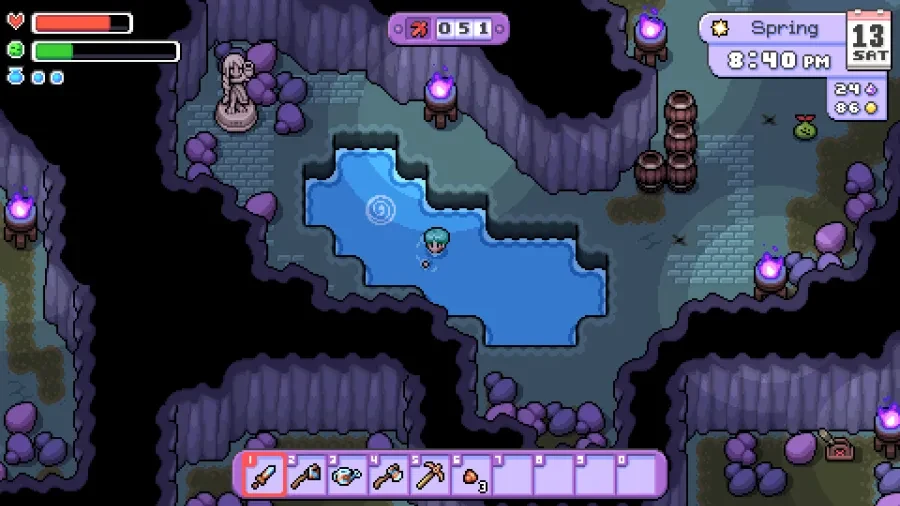
Carp is a good example of what a fish brings in. It's a common, medium-sized river fish you can catch in spring in any weather, and it sells for 35t. Carp can also be donated to the Spring River collection and is used in some quests, so check those before you sell one.
The 35t is the price of a single Carp, not what every cast earns. Your catches, the time you spend fishing and the fish you hold back for other goals all change what you take home. Plan around the fish you actually land rather than a set number of catches.
Buy Regrowing Crops in Fields of Mistria Once You Have Spare Cash
Regrowing crops are where farm income starts to build, because one planting keeps producing. Each seed costs 300t, and after its first growth it gives a harvest every 3 days. That makes them a better fit once you have spare cash, not a first move with your last coins.
A regrower doesn't pay back its seed right away. Two harvests bring in 250t, still short of the 300t seed cost, and the third brings the total to 375t. Think of the seed as an investment that needs several harvests to pay off, not an instant profit.
Timing matters too. Every 3 days you wait to plant is a harvest you won't get, so buy your season's regrower as early as your cash allows. After you upgrade the General Store, Peas in spring, Tea in summer and Onion in fall join the list at 135t per harvest, with the same 3-day regrowth. Rice Stalk, a fall option, pays 150t per harvest, but its first growth takes 9 days, so plan its timing on its own.
Use Mining Loot Without Selling What You Still Need
The Mines give you ore, gems and monster drops you can sell, and monster kills pay out small amounts of Tesserae directly. Those payouts aren't steady enough to plan a daily income around, so treat them as a bonus on top of what you carry out. The more useful question is what you do with the ore.
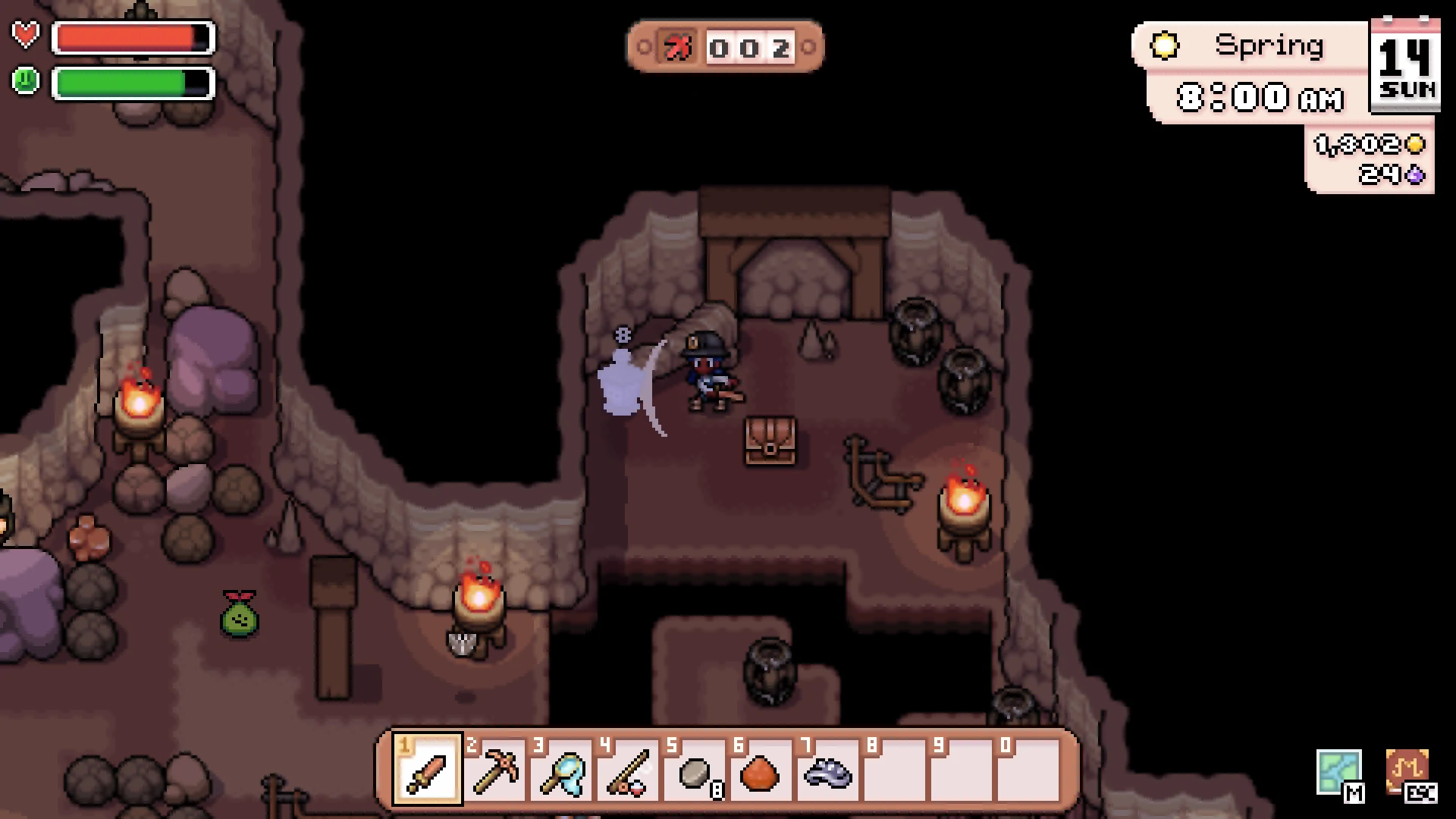
Copper Ore sells for 10t each. Blacksmithing turns 10 ore into one Copper Ingot in 20 in-game minutes, and the ingot sells for 110t.
- 10 Copper Ore sold raw: 100t
- 1 Copper Ingot made from those 10 ore: 110t
That's a 10t gain before the time you spend smelting, which makes it a small uplift rather than a major earner. Smelt only the ore you can spare, and keep enough for any quest or upgrade that needs it.
Compare Cooking and Animal Products With Their Ingredients
Before you cook or process anything, compare the finished item with what its ingredients would sell for. Bread shows the difference. It takes one Flour, needs Cooking level 6 and a Tier 1 kitchen (you can use the Inn's kitchen), and takes 10 in-game minutes. It sells for 190t.
- Buying Flour to make Bread: Flour costs 200t at the General Store, so each loaf leaves a 10t loss.
- Using Flour you already own: Flour sells for 175t on its own, so turning it into Bread adds 15t.
Buying ingredients to cook loses money at base prices, while cooking with what you already have adds a little value. Cooking skills can change results, and some effects are random, so don't plan around them. The time spent buying, cooking and shipping still counts, even when a skill shortens the cooking step.
Adult cows you care for drop Milk, which sells for 40t. Two Milk run through the Mill make one Butter or Cheese, which sells for 90t, or 10t more than the Milk alone before processing time. Cows, feed and the Mill all come with their own costs, so treat animal products as a supplement to your farm and Mines rather than a quick first-week plan.