
The fastest money in Red Dead Redemption 2 Story Mode comes from gold bars and treasure hunts. Each gold bar sells to a Fence, a buyer of stolen goods who works out of towns, for $500, and the four treasure hunts together hold $7,500 worth of bars. Three of those hunts open in Chapter 2, so you won't have to wait long to start.
| Method | Payout | Available from | Payout type |
|---|---|---|---|
| Landmarks of Riches treasure hunt | 6 Gold Bars, $3,000 total | Chapter 2 | Fixed |
| Poisonous Trail treasure hunt | 4 Gold Bars, $2,000 total | Chapter 2 | Fixed |
| Strange Statues puzzle | 3 Gold Bars, $1,500 total | Chapter 2 | Fixed |
| High Stakes treasure hunt | 3 Gold Bars, $1,500 total | Chapter 3, after "The New South" | Fixed |
| Jack Hall Gang treasure hunt | 2 Gold Bars, $1,000 total | Chapter 2 | Fixed |
| Cotorra Springs train wreck | 2 Gold Bars, $1,000 total | Chapter 2 | Fixed |
| Limpany sheriff's office | 1 Gold Bar, $500 | Chapter 2 | Fixed |
| Legendary Bharati Grizzly Bear | Pelt sells for $60 | Chapter 2, "Exit Pursued by a Bruised Ego" | Fixed |
| First bounty (Benedict Allbright) | $50 when delivered alive | Chapter 2, "Good, Honest, Snake Oil" | Fixed |
| Perfect Whitetail Deer carcass | $7 | Whitetail Deer from Chapter 1; butchers useful from Chapter 2 | Depends on condition |
| Poker | $2.50 or $5 buy-in | Chapter 2, after "Who Is Not Without Sin" | Varies, can lose |
| Train, store and coach robberies | Varies | Chapter 2 onward | Varies, can raise bounty |
Sell Gold Bars to a Fence for $500 Each
Gold bars are the most valuable single item you can pick up early in the story. Each one sells to a Fence for $500, and Fences are the only buyers who take them, so general stores won't help. The ordinary Fences in Rhodes, Saint Denis and Van Horn are open from the start of Chapter 2.
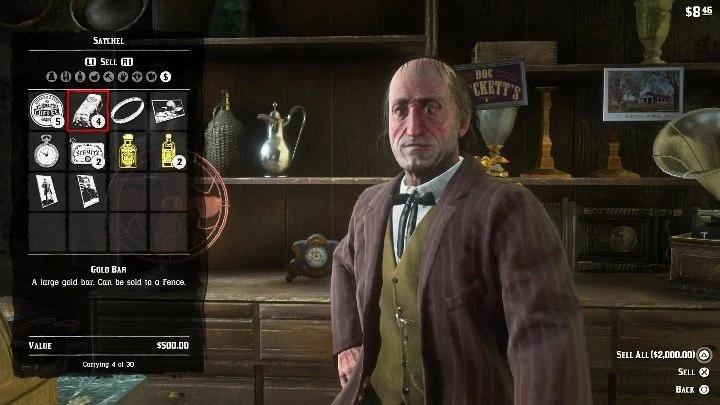
Seamus at Emerald Ranch also buys gold bars, but he only becomes available after the Chapter 2 mission "The Spines of America." Once you've finished that mission, he's another Fence you can use.
Three other early gold finds are fixed spots, so each one pays out only once. They are the sheriff's office in Limpany, the Cotorra Springs train wreck, and the Strange Statues puzzle. Pick them up on your first pass through each area, and check the Gold Bars page for exact spots.
Work Through Red Dead Redemption 2 Treasure Hunts in Order
Each treasure hunt is a chain of maps, and each map leads to the next dig spot. Only the final spot holds the gold bars, so you need to follow the chain in order. Every hunt works the same way:
- Get the first map for the hunt.
- Study the map, then ride to the spot it shows.
- Search the area. The spot can be under a rock, in a crevice or inside a dead tree.
- Pick up the next map at that spot and repeat until you reach the final cache.
- Sell the gold bars to a Fence.
The Jack Hall Gang hunt is the easiest one to start in Chapter 2. Maximo, a treasure hunter near Flatneck Station, sells its first map for $10. Poisonous Trail and Landmarks of Riches can also be started in Chapter 2, and each has its own starting point, which the Treasure Hunts page covers.
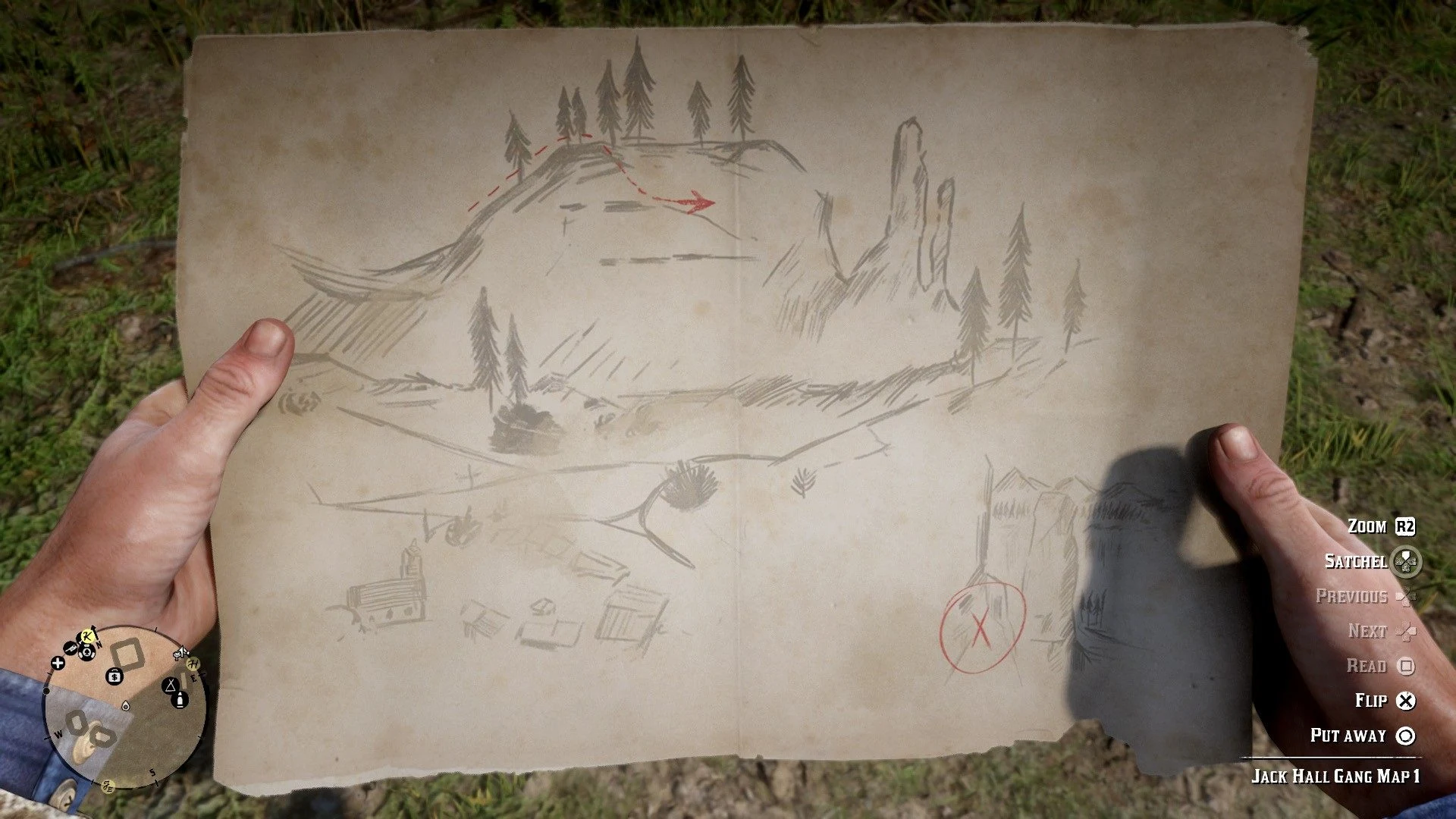
High Stakes opens later, in Chapter 3 after "The New South." Its first map is carried by a random treasure hunter who appears as a Chance Encounter when you're nearby, and he can show up in different areas, so you may need to check more than one. Lasso him and tie him up, and he drops the map. If you miss him three times, you can buy the map from a Fence instead.
If you're stuck finding a dig spot, dismount and use Eagle Eye (L3 + R3 on PlayStation). It highlights interactive objects nearby, including buried treasure spots.
Hunt Whitetail Deer and Legendary Animals for Cash
Hunting pays best when you sell the right part of the animal. A perfect Whitetail Deer carcass sells for $7, while its perfect hide sells for $2.25. The carcass is the bigger quick-cash sale, so keep hides only when you need them for crafting.
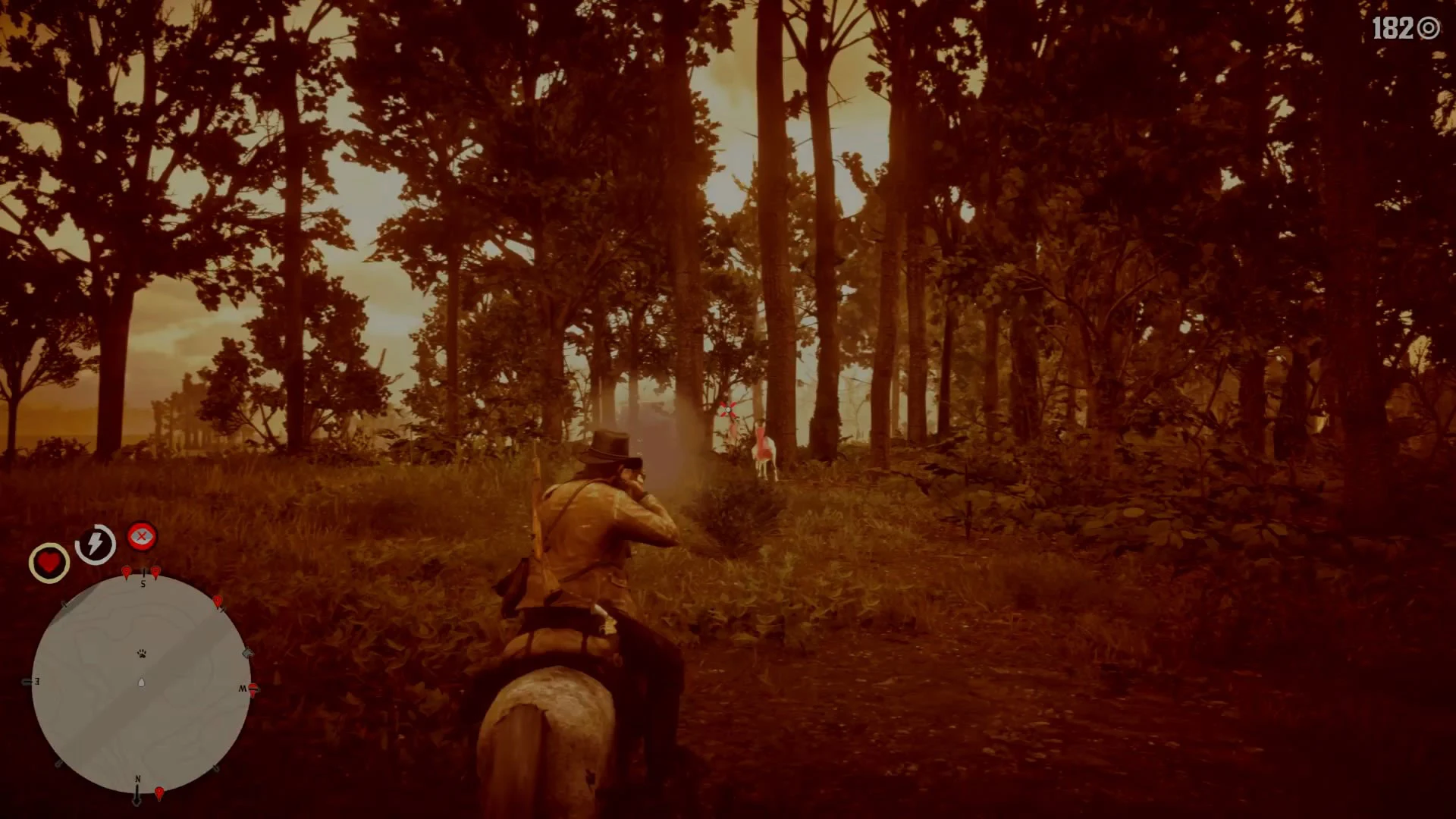
Pelt quality depends on two things: the animal's three-star condition and a clean kill with a suitable weapon. A headshot is the cleanest option, and a headshot with the bow in particular limits damage. Bring the carcass to a butcher quickly, because it loses value as it begins to decompose.
Whitetail Deer show up in Chapter 1 during "The Aftermath of Genesis," but towns with butchers only become useful selling points in Chapter 2. Sell ordinary game to a butcher or the Trapper, and keep perfect pelts for crafting if you need them.
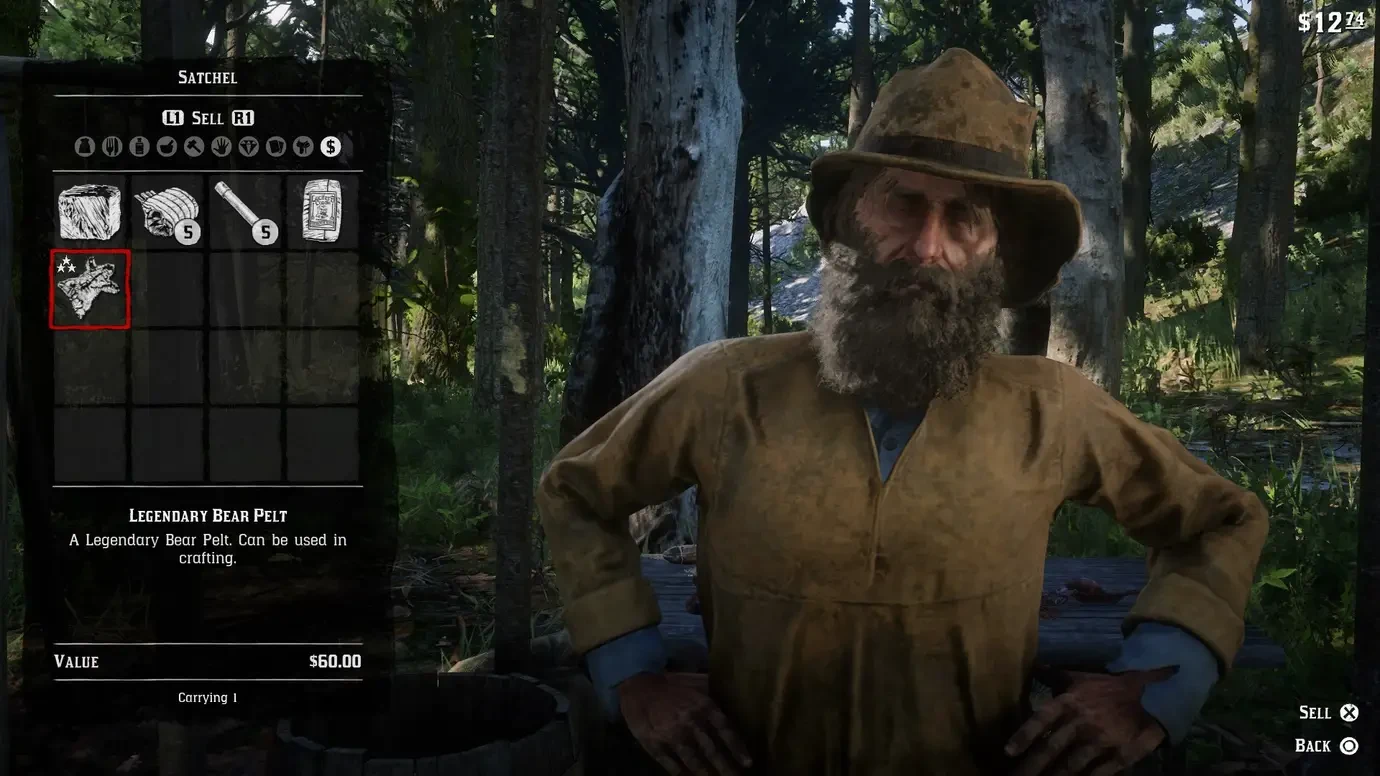
Legendary animal hunting starts in Chapter 2 with "Exit Pursued by a Bruised Ego," and the Legendary Bharati Grizzly Bear is available from that hunt. Its pelt sells to the Trapper for $60. Other legendary animals have their own requirements, including later story missions and the Master Hunter challenge, so don't plan around them early. The Legendary Animals page lists the full set.
Take Bounties Alive for the Best Payout
Bounties open after the Chapter 2 side mission "Good, Honest, Snake Oil," which starts at the Valentine sheriff's office. Its first target is Benedict Allbright. Once you've finished it, wanted posters appear in sheriff's offices as you explore new towns.
Each poster starts a job with a marked search area for its target. When a poster allows either outcome, bringing the target in alive earns more than bringing them in dead, so use your lasso to take them alive. If the target runs with gang members, clear the gang first, then go after them.
Bounties aren't endless. Later posters are limited and vary by target and chapter, so treat them as side income rather than a loop you can repeat forever.
Loot Enemies, Cabins and Hidden Stashes
Looting is one of the easiest ways to add to your total. Search enemies after every fight, since bodies and bounty hunters carry items you can sell. Looted goods have to go to a Fence, because regular shops won't take them.
Some story missions cut to a scene as soon as you approach your allies, which locks you out of the bodies nearby. Loot the enemies before you walk up to your gang. Houses are worth a look too, so check cabinets and drawers when you sneak through them on missions.
Some cash is hidden in homes. In Carmody Dell, the home robbery during "The Spines of America" has $150 in a hidden chimney stash. The Chez Porter stash turns up during the home-robbery activity with Javier and holds $100 in two bundles plus a jewelry bag. Depending on when you take that activity, it falls in Chapter 2 or Chapter 3, and the jewelry's sale value varies.
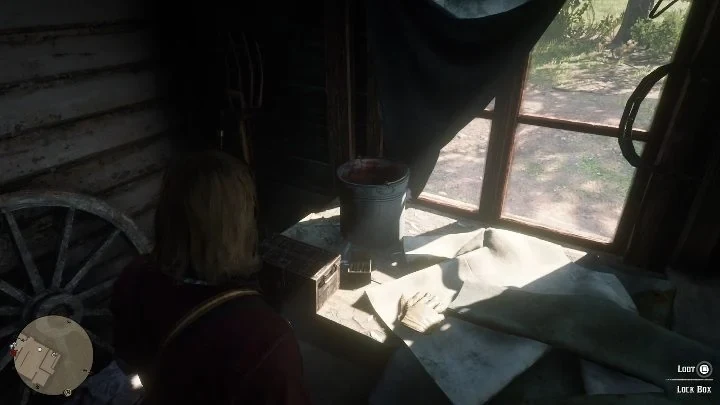
Two early missions, "An American Pastoral Scene" and "Pouring-Forth Oil," pay around $500 together. All of these stashes and story payouts are one-time rewards.
Play Poker and Minigames for Small Winnings
Poker opens in Chapter 2 after "Who Is Not Without Sin." The tables at Flatneck Station and Valentine have a $2.50 buy-in, and Saint Denis asks for $5. Stakes can grow as the story goes on, but winnings vary and you can lose what you put in.
Luck plays a big role in poker, so treat it as light, optional play rather than steady income. Five Finger Fillet depends more on skill, since you need to be quicker than your opponent in each round. Dominoes and Five Finger Fillet are both playable in Story Mode, including at gang camps in Chapters 2 to 4, but neither has a dependable earning amount, so count any winnings as a bonus.
Robberies Pay Well but Raise Your Bounty
Robbing trains, stagecoaches, stores and banks can bring in cash and valuables. The payout depends on the target and what it holds, so there's no fixed amount to plan around.
The cost is the bounty. Big hits, especially on trains, push your bounty up quickly, which sends lawmen and bounty hunters after you and makes every trip harder. Save robberies for when you're short on cash and ready for the heat.