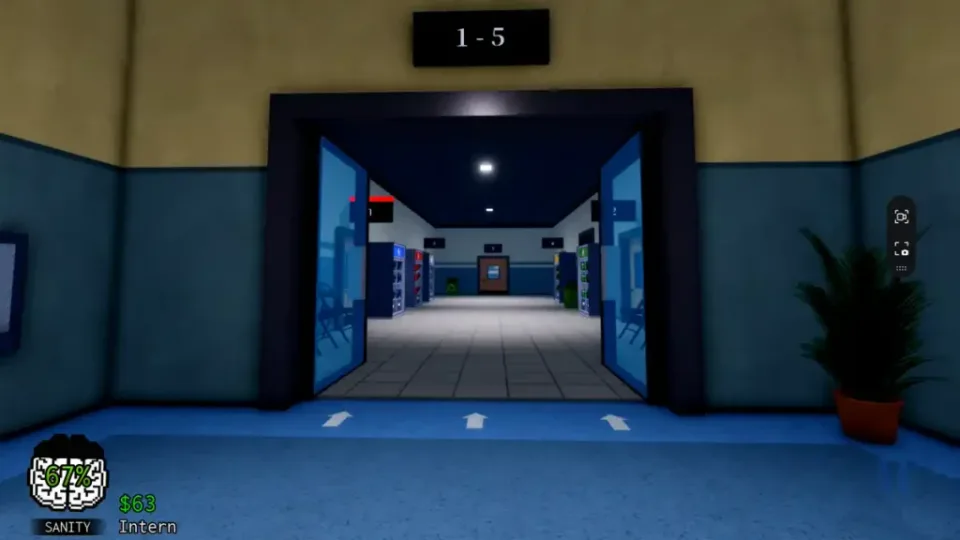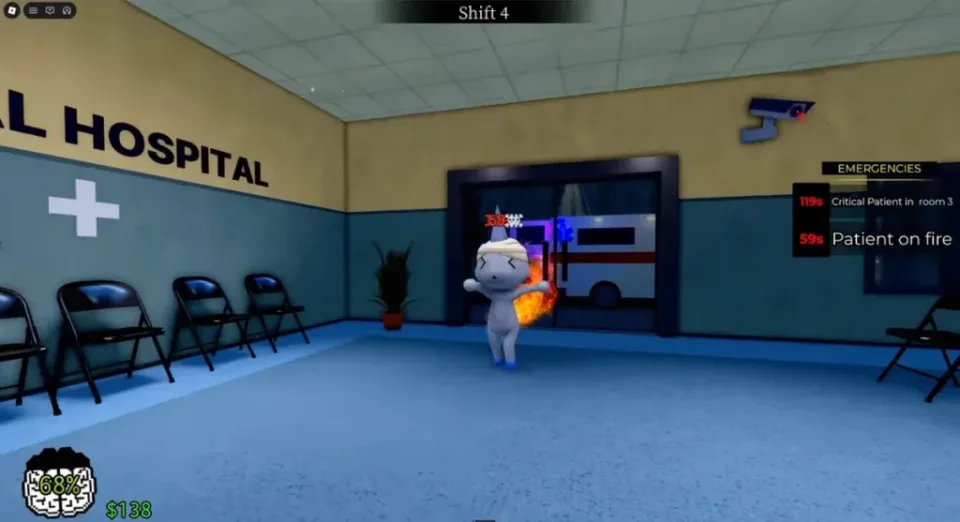

Each shift moves the Animal Hospital night forward. You treat patients, check cameras for anomalies, and handle new pressure as the run grows tougher. The early shifts teach the hospital loop, Shift 4 brings the first major Ambulance Event milestone, and later runs continue beyond the core sequence.
View
section
Tutorial foundations
Learn reception, treatment, cameras, shutters, and the first anomaly checks. The Supplies Shop and Emergency Wing boundary sits between Shift 2 and Shift 3 in the available information, so the affected cards keep it qualified.
Shift 1
The first shift teaches the reception and treatment loop before the main anomaly pressure builds.
- Phase
- Tutorial
- Shift
- 1
- What changes
- The opening cases introduce patient intake, treatment steps, and the basic camera and shutter checks.
- Active threats
- The first cases are described as normal, scripted patients with low-pressure tutorial pacing.
- Unlocks or changes
- Early guides associate the opening progression with access to the shutters and cameras. No official unlock table fixes the exact boundary.
- Prepare
- Learn the reception layout, check-in flow, and treatment route before the later anomaly pressure starts.
- Recurring pattern
- No recurring event timing is assigned to the tutorial row.
- Core objective
- Learn the reception, treatment, and shift-completion loop.
- Progression
- Completing a shift advances the run and pays out cash in the game's normal end-of-shift loop. No fixed payout is included.
- Scope note
- This row covers the named first shift, not every tutorial prompt or room interaction.
Shift 2
The second shift moves beyond the tutorial and introduces early facility and anomaly pressure, with one important unlock boundary still disputed.
- Phase
- Early progression
- Shift
- 2
- What changes
- Early progression guides add facility access and the first anomaly-focused pressure around the normal treatment loop.
- Active threats
- Normal patients remain in the loop while anomaly checks and early threat behavior begin to matter.
- Unlocks or changes
- Community guides disagree on this boundary. One places the Supplies Shop and Emergency Wing after Shift 2. Another places them at the start of Shift 3. The exact unlock is intentionally unresolved.
- Prepare
- Practice admitting patients, completing treatment quickly, and checking the camera before committing to a room.
- Recurring pattern
- The shift loop continues after this row. Later guides place recurring Ambulance Events on a five-shift rhythm after the first event, but that timing is not assigned here.
- Core objective
- Repeat the normal care loop while the first facility and anomaly checks enter the run.
- Progression
- Completing the shift advances the numbered run and pays out cash. Exact values are omitted.
- Scope note
- The shop and Emergency Wing disagreement is preserved instead of being resolved in this dataset.
| Image | Name | Description | Phase | Shift | What changes | Active threats | Unlocks or changes | Prepare | Recurring pattern | Core objective | Progression | Scope note |
|---|---|---|---|---|---|---|---|---|---|---|---|---|
| Shift 1 | The first shift teaches the reception and treatment loop before the main anomaly pressure builds. | Tutorial | 1 | The opening cases introduce patient intake, treatment steps, and the basic camera and shutter checks. | The first cases are described as normal, scripted patients with low-pressure tutorial pacing. | Early guides associate the opening progression with access to the shutters and cameras. No official unlock table fixes the exact boundary. | Learn the reception layout, check-in flow, and treatment route before the later anomaly pressure starts. | No recurring event timing is assigned to the tutorial row. | Learn the reception, treatment, and shift-completion loop. | Completing a shift advances the run and pays out cash in the game's normal end-of-shift loop. No fixed payout is included. | This row covers the named first shift, not every tutorial prompt or room interaction. | |
| Shift 2 | The second shift moves beyond the tutorial and introduces early facility and anomaly pressure, with one important unlock boundary still disputed. | Early progression | 2 | Early progression guides add facility access and the first anomaly-focused pressure around the normal treatment loop. | Normal patients remain in the loop while anomaly checks and early threat behavior begin to matter. | Community guides disagree on this boundary. One places the Supplies Shop and Emergency Wing after Shift 2. Another places them at the start of Shift 3. The exact unlock is intentionally unresolved. | Practice admitting patients, completing treatment quickly, and checking the camera before committing to a room. | The shift loop continues after this row. Later guides place recurring Ambulance Events on a five-shift rhythm after the first event, but that timing is not assigned here. | Repeat the normal care loop while the first facility and anomaly checks enter the run. | Completing the shift advances the numbered run and pays out cash. Exact values are omitted. | The shop and Emergency Wing disagreement is preserved instead of being resolved in this dataset. |
section
Core escalation
The routine starts sharing space with real emergencies here. Shift 4 is the first ambulance milestone, with multiple urgent patients arriving together.
Shift 3
The third shift adds early emergency pressure and Taser progression while leaving the shop and Emergency Wing boundary open.
- Phase
- Early progression
- Shift
- 3
- What changes
- Early guides describe the Taser as an early progression tool. Shop and Emergency Wing access is associated with the Shift 2/3 boundary.
- Active threats
- Anomalies and timed emergencies begin to overlap with routine patient treatment in the early progression.
- Unlocks or changes
- The Shift 2/3 facility boundary remains unresolved. Sources disagree on whether the Supplies Shop and Emergency Wing open after Shift 2 or at the start of Shift 3. No resolution is claimed here.
- Prepare
- Keep treatment supplies ready, learn the facility route, and be prepared to use the Taser when the relevant emergency requires it.
- Recurring pattern
- The shift loop continues. Later community timelines place the Ambulance Event on a five-shift recurrence after its first appearance.
- Core objective
- Move into the full treatment and emergency workflow.
- Progression
- Completing the shift advances the run and pays cash. It also leads into the higher-pressure fourth-shift milestone.
- Scope note
- This row does not claim that the disputed facilities definitely unlock at Shift 3.
Shift 4
The fourth shift is the first major pressure spike, with an Ambulance Event that can fill the hospital with urgent patients.
- Phase
- Core escalation
- Shift
- 4
- What changes
- The Ambulance Event becomes eligible around the fourth-shift milestone and can bring six patients into the hospital at once.
- Active threats
- The ambulance surge can include patients on fire or in critical condition, alongside normal anomalies and treatment.
- Unlocks or changes
- The Ambulance Event enters the documented shift progression around this milestone. Sources vary on the exact first trigger, so this is not a hard unlock value.
- Prepare
- Keep a fire extinguisher and response tool available, and triage multiple patients quickly when an ambulance arrives.
- Recurring pattern
- Community guides commonly describe the event at Shift 4, then about every five shifts, but the cadence is not an official guarantee.
- Core objective
- Handle the first documented high-pressure surge while keeping normal patients moving.
- Progression
- Clearing the ambulance wave is associated with a cash bonus in community guides. The exact amount is not included.
- Scope note
- Event mechanics are detailed in the existing emergencies collection. This row records the progression point only.
| Image | Name | Description | Phase | Shift | What changes | Active threats | Unlocks or changes | Prepare | Recurring pattern | Core objective | Progression | Scope note |
|---|---|---|---|---|---|---|---|---|---|---|---|---|
| Shift 3 | The third shift adds early emergency pressure and Taser progression while leaving the shop and Emergency Wing boundary open. | Early progression | 3 | Early guides describe the Taser as an early progression tool. Shop and Emergency Wing access is associated with the Shift 2/3 boundary. | Anomalies and timed emergencies begin to overlap with routine patient treatment in the early progression. | The Shift 2/3 facility boundary remains unresolved. Sources disagree on whether the Supplies Shop and Emergency Wing open after Shift 2 or at the start of Shift 3. No resolution is claimed here. | Keep treatment supplies ready, learn the facility route, and be prepared to use the Taser when the relevant emergency requires it. | The shift loop continues. Later community timelines place the Ambulance Event on a five-shift recurrence after its first appearance. | Move into the full treatment and emergency workflow. | Completing the shift advances the run and pays cash. It also leads into the higher-pressure fourth-shift milestone. | This row does not claim that the disputed facilities definitely unlock at Shift 3. | |
| Shift 4 | The fourth shift is the first major pressure spike, with an Ambulance Event that can fill the hospital with urgent patients. | Core escalation | 4 | The Ambulance Event becomes eligible around the fourth-shift milestone and can bring six patients into the hospital at once. | The ambulance surge can include patients on fire or in critical condition, alongside normal anomalies and treatment. | The Ambulance Event enters the documented shift progression around this milestone. Sources vary on the exact first trigger, so this is not a hard unlock value. | Keep a fire extinguisher and response tool available, and triage multiple patients quickly when an ambulance arrives. | Community guides commonly describe the event at Shift 4, then about every five shifts, but the cadence is not an official guarantee. | Handle the first documented high-pressure surge while keeping normal patients moving. | Clearing the ambulance wave is associated with a cash bonus in community guides. The exact amount is not included. | Event mechanics are detailed in the existing emergencies collection. This row records the progression point only. |
section
Core finish and endless
Shift 5 marks the core milestone. Later runs belong to an open-ended progression band, so event timing and late-story content stay qualified.
Shift 5
Shift 5 is the five-shift core milestone. The source set does not justify calling it the game's final playable shift.
- Phase
- Core milestone
- Shift
- 5
- What changes
- Sources describe Shift 5 as the named core or tutorial-tier milestone, but they differ on whether later play should be called an ending or endless progression.
- Active threats
- The early anomaly, enemy, treatment, and emergency loop remains active at the core milestone.
- Unlocks or changes
- Shift 5 marks the end of the five-shift core sequence in the source set. It is not treated here as a hard final shift because other guides describe later numbered runs.
- Prepare
- Carry the routines from earlier shifts, keep sanity recovery and emergency tools available, and do not assume every late event has a fixed shift.
- Recurring pattern
- This is a milestone row, not a recurring event row. Later numbered shifts are grouped in the 6+ band.
- Core objective
- Complete the five-shift core sequence before moving into later numbered play.
- Progression
- Some guides tie this milestone to a standard discharge or Professional Caretaker outcome, while others continue into later shifts. Preserve both descriptions until live-game verification.
- Scope note
- Late story and special-shift content is outside this progression row and belongs in the relevant existing collection or article.
Endless progression (Shift 6+)
After the five named core shifts, later runs continue as an open-ended progression band with variable pressure and event timing.
- Phase
- Endless progression
- Shift
- 6+
- What changes
- Later guides describe continuing shift numbers, rising pressure, and variable late-run events instead of a fixed final row.
- Active threats
- Recurring emergencies, broader anomaly and enemy pressure, and late story or special-shift content may appear as the run continues.
- Unlocks or changes
- No fixed final shift is established in the source pass. This row groups Shift 6 and later instead of claiming one literal Shift 6 unlock.
- Prepare
- Maintain a durable setup for treatment, sanity, and emergency response. Treat late timing as variable rather than memorizing a fixed table.
- Recurring pattern
- Ambulance recurrences are commonly listed every five shifts after the first event, while later story and special-shift windows vary.
- Core objective
- Keep the run alive as numbered shifts continue beyond the five-shift core sequence.
- Progression
- The run continues to a higher shift number and later milestones. Exact rewards and rare event windows are left out until they have stronger support.
- Scope note
- This is a progression band, not a claim that every later shift has identical content. Do not add temporary event rows or individual endless shift numbers here.
| Image | Name | Description | Phase | Shift | What changes | Active threats | Unlocks or changes | Prepare | Recurring pattern | Core objective | Progression | Scope note |
|---|---|---|---|---|---|---|---|---|---|---|---|---|
Shift 5 | Shift 5 | Shift 5 is the five-shift core milestone. The source set does not justify calling it the game's final playable shift. | Core milestone | 5 | Sources describe Shift 5 as the named core or tutorial-tier milestone, but they differ on whether later play should be called an ending or endless progression. | The early anomaly, enemy, treatment, and emergency loop remains active at the core milestone. | Shift 5 marks the end of the five-shift core sequence in the source set. It is not treated here as a hard final shift because other guides describe later numbered runs. | Carry the routines from earlier shifts, keep sanity recovery and emergency tools available, and do not assume every late event has a fixed shift. | This is a milestone row, not a recurring event row. Later numbered shifts are grouped in the 6+ band. | Complete the five-shift core sequence before moving into later numbered play. | Some guides tie this milestone to a standard discharge or Professional Caretaker outcome, while others continue into later shifts. Preserve both descriptions until live-game verification. | Late story and special-shift content is outside this progression row and belongs in the relevant existing collection or article. |
| Endless progression (Shift 6+) | After the five named core shifts, later runs continue as an open-ended progression band with variable pressure and event timing. | Endless progression | 6+ | Later guides describe continuing shift numbers, rising pressure, and variable late-run events instead of a fixed final row. | Recurring emergencies, broader anomaly and enemy pressure, and late story or special-shift content may appear as the run continues. | No fixed final shift is established in the source pass. This row groups Shift 6 and later instead of claiming one literal Shift 6 unlock. | Maintain a durable setup for treatment, sanity, and emergency response. Treat late timing as variable rather than memorizing a fixed table. | Ambulance recurrences are commonly listed every five shifts after the first event, while later story and special-shift windows vary. | Keep the run alive as numbered shifts continue beyond the five-shift core sequence. | The run continues to a higher shift number and later milestones. Exact rewards and rare event windows are left out until they have stronger support. | This is a progression band, not a claim that every later shift has identical content. Do not add temporary event rows or individual endless shift numbers here. |
How the run changes
A completed shift moves the run forward and pays cash at the end. Early shifts are for learning reception, treatment, cameras, and shutters, so speed matters less than knowing where to go when a patient needs help.
The Supplies Shop and Emergency Wing sit on the Shift 2/3 boundary. Some players place that change after Shift 2, while others see it at the start of Shift 3. Treat the boundary as unresolved and check your live game rather than building a plan around one exact shift.
Preparing for the pressure spike
Shift 4 is the first big ambulance milestone. Keep a fire extinguisher and response tool ready, learn a quick route between reception and treatment rooms, and triage urgent patients before the normal queue gets messy.
- Keep treatment supplies close enough that you are not crossing the hospital for every case.
- Use camera checks before entering a room when the anomaly loop is active.
- Save sanity recovery and emergency tools for a real surge instead of spending them on a routine case.
After Shift 5
Shift 5 marks the core milestone, but it is not safe to treat it as a hard final shift. Later numbered runs are grouped into an open-ended band because event timing and late story moments can vary.
Ambulance recurrences are often placed about five shifts apart after the first event, but that rhythm is not a guaranteed rule. Prepare for pressure to return, and keep late story or special-shift content separate from the ordinary progression.
FAQ
Is Shift 5 the final shift in Animal Hospital?
Shift 5 closes the named core sequence, but later numbered runs are documented. Treat Shift 6+ as an open-ended progression band instead of a fixed final shift.
When do the Supplies Shop and Emergency Wing unlock?
The boundary is unresolved. Some accounts place both changes after Shift 2, while others place them at the start of Shift 3. Check your live game before relying on one exact unlock point.
When does the Ambulance Event first appear?
It is commonly associated with the Shift 4 milestone, but the exact first trigger is not a hard guarantee. Be ready for the surge around that point and watch what your run actually does.
What should I prepare for later shifts?
Keep treatment supplies, a fire extinguisher, a response tool, and sanity recovery ready. A short route between reception and treatment rooms matters when several urgent patients arrive together.
Do later shifts have fixed rewards and event timing?
Completing a shift advances the run and pays cash, but exact late rewards and rare event windows should not be treated as fixed. The open-ended band is meant to cover that changing progression.