

Workers & Resources: Soviet Republic has no taxes and no passive income, so your republic earns Rubles and Dollars through three routes: exports, tourist spending and loans. Exports are the main one. You load goods into a road vehicle or train, deliver them to a Customs House, and get paid in the currency of that border. Check the buy and sell prices on both sides before you decide what to produce, because the payout changes with the market.
| Money source | Currency | What you do |
|---|---|---|
| Exports through the Soviet border | Rubles | Deliver goods to a Customs House on the Soviet side |
| Exports through the Western/NATO border | Dollars | Deliver goods to a Customs House on the Western/NATO side |
| Tourist spending | Rubles or Dollars, depending on home country | Bring visitors to staffed hotels and attractions |
How Exports Bring In Rubles and Dollars
Exporting is the backbone of the economy. To sell a resource, load it into a road vehicle or train and deliver it to a Customs House. The Customs House shows what the goods delivered there are worth, so you can see the payout for each delivery.
- Choose the border you want to sell through. Trade through the Soviet border pays in Rubles, while trade through the Western/NATO border pays in Dollars.
- Load your goods into a road vehicle or train.
- Deliver them to the Customs House on that border and check what they are worth.
Electricity is the exception. Power doesn't go through a Customs House. It leaves through an electrical border connection instead. Loans are the third way to get currency.
Picking an Early Export That Fits Your Map
The right early export depends on your map, your workforce and what your own citizens need. Alcohol and clothing are two options worth a look first, but neither is a guaranteed winner. Inputs, labour, transport and market prices all change the result.
- Alcohol. One practical pairing is exporting alcohol while importing wheat, so you bring in what you lack and sell what you make.
- Clothing and textiles. Clothing is a compact, higher-value manufactured good, so each shipment carries more value. A simple route is importing fabric and exporting the clothes made from it.
- Oil. Worth considering if the map has oil deposits you can reach and a practical route to a border. Pumpjacks produce oil without workers, and you can pipe it or carry it in cistern trucks or tanker rail cars. An Oil Refinery can process it into fuel and bitumen, and asphalt needs bitumen.
Whatever you choose, supply your own republic first. Food and the other goods your citizens need come before exports, and only the surplus should go to a border.
Checking Live Prices on Both Sides Before You Sell
Soviet and Western prices are separate, and both move over time. Prices shift with your imports and exports, with global events and with inflation. They can also rise and fall from year to year without any action from you, so a price that paid well earlier may not hold. The Economy and Trade panels in your save show the buy and sell prices for both blocs, and they are the reliable way to compare them.
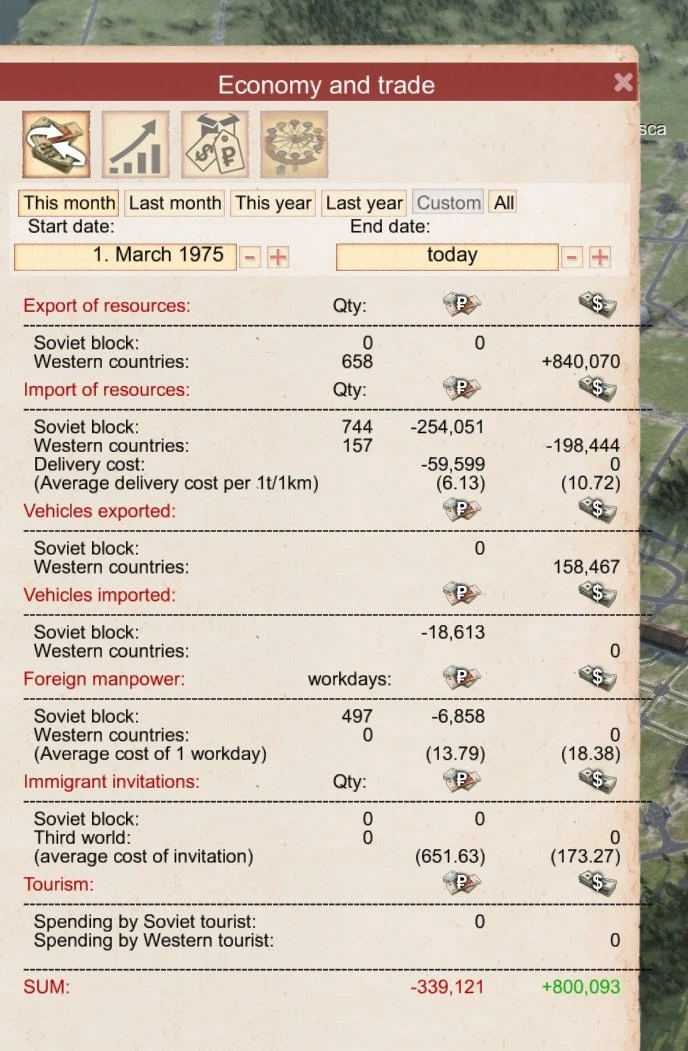
Exporting too much of one good lowers its price, so a large surplus of the same item earns less per unit. When one side's selling price has dropped and its buying price is high, switching to the other side can help until prices settle down. Use this routine:
- Compare the buy and sell prices for your product on the Soviet and Western sides.
- Note which currency your next import or quick build needs, and pick the side that pays in it.
- Keep watching the sale price as you export. Diversify or switch markets once repeated sales have pulled one side's price down.
Cutting Delivery Costs on Imports and Builds
How you bring in resources changes what you pay for them. There are two main ways to do it, and they charge differently.
- Auto-purchase buys and delivers resources to places such as shops and gas stations, once you set a minimum amount and the currency to use. The price is the resource value plus a charge for distance from the border, so the farther the destination is from a border, the more the delivery adds.
- Manual imports use vehicle lines that drive to a Customs House, buy resources and haul them to storage or factories. This cuts the delivery charge and makes costs more predictable over time. It costs more in the short run and may need distribution warehouses to run smoothly.
Manual hauling isn't free. You still pay for vehicles, fuel and the infrastructure they run on, so count those costs before you replace auto-purchase with your own trucks.
The same distance rule applies to builds. Paying Rubles or Dollars to fund a building finishes it almost immediately, but the price includes an instant-delivery fee that rises with the distance to the nearest Customs House. Building from resources is cheaper overall, but it needs vehicles, available materials and a plan to move them to the site.
Adding Tourism as a Second Income
Tourism brings visitors from other countries into your republic. They arrive at the borders, ride a bus or train to a hotel, and stay for a limited time before going home. They spend money at hotels, attractions and services in the currency of their home country, so visitors from Soviet countries pay in Rubles and visitors from Western countries pay in Dollars.
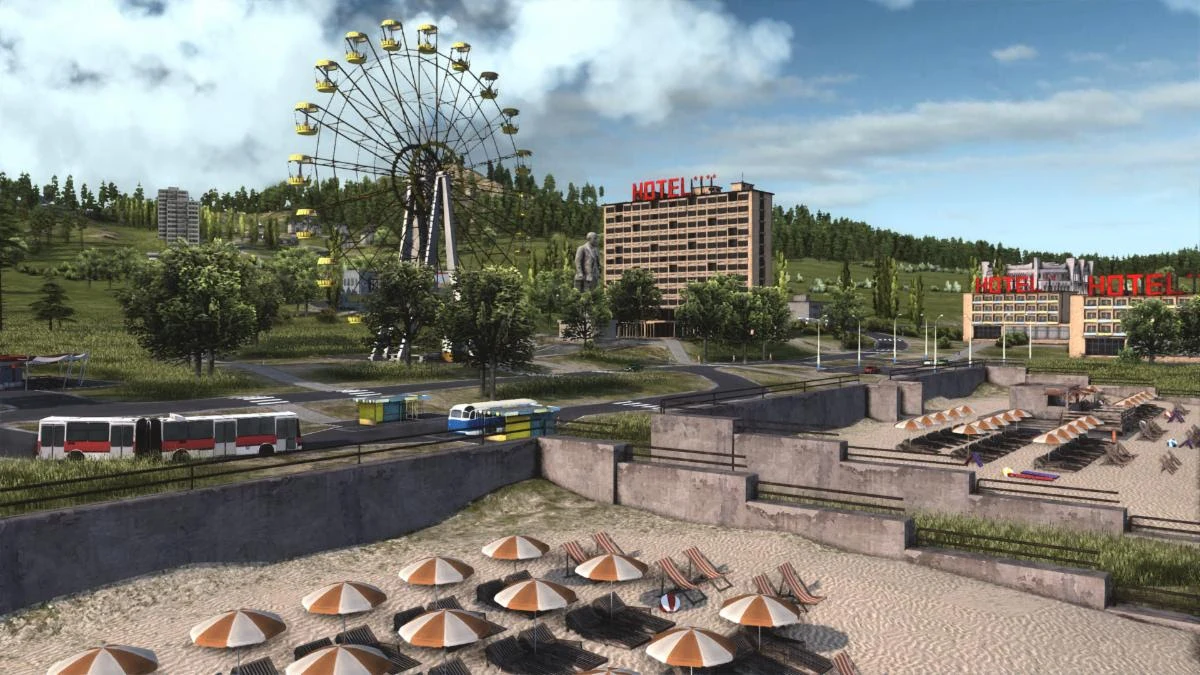
Visitors have the same needs as your citizens: food, alcohol, culture, religion, sport and sometimes clothes. Hotels can supply food and alcohol when stock is available, and attractions can satisfy a need instead. An attraction can override a tourist's wish for a drink and satisfy them instead, so the mix of buildings you choose shapes what visitors do. Cultural buildings such as museums and cinemas charge an entry fee.
Tourism uses a five-star rating. A higher rating brings more visitors to your borders and influences which attractions they choose. Attraction ratings come from sight (higher ground scores better), nature (more full-grown trees), water (more water nearby) and pollution, which visitors dislike. Each attraction weights these factors differently, so a zoo leans heavily on nature while a small hotel counts it for much less.
Tourism works best when you can bring visitors to staffed hotels and keep their attractions, food and alcohol supplied. High-rated attractions also let you raise prices and still keep a good star level. Track Soviet and Western tourist spending separately, since they pay in different currencies. Because tourism income depends on visitor numbers and how well your buildings are supplied, there's no fixed return to plan around. Start with a few hotels and attractions, watch what comes in, and expand from there.