

In Anno 117: Pax Romana, your money is called denarii, and residents are the main steady source of it. Each home pays more when its needs are supplied, while buildings, ships, and troops drain the balance through upkeep. A negative balance usually means those costs have grown faster than income, so the fix is to pause what you don't need, supply the needs that bring in income, place income buildings near homes, and sell only goods you truly have in surplus.
| Income source | How it adds income | Example | What to watch for |
|---|---|---|---|
| Residents' needs | Income attribute on each home | Garum (Latium Tier 2): +2 Income per home | The need must be supplied to the residence |
| Production area effects | Income to each building in range | Spinner: +1 Income; Loom Weavery: +2 Income | Production must run and goods must reach it |
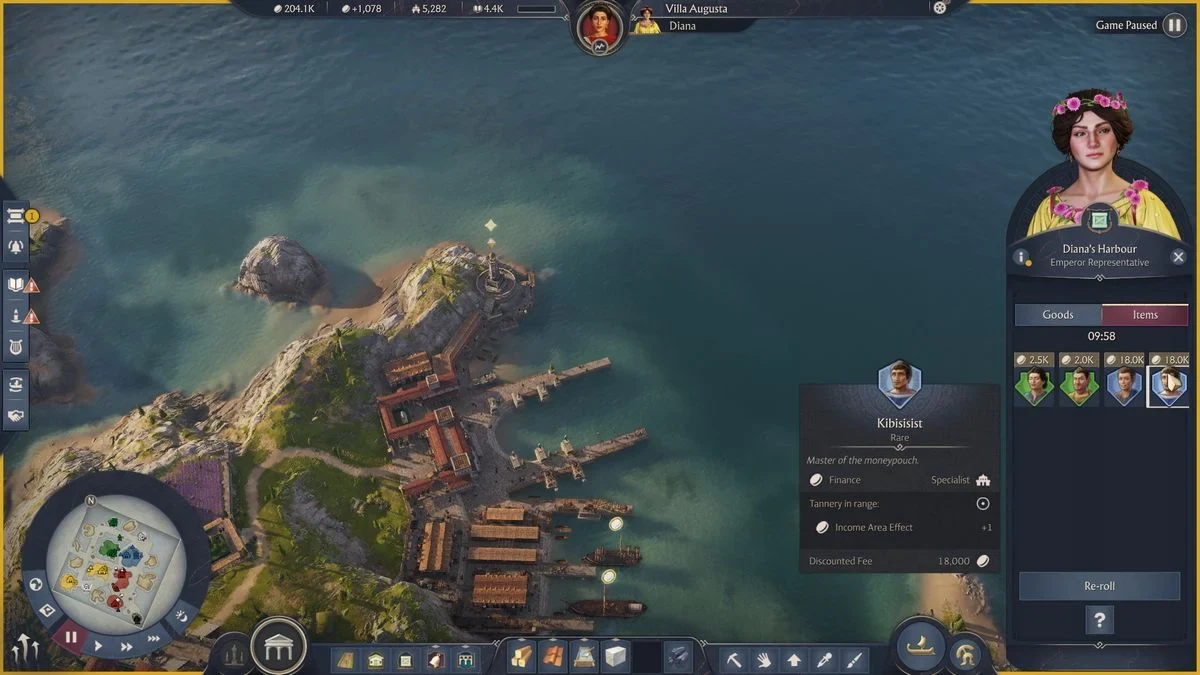
| Specialists | Income area effect | +1 Income area effect shown in-game | Must be equipped in a Villa or Officium |
| Market | Income to each home in range | +1 Income per home | Costs 10 denarii to maintain |
| Trading Post sales | Denarii from stock above your limit | Set by you | Only stock above your limit is sold |
How Residents Pay Denarii and What Drains Your Balance
Residents earn income through their attributes, and an attribute only applies once the need that carries it is supplied. A need that's only partly met gives only part of its bonus, so a steady supply matters as much as the need itself. That's why a balance can slip even when you have plenty of houses. The houses are there, but they aren't getting everything they ask for.
Costs come from two places. Production buildings, public service buildings, ships, and later military units carry upkeep, which is taken from your balance for as long as they stand. Most construction also costs a one-time sum up front, including roads and ships, although houses cost materials such as wood rather than denarii.
Goods consumption adds pressure too. Since Patch 3.0, new saves start on Normal difficulty by default, and it raises how much residents consume. A supply chain that was fine on an easier setting can fall short, and an unmet need means income you don't collect.
How to Find and Pause the Costs Draining Your Balance
Start by seeing where the money goes, then trim costs in a safe order.
- Open the income breakdown. Hover over the money icon in the top bar. It shows where your denarii come from and what they're spent on, so you can spot the largest recurring costs.
- Check what each costly building feeds. Before you pause a production building, see which homes depend on its goods. Pausing stops the output, and those homes lose that supply. Don't demolish a chain until you've checked this.
- Pause what the island doesn't need yet. Redundant public service buildings, idle ships, extra troops, and production that makes more than your residents use are the usual targets.
- Hold off on new chains. Don't build a facility as soon as it unlocks. Build only as many production buildings as your current residents need.
Each running building carries upkeep, so a facility that makes goods nobody uses is a steady loss, even though it looks productive. Pausing or skipping those gives your balance room to recover while residents' income catches up.
How to Supply Residents With the Needs That Pay Income in Anno 117
Each residence lists its needs in categories. For Liberti in Latium and Waders in Albion, those categories are Food, Public Service, and Fashion, and one need in each is enough to unlock an upgrade. You don't have to cover every option in a category, so you can pick what suits your island. More houses only help when their needs are covered, so grow housing at the pace your supply allows.
- Read each residence's attributes. Hover over a good or building to see what it adds. Some add Income, while others add population, happiness, or health.
- Restore missing supply first. A need that isn't being met gives you nothing, so fixing a gap comes before anything else.
- Choose Income when you have options. When a category offers several needs, favour the ones that show Income. Population, happiness, and health have value of their own, though, so don't drop a need that keeps your homes full or content.
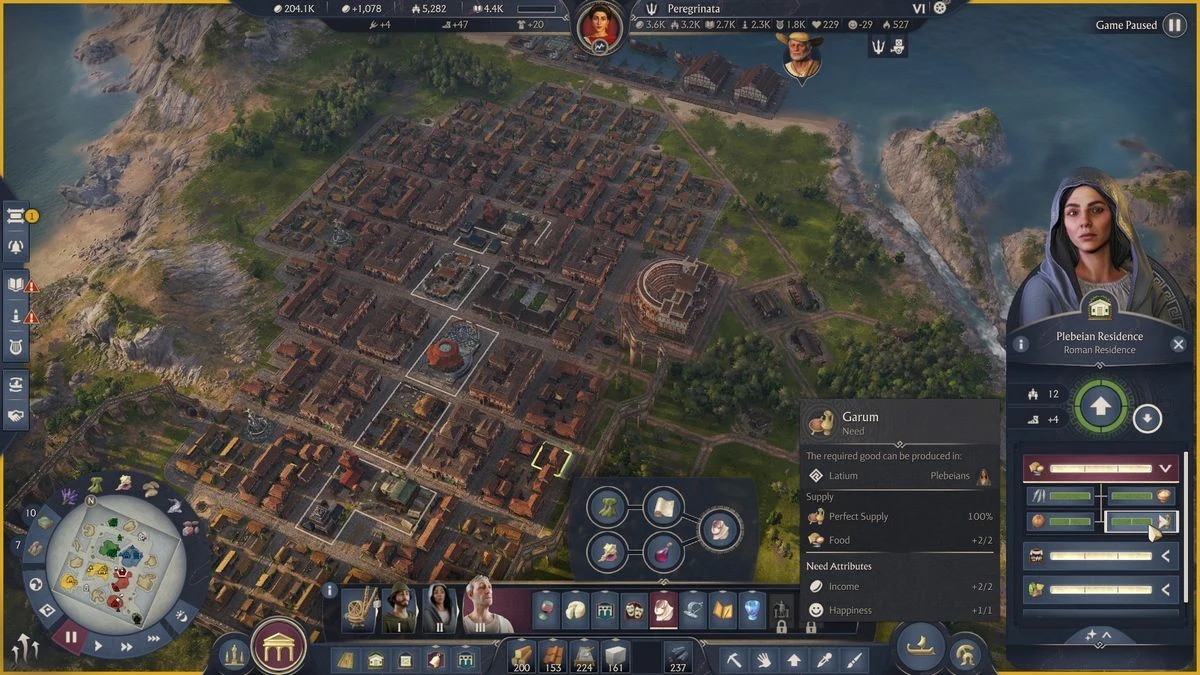
4. Check the supply bars before upgrading. Tier 1 needs are worth one supply point each, and Tier 2 needs are worth two. To move beyond Tier 2, each category needs three points, so look at the bar for each category first.
In Latium, upgrading Liberti turns them into Plebeians, so those homes are replaced rather than added to. That can leave you short of the Liberti workforce that some jobs still need. Keep enough Liberti homes in place to fill those jobs before you upgrade the rest.
Where to Place Income Buildings Near Homes in Anno 117
Area effects are the second main way to earn denarii. A building with an Income effect adds income to every building in its range, so where you put it matters as much as what it is. Place these buildings among your residences, and check that the range actually covers them.
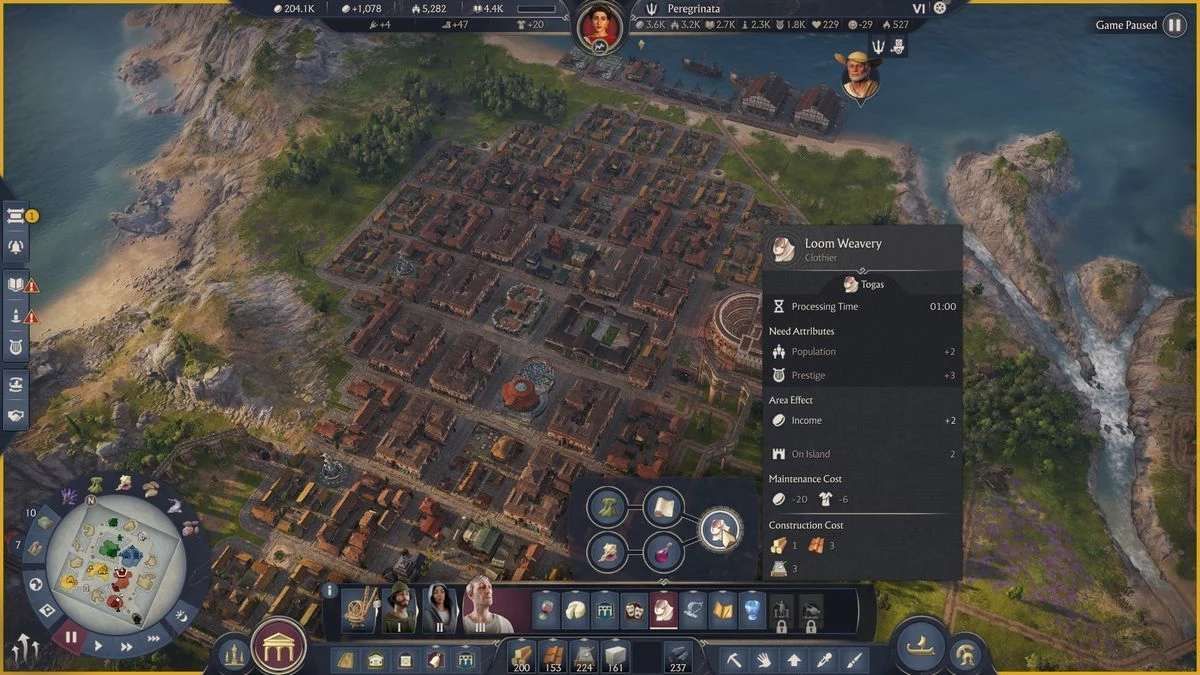
- Check the effect and range. Open the building's panel before you place it, and note the value and the area it covers.
- Place it among homes. Pick a spot where the range covers as many residences as possible.
- Connect its goods. Production buildings need a warehouse in range, and your Trading Post on the coast counts. Connect the chain with roads so goods reach the building.
- Confirm it's producing. The effect only holds while production keeps running and goods keep flowing, so check the building after it's placed.
The Market shows why the numbers matter. It adds +1 Income to each home in range and costs 10 denarii to maintain, so it needs at least 10 homes in range just to cover its own upkeep. A small cluster of houses won't justify it.
Specialists can also provide Income area effects. They're equipped in a Villa or Officium, so if you have one of those, equipping a specialist is worth checking before you add another production building. Read each value in the panel, because it shows what one building adds to the buildings in its range, not a total for the whole island. Values can change with balance updates, so trust the in-game panel over numbers you remember.
How to Sell Surplus Goods at the Trading Post Without Starving Residents
Ships can dock at your Trading Post and buy goods, even without setting up a trade route, as long as you're not at war with everyone. The catch is that residents draw their goods from island storage, so anything you sell is gone for them too. Sell only what's above what your island uses.
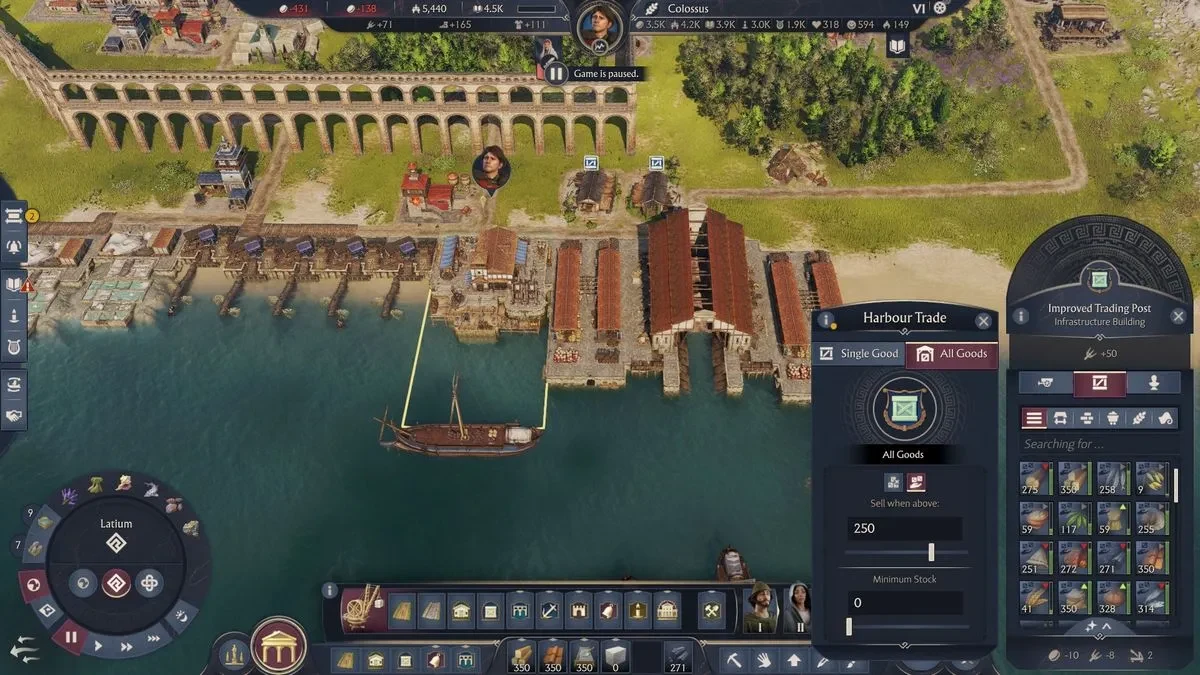
- Open the All Goods tab in Harbour Trade. You'll find it at your Trading Post.
- Set a sell-above limit. Stock above the limit is offered for sale, and stock at or below it stays on the island.
- Base the limit on your island's demand. Leave a reserve above what your residents consume and what your production needs. Example figures such as 25 units can work as a starting point, but the right number depends on how fast your island uses each good.
- Check stock after the order runs. In Patch 3.0 and later, the Statistics Screen's storage tab shows stored goods, passive and active trades, and how stock fluctuates. If a good keeps falling toward what your residents need, raise its limit.