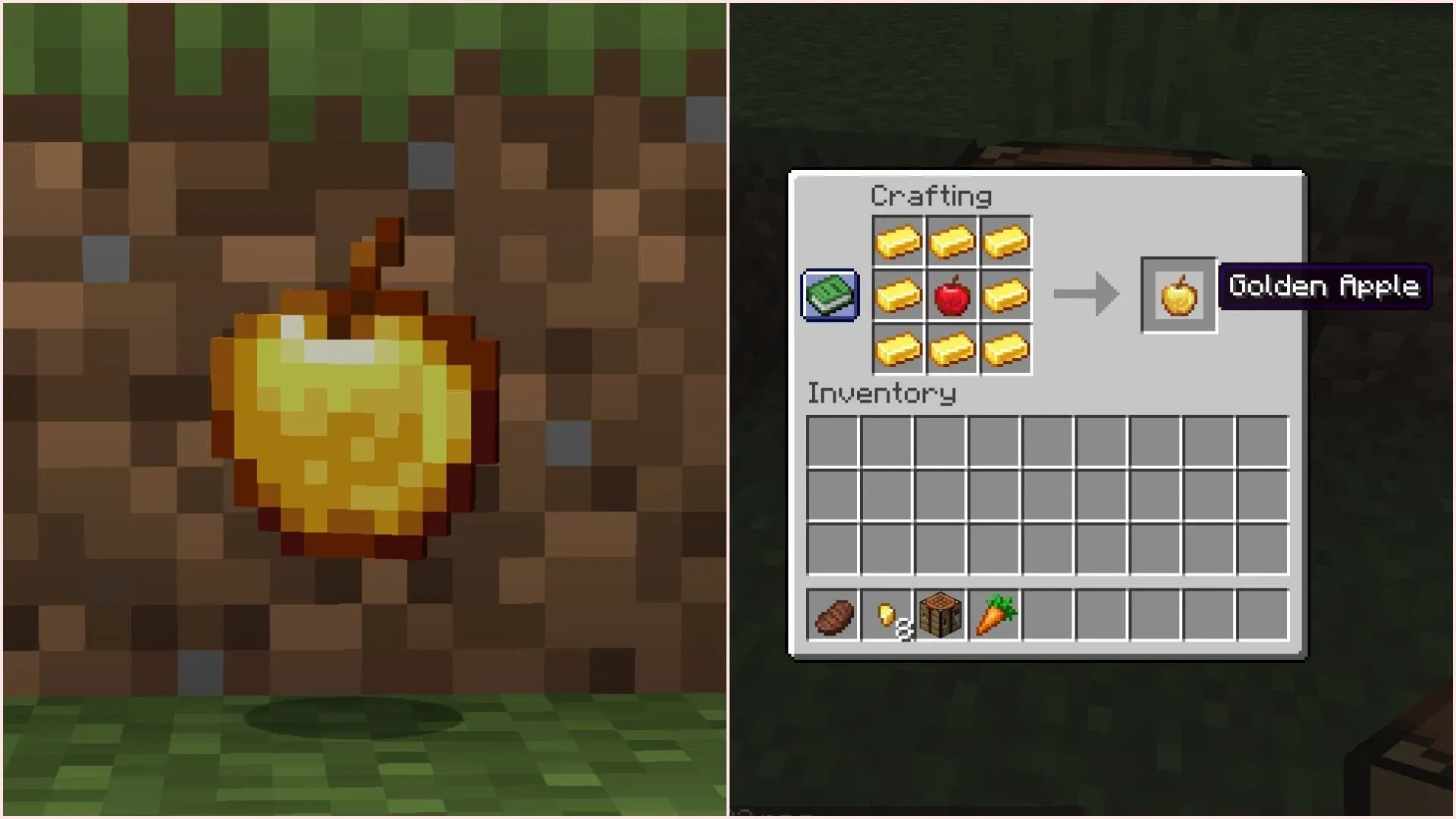


Ancient debris is the rare ore you need to make netherite, and it only generates in the Nether, the fiery dimension you reach through a portal. Mine it with a diamond or netherite pickaxe, mostly between Y=8 and Y=24 (Y is your height level in the world). Smelt each piece into netherite scrap, craft four scrap with four gold ingots into a netherite ingot, then combine that ingot with a Netherite Upgrade template and a diamond item at a smithing table.
| Method | Where to dig | What it costs | What to watch for |
|---|---|---|---|
| Strip mining (branch mining) | Y=8 to Y=22 | A pickaxe and food | Lava pockets. Carry fire resistance and a water bucket. |
| TNT | About Y=15 | 5 stacks of gunpowder and 4 stacks of sand per stack of TNT | Blasts with power 4. Space the TNT 5 blocks apart. |
| Beds | About Y=15 | Wool and planks for each bed | Blasts with power 5. Stay at least 6 blocks back. |
What Ancient Debris Is and Where It Spawns
Ancient debris is the main source of netherite scrap, and it only generates in the Nether. It spawns inside netherrack, the common reddish stone of the Nether, in small scattered veins. Because it almost never touches open air, you can't spot it from a cave.
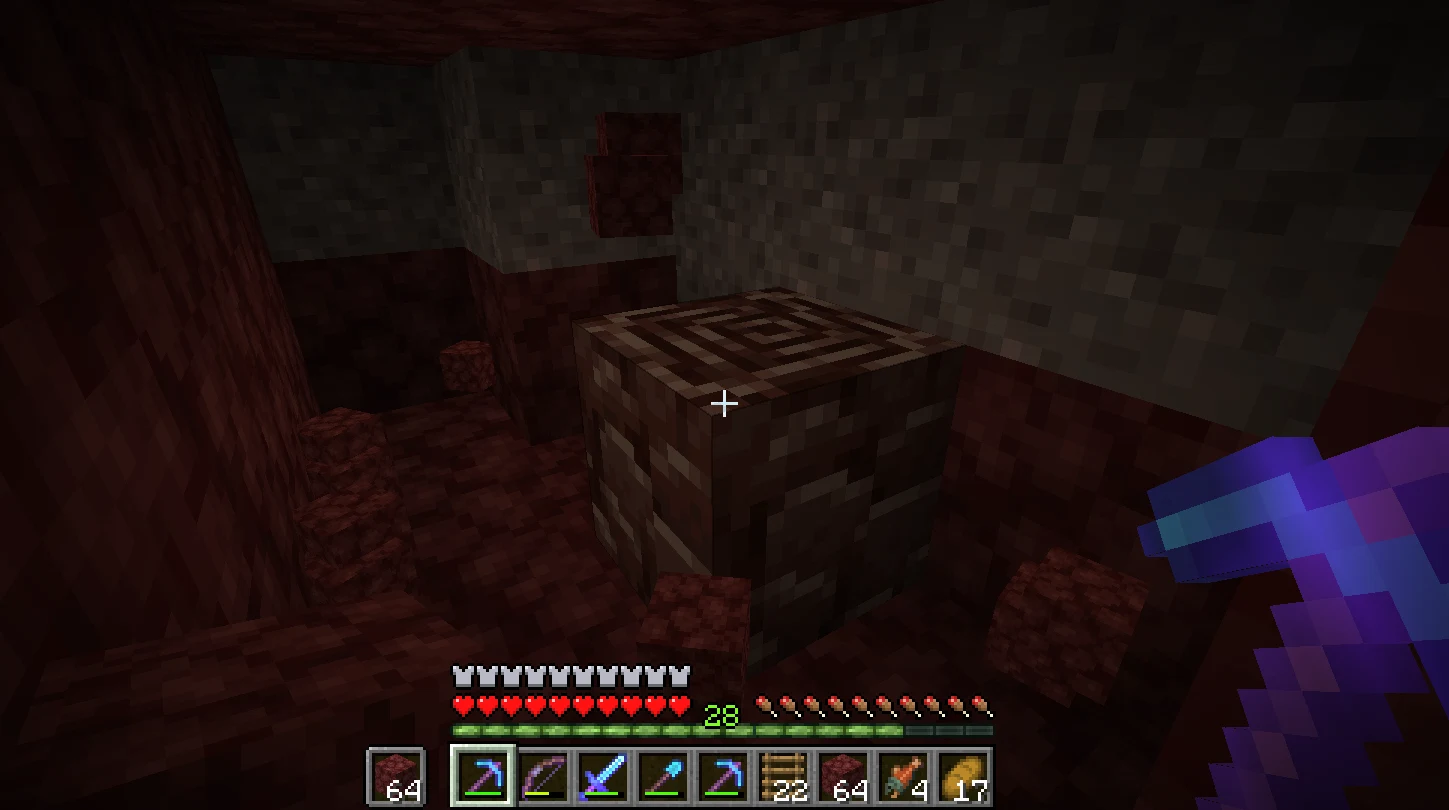
Sometimes a nearby feature exposes a piece, and it can also generate under lava where it's easy to see. In Java Edition, debris can also hide inside basalt and blackstone, so check those blocks too. A fire resistance potion lets you swim through lava to look.
Most debris sits between Y=8 and Y=24, and it's most common around Y=16. Java Edition also scatters a few extra pieces up to Y=119, so you may find one higher up, but the middle band gives you the best odds. Bedrock Edition spreads its debris more evenly, but Y=8 to Y=24 is still a good place to start there too.
Pickaxes That Can Mine Ancient Debris
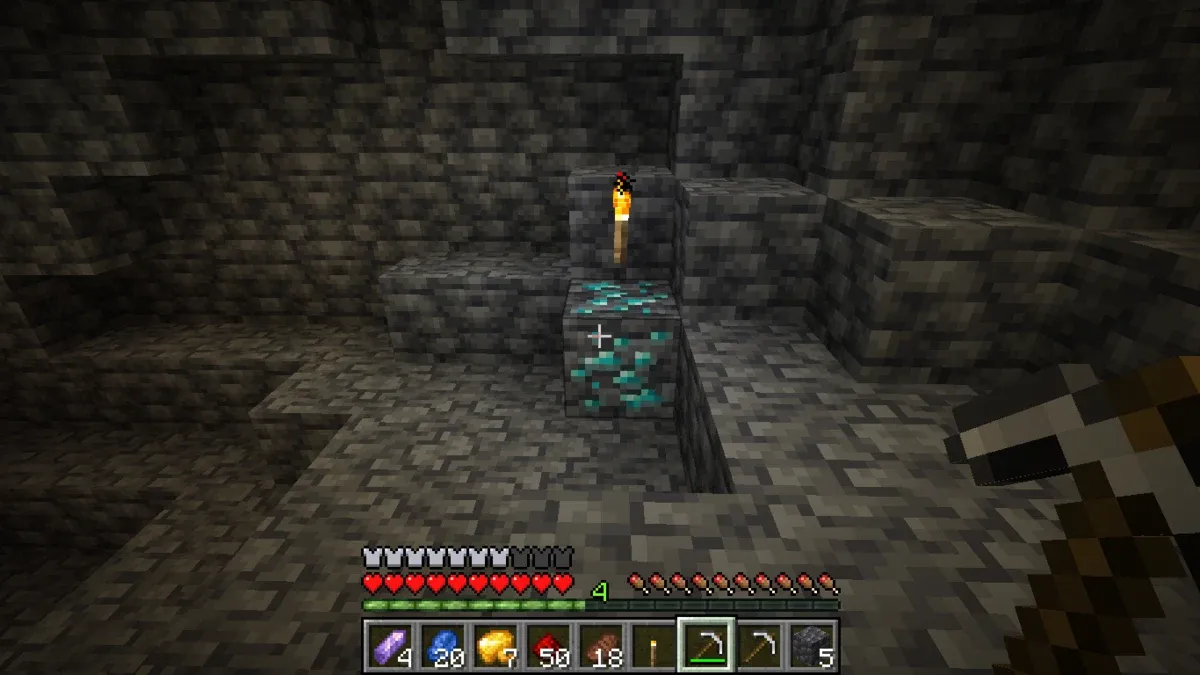
Only a diamond pickaxe or a netherite pickaxe will drop ancient debris. Other tools still break the block, but they leave nothing behind, so you lose the ore. If you still need diamonds, how to find diamonds in Minecraft covers the best height to dig for them.
A diamond pickaxe with Efficiency II, an enchantment that speeds up mining, breaks netherrack almost instantly. That means you can keep sprinting while you dig, which matters on a search that involves a lot of digging.
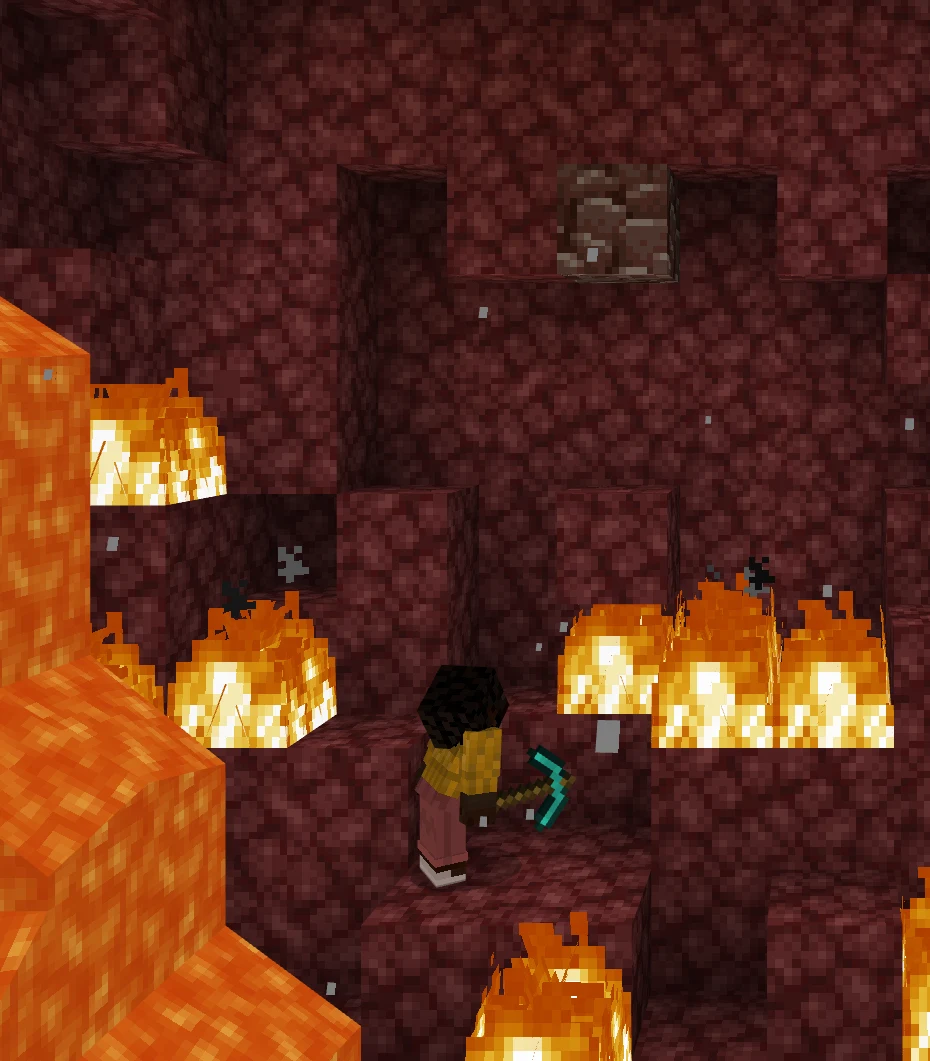
Mending and Unbreaking III are worth adding too. Mending repairs the pickaxe as you mine the Nether quartz and Nether gold ore along the way, and Unbreaking III makes the pickaxe wear down more slowly. For the full list of options, see all 43 enchantments in Minecraft Java Edition.
How to Find Ancient Debris in the Nether
Strip mining, also called branch mining in the Nether, is the simplest way to search. Dig a straight tunnel at any height from Y=8 to Y=22, which keeps you in the band where debris is most common. When you reach lava, turn and dig in another direction. Netherrack breaks faster than stone, so the tunnels go quickly.
The main danger is lava pockets, so carry fire resistance potions and a water bucket. Staying low also lowers the chance of breaking into a lava ocean.
Debris grows in small veins of up to 3 blocks, and the pieces spread out. When you find one, mine all the way around it, since the next piece may be a few blocks away. If two debris blocks have two or more blocks between them, they belong to separate veins, so check around each one.
If your pickaxe breaks netherrack instantly, you can also sweep your crosshair across the netherrack to cut wide tunnels. That exposes debris faster, but it wears the pickaxe down quickly, so use one with Mending and carry several bottles o' enchanting.
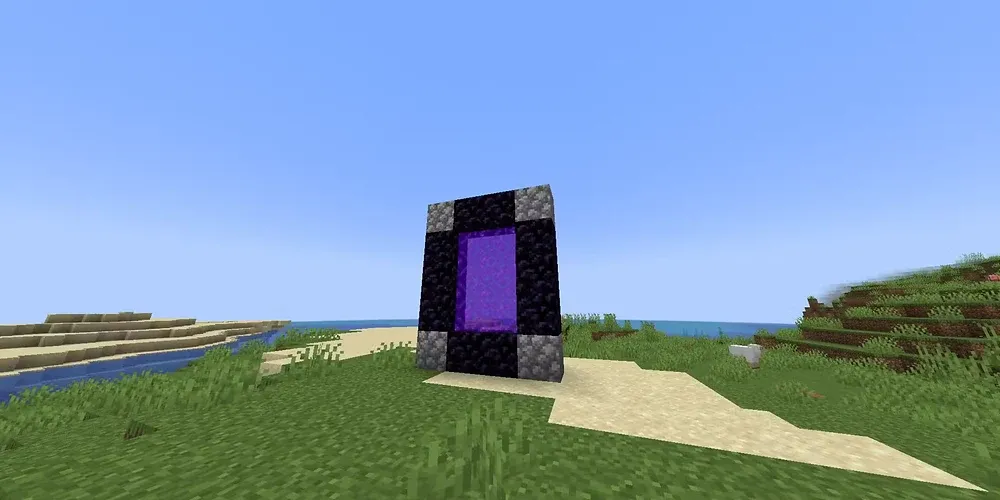
Keep track of your Nether portal too. The Nether's tunnels are easy to get lost in, so write down the portal's coordinates before you dig. One block in the Nether equals eight blocks in the Overworld, so a new portal built to get home can land you far from where you started. If you still need one, how to make a Nether portal walks through the build.
Mining With TNT
TNT clears Nether rock quickly and leaves the debris behind, because blast resistance decides what survives. Netherrack has a blast resistance of 0.4, so explosions break it easily. Ancient debris has a blast resistance of 1,200, so it survives, and TNT explodes with blast power 4.
- Dig a tunnel at about Y=15, which sits close to the peak of the debris band.
- Walk back along the tunnel and place TNT on the floor every 5 blocks, with 4 blocks between each one.
- Light the chain from one end, then step well back.
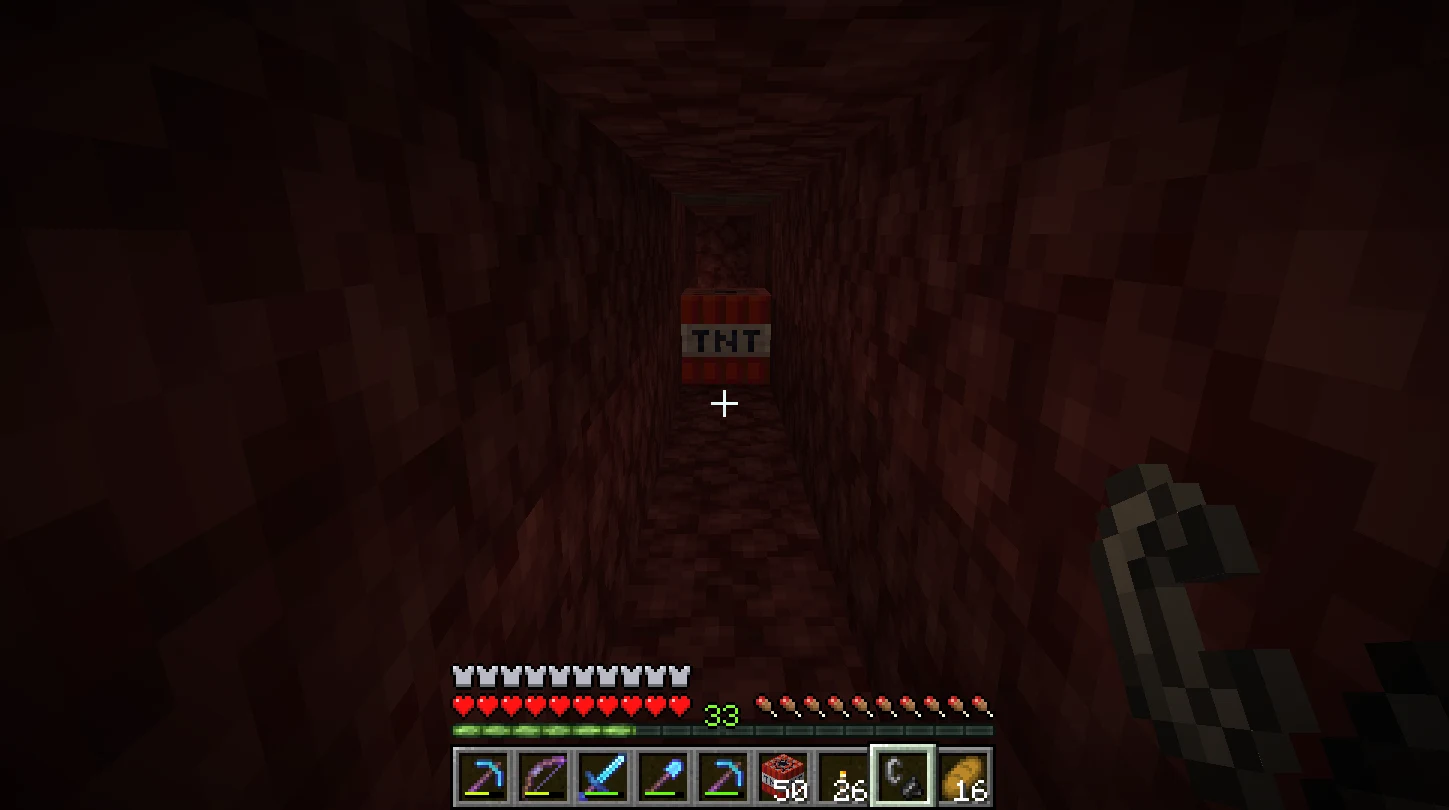
TNT is the most expensive of the three methods, since one stack of TNT costs 5 stacks of gunpowder and 4 stacks of sand. Gather those materials before you start. After the blasts, walk the tunnel and mine around any debris that is now exposed, using the same vein rule as before.
Mining With Beds
Beds explode when you try to sleep in them in the Nether or the End, with a blast power of 5. That is stronger than TNT's power of 4, and the method works the same way in Java and Bedrock Edition. Beds are cheaper than TNT, but you'll use a lot of them, so bring plenty of wool and wood.
- Mine down to about Y=15, where bed blasts tend to expose the most debris.
- Craft your beds. Each one needs wool and planks.
- Dig a main tunnel. At every 16th block, dig a side tunnel that is 1 block wide, 1 block tall and 5 blocks long, at eye level.
- Place a bed at the end of a side tunnel and right-click it.
- After the explosion, up to 3 pieces of debris may be exposed. Mine them, then repeat on the other side of the main tunnel until you run out of beds or food.
Bed blasts hit hard, and underground lava pools make the Nether riskier. Stay at least 6 blocks from the bed, since a blast that close can hurt you badly enough to kill you. Blast Protection armor, fire resistance potions and a totem of undying are worth bringing. None is required, but each one covers a risk this method brings.
How to Smelt Ancient Debris and Craft a Netherite Ingot
- Smelt the debris. Put ancient debris in a furnace or blast furnace with any fuel. Each piece becomes one netherite scrap, and you get 2 experience points when you take the scrap out.
- Gather gold. Each netherite ingot needs 4 gold ingots, so collect them before you craft.
- Craft the ingot. Place 4 netherite scrap and 4 gold ingots in a crafting table, in any arrangement, to make 1 netherite ingot.
| Image | Item | How you get it |
|---|---|---|
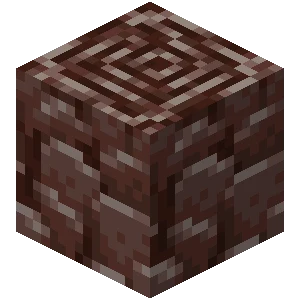 | Ancient debris | Mined in the Nether with a diamond or netherite pickaxe |
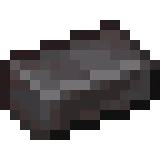 | Netherite ingot | 4 netherite scrap and 4 gold ingots at a crafting table |
The recipe doesn't care where each item sits in the grid, so place them however is easiest. Netherite ingots also repair netherite tools and armor in an anvil, and they turn up as loot in the treasure chests of bastion remnants.
Netherite items float on lava and can't be destroyed by fire or lava, so a dropped ingot can be picked back up.
Getting a Netherite Upgrade Template
Upgrading diamond gear takes a Netherite Upgrade template as well as a netherite ingot, and the template is used up with each upgrade. It is only found in bastion remnants, so you'll need to explore a bastion to get one. For the other Nether structures, see all 30 structures in Minecraft Java Edition.
In Java Edition, the hoglin, generic and bridge chests in bastion remnants have a 10% chance of holding one. Bedrock Edition also puts templates in bastion chests, but the exact chance isn't confirmed, so plan on searching several bastions.
Once you have one, you can make more. A 3 x 3 crafting table recipe uses one template, 7 diamonds and 1 netherrack to make 2 templates, so each craft leaves you with one more template than you started with. Arrange the grid like this:
| Row | Left | Middle | Right |
|---|---|---|---|
| Top | Diamond | Netherite Upgrade template | Diamond |
| Middle | Diamond | Netherrack | Diamond |
| Bottom | Diamond | Diamond | Diamond |
Upgrading Diamond Gear to Netherite at a Smithing Table
- Put the Netherite Upgrade template in the left slot.
- Put the diamond item in the middle slot.
- Put a netherite ingot in the right slot.
- Take the netherite item from the output slot.
| Image | What it is |
|---|---|
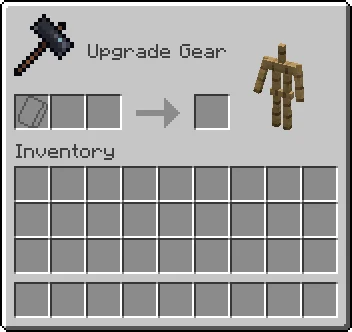 | The smithing table screen: template on the left, diamond item in the middle, netherite ingot on the right |
 | The Netherite Upgrade template, used up with each upgrade |
Each upgrade uses one template, one diamond item and one netherite ingot. These diamond items can be upgraded:
- Armor: helmet, chestplate, leggings and boots
- Tools and weapons: sword, pickaxe, axe, shovel, hoe and spear
- Horse armor and nautilus armor
The upgrade keeps the item's enchantments, custom name, armor trim and the durability it has already lost, so a worn diamond tool stays worn by the same amount. It also costs no experience and doesn't raise the prior work penalty, unlike an anvil.
A full set of netherite tools and armor, which is 4 armor pieces and 6 tools and weapons, costs 10 netherite ingots. Counting it out from the recipes, that's 40 ancient debris and 40 gold ingots, plus 10 templates, one for each upgrade. If you start with a single template, you'd need 9 duplications to reach 10, which uses 63 diamonds and 9 netherrack.