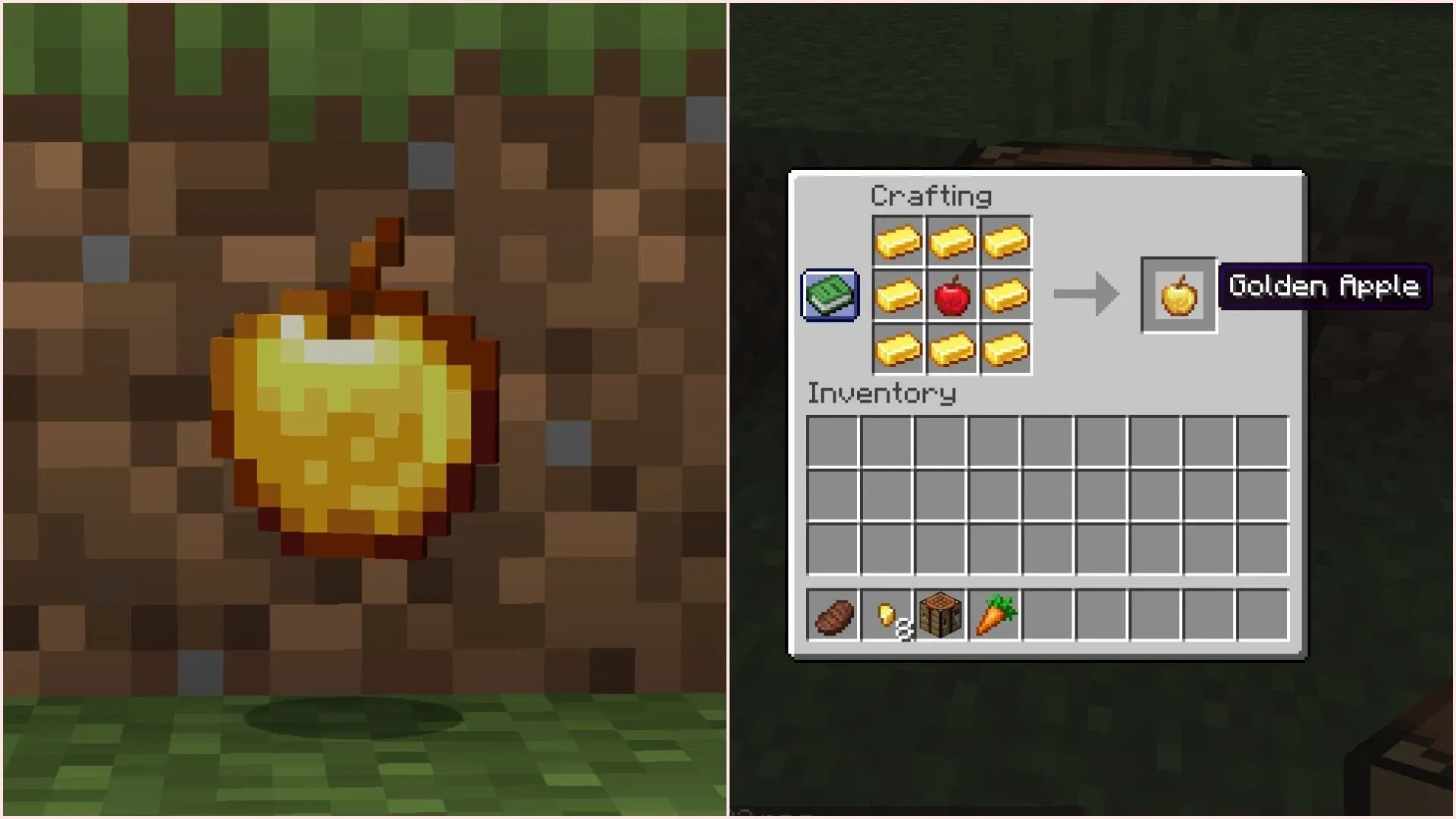
Diamonds in Minecraft turn up most often deep underground, at Y=-58 and Y=-59. Y is your height in the world, the vertical number shown in your coordinates, and diamond ore appears more often in these two layers than at any other height. Y=-59 has the highest density, while Y=-58 is nearly as good and gives tunnels fewer problems with bedrock. You'll need an iron pickaxe or better to collect any of them.
| Layer | Why use it | Trade-off |
|---|---|---|
| Y=-59 | Highest density of diamond ore | Bedrock can block tunnels here |
| Y=-58 | Nearly as dense, with less bedrock in the way | Slightly less dense than Y=-59 |
| Y=-54 | Easier to handle around lava lakes | Less dense than both layers above |
| Y=16 to Y=-63 | The full range where diamond ore generates | Rarer the higher you are |
Think of the table as a choice between peak density and comfort. Work between Y=-58 and Y=-59 rather than chasing one exact number, and switch to Y=-54 if lava is the bigger worry.
Why Diamonds Are Most Common Around Y=-58 and Y=-59
Diamond ore generates in the Overworld from Y=16 down to Y=-63, and it becomes more common the lower you go. Under Y=0, diamond ore that forms in deepslate or tuff turns into deepslate diamond ore, which appears more often than the regular kind. So the diamonds you find this deep will often be the deepslate version.
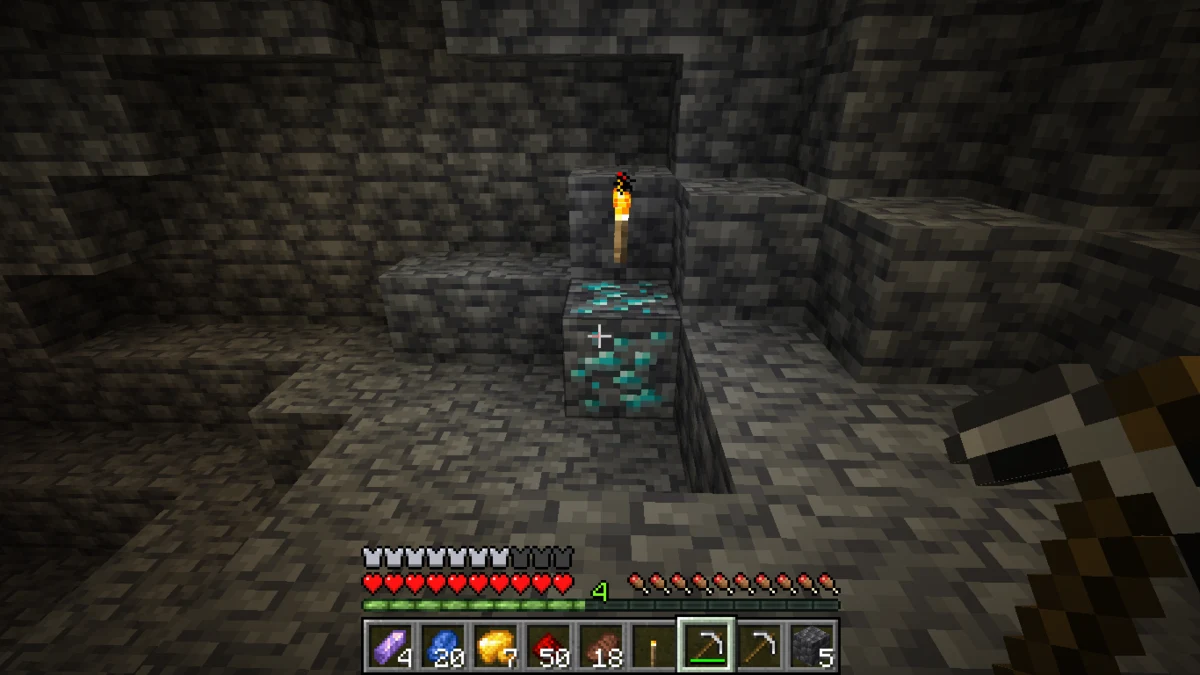
The bedrock layer, the unbreakable floor of the world, sits close to these layers and can block tunnels. That's why Y=-58 is often the easier height for long tunnels.
Before Minecraft 1.18, Y=11 was the usual target for diamonds. The Caves & Cliffs Part II update changed the world's height and how ore is spread through it, so that older height no longer applies. Java 1.20.2 and Bedrock 1.20.30 both made diamond ore more frequent in the deep layers, so the same two layers are the peak on both editions.
What Pickaxe and Gear You Need Before Mining Diamonds
You need an iron pickaxe or better to collect diamonds. A stone, wooden, or other lower-tier pickaxe will still break diamond ore, but it won't drop a diamond, so the effort goes to waste. Diamond and netherite pickaxes work too, and diamond tools mine faster and last longer than iron ones.
Pack these for a longer trip:
- Torches: At least a full stack. They light your tunnels, keep hostile mobs from spawning, and mark where you've been.
- Water buckets: One at minimum, two if you can. They help with lava and falls.
- Food: Long digs drain your hunger bar, so bring foods that restore hunger quickly. See every food in the game for options.
- A sword and armor: Caves are full of hostile mobs, and armor helps against lava too.
- Wood: Around two stacks. Wood becomes sticks, which you'll need for a replacement pickaxe if yours breaks.
- Cheap blocks: Dirt or cobblestone for plugging holes and blocking lava.
You don't need your best pickaxe for every block. Mine the stone you dig through with a stone pickaxe, and save the iron one for ore. For a side-by-side look at each tool tier, see the full list of tools.
How to Reach the Diamond Layers Safely in Minecraft
Getting to the right layer comes down to watching one number. In Java Edition, press F3 to open the debug screen and read the Y value. On Bedrock Edition, turn on Show Coordinates in the world settings so the number is always visible.
- Start from the surface or an existing cave, and dig a staircase down.
- Angle the staircase at 45 degrees, moving one block sideways for every block you drop.
- Place a torch every fifth block so you can track your depth and keep the route lit.
- When your Y value reads -58 or -59, level off and start tunneling.
Skip straight-down digging. A straight shaft can drop you into lava or a ravine before you have a chance to react. A staircase is easy to climb back up if you need to leave in a hurry.
How to Branch-Mine Solid Stone for Diamonds
Diamond ore has a chance not to generate when it sits next to air, and cave walls are exposed to plenty of air. That's why digging through solid stone can reveal ore that open cave walls don't. Diamond ore can still generate beside water and lava, so keep an eye on those spots too.
- Dig a main corridor through solid stone at your target layer. Make it 1 block wide and 2 blocks high, which is tall enough to walk through without bumping your head.
- Dig side branches off the corridor, each at least 20 blocks long.
- Leave about 6 solid blocks between each branch.
- Check every wall, floor, and ceiling as you go, and mine any diamond ore you see.
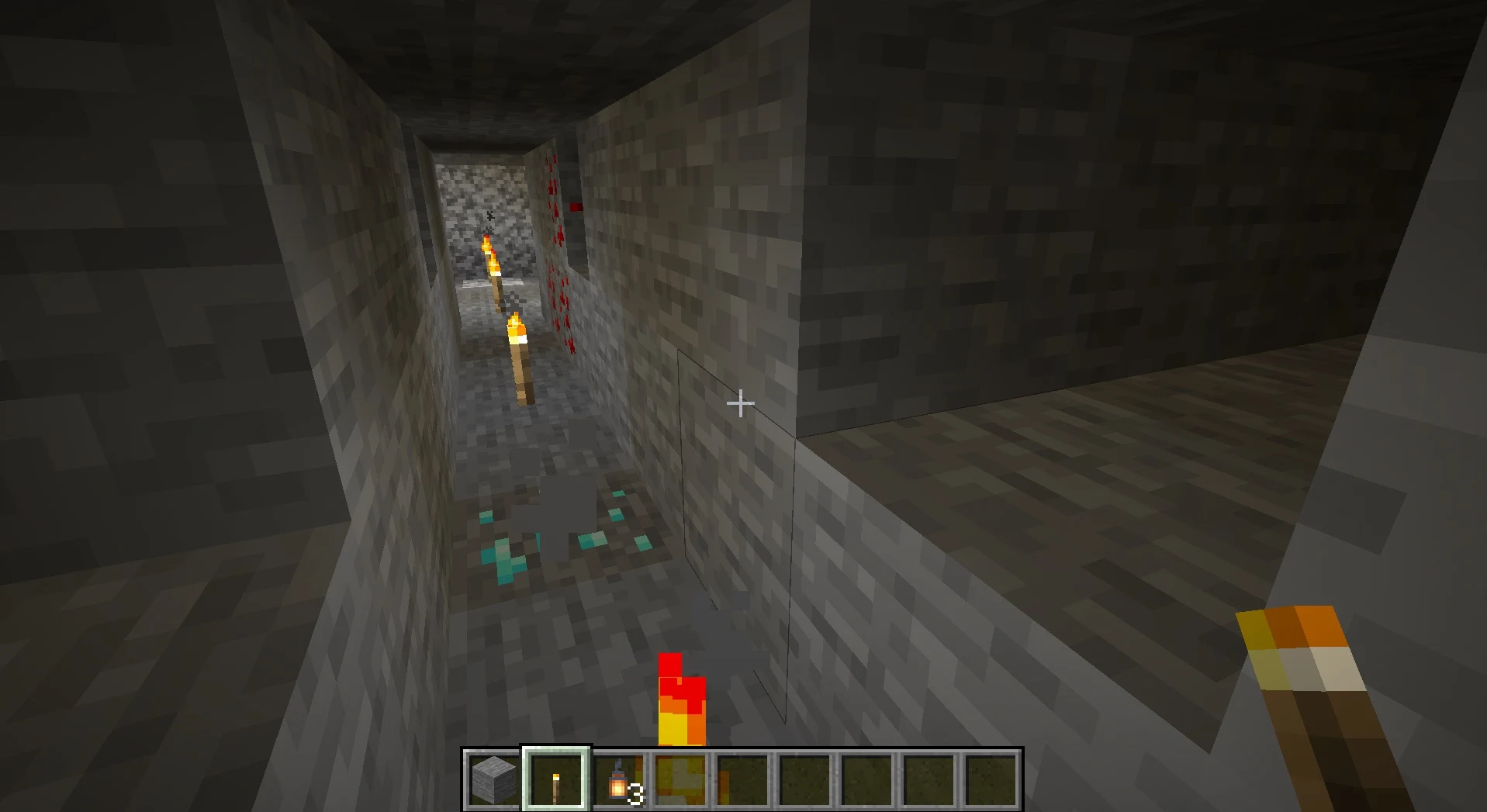
Spacing is the main trade-off. Branches two blocks apart expose nearly every block, but they mean a lot of digging. Branches five blocks apart go faster, but they can miss small diamond blobs, since diamonds can form blobs of fewer than four blocks. Six solid blocks between branches is a good balance, because each branch is far enough from the last that it rarely digs into ore the previous one already took.
Redstone peaks at the same two layers, so you'll likely run into it on the way. For the rest of the ores you might meet, see the full list of ores.
How to Get the Most Diamonds From Each Ore Block
Without enchantments, each diamond ore block drops one diamond and 3 to 7 XP. Fortune raises the diamond count, but it only works on the pickaxe that breaks the ore. The three levels average the following:
- Fortune I: About 1.33 diamonds per block, with a maximum of 2
- Fortune II: About 1.75 diamonds per block, with a maximum of 3
- Fortune III: About 2.2 diamonds per block, with a maximum of 4
Fortune III is the level to aim for. Fortune and Silk Touch are two of the enchantments in the game that help with mining, and Efficiency speeds up digging as well.
Silk Touch works differently. It collects the ore block itself instead of diamonds, and you can break that block later with a Fortune III pick. That's useful when you want to hold ore until you're back at your base.
How to Stay Safe Around Lava and Caves
Lava becomes common at lower levels, so it's the biggest danger in this range. Water is your best answer to it. Water also breaks falls and puts out fire. Pour it onto a solid block next to a lava pool and the lava turns to obsidian, but don't stand between that spot and the lava while you pour.
Two water buckets go further. Dig a 2×2 pit and place water in two opposite corners, and you'll have an endless source to refill from. If you have a Fire Resistance potion, bring it along too, since it negates fire and lava damage.
Caves often hold ore on their walls, but they're risky. Light a cave before you start extracting ore, and move slowly, because rushing makes it easy to miss unlit passages where mobs can come out or to fall into a hole you didn't see.
Mark your route with torches and head back the way you came. When your inventory fills up, empty it at base instead of pushing deeper, which lowers the chance of losing your diamonds.