

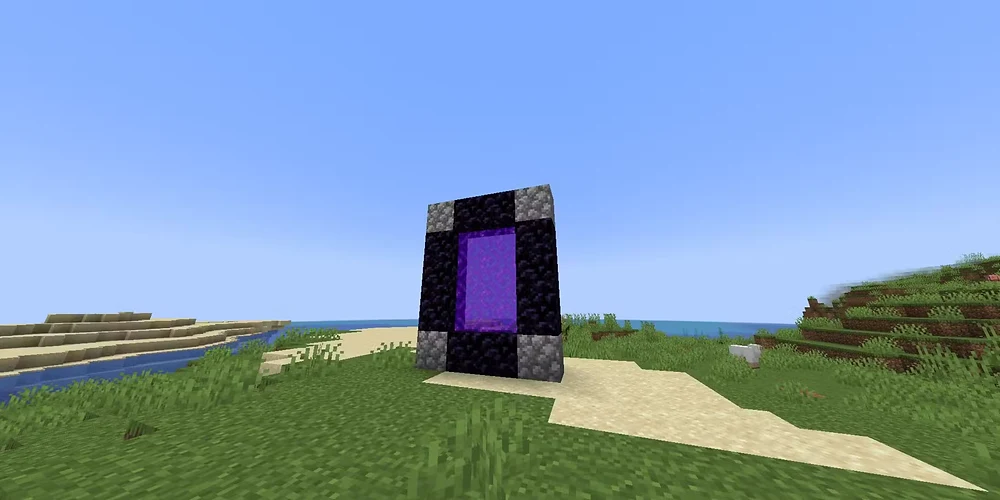
A Nether portal is a doorway between the normal world and the Nether, a separate world you reach by stepping through it. To build one, make a vertical frame of obsidian that's at least 4 blocks wide and 5 blocks tall, leave a 2×3 opening in the middle, and light it from inside with flint and steel or a fire charge. The smallest frame takes 10 obsidian, or 14 if you include the corners, and the build works the same on Java and Bedrock.
| Part | What you need |
|---|---|
| Frame size | At least 4 blocks wide and 5 blocks tall, measured on the outside |
| Opening | 2 blocks wide and 3 blocks tall, left empty |
| Obsidian | 10 without corners, 14 with corners |
| Frame block | Regular obsidian only |
| Pickaxe for mining obsidian | Diamond or netherite |
| Lighter | Flint and steel or a fire charge |
Mine the Obsidian With a Diamond or Netherite Pickaxe
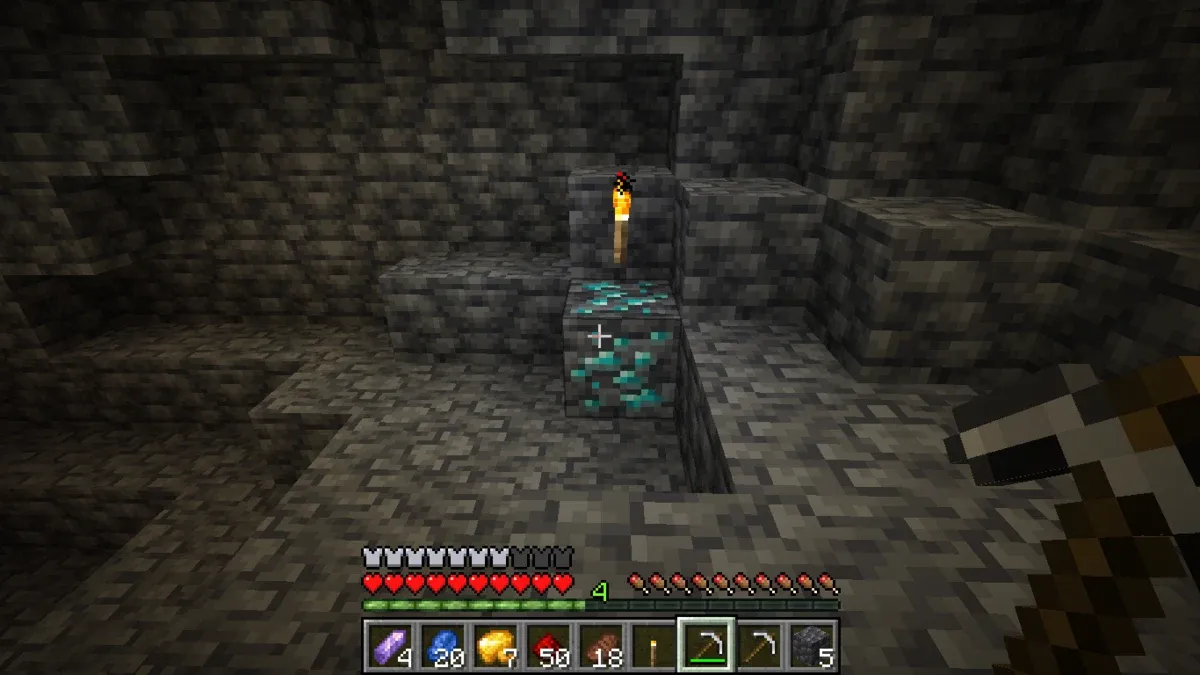
Obsidian only drops as a block when you mine it with a diamond or netherite pickaxe, so get that tool ready first. Gather 10 blocks for the basic frame, or 14 if you want the corners. For the other tools in the game, see the full list of tools in Java Edition.
If your obsidian sits on top of a lava lake, let water flow over its surface before you mine. When you break a block, the water flows into the gap and turns the lava under it into obsidian, so the block doesn't drop into the lava and get lost.
How to Build the Nether Portal Frame Step by Step
The frame stands upright, like a door. Its outside edge must be at least 4 blocks wide and 5 blocks tall, and the 2×3 space in the middle stays empty so you can walk through. You can make it bigger, up to 23 blocks by 23 on the outside, but extra size means extra obsidian, so the 4×5 frame is the cheapest option.
The four corner blocks are optional. The frame works without them, which is why the smallest version uses 10 obsidian, and many players leave them out to save 4 blocks.
The smallest frame, with the corners left out, looks like this:
 ##
#  #
#  #
#  #
 ##
- Place two obsidian blocks side by side for the bottom of the frame.
- On each side, build a column of three blocks starting one block up and one block out from the ends of the bottom row. If you're skipping the corners, place a temporary dirt block in the corner spot to build against, then break it once the column is up.
- Place two blocks side by side across the top to close the frame.
- Check that the middle 2×3 space is empty before you light it.
How to Light a Nether Portal With Flint and Steel
Flint and steel is the standard lighter. You craft it from one iron ingot and one flint, and flint can drop from gravel. You can check that recipe in the full list of crafting recipes in Java Edition.
Once the frame is finished, use the flint and steel from inside the opening to light the portal. A fire charge works the same way, and a ghast's fireball can light it too.
Timing matters. Fire only activates a complete frame, so if you light a frame that still has gaps, the portal won't switch on when you add the missing blocks later. Light it again after the frame is finished.
How to Build a Nether Portal Without a Diamond Pickaxe
If you don't have a diamond or netherite pickaxe, you can cast the frame out of lava instead of mining obsidian. Obsidian forms when water touches a lava source block, so you place lava where each frame block should go and pour water over it. You'll need a water bucket and enough lava for every frame spot, which is 10 for the basic frame or 14 with corners. Carry that many lava buckets, or refill one bucket from a nearby lava pool between placements. The same water bucket can be reused for every spot.
- Build a temporary mold out of dirt or sand. Shape it so each frame spot is open at the top and walled in on the sides, which keeps the lava from spreading.
- Use a bucket to place a lava source block in one open frame spot.
- Pour water onto that lava. The source block turns into obsidian.
- Scoop up the water and refill your bucket if needed, then move to the next spot.
- Repeat until every frame spot is obsidian.
- Remove the dirt or sand mold and any leftover water, then light the frame.
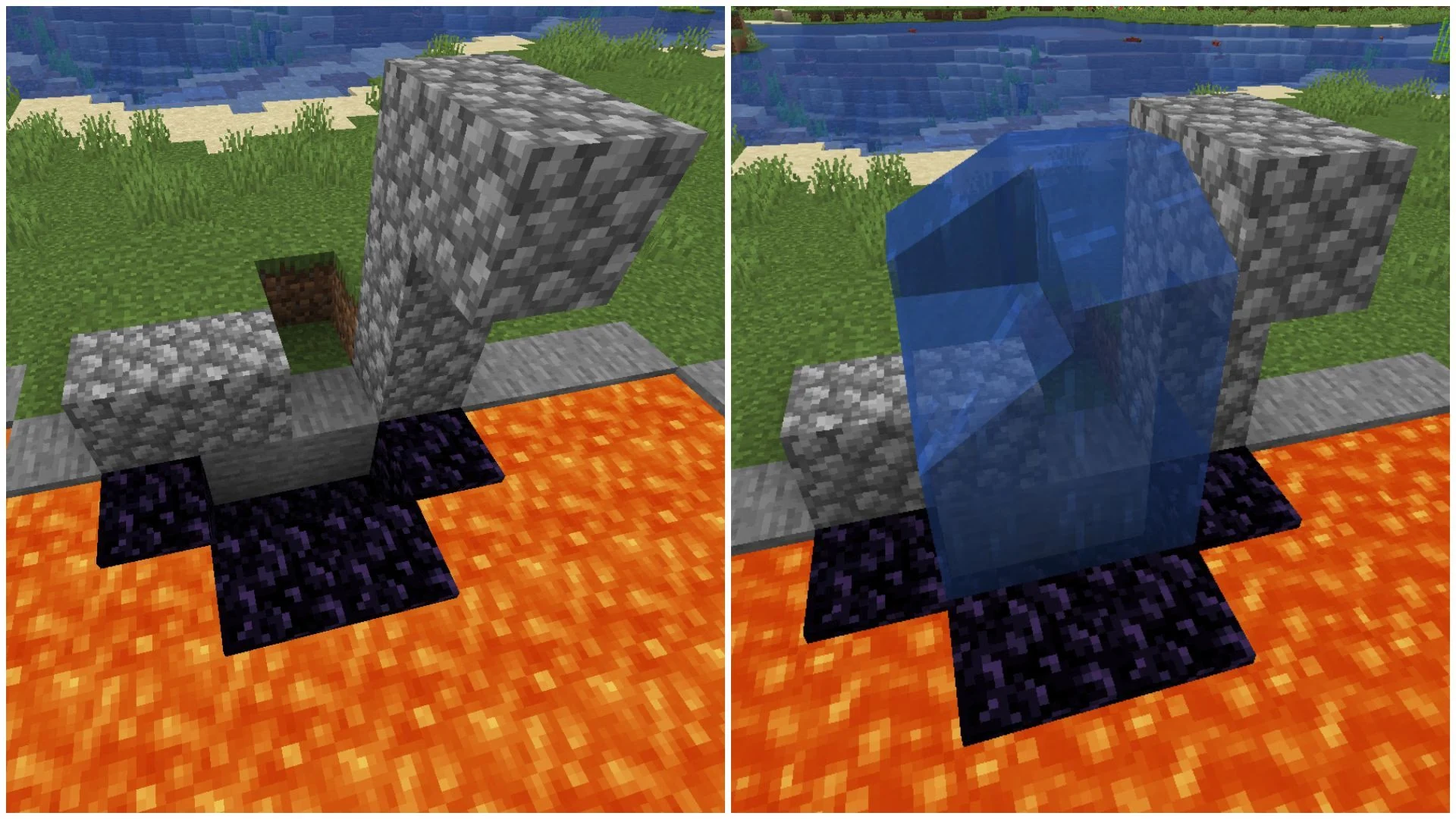
Keep the water on the lava you're working on. Water that touches flowing lava makes stone or cobblestone instead of obsidian, which leaves the wrong block where an obsidian one should be.
How to Activate a Ruined Portal in Minecraft
Ruined portals are partly built already. You'll find an obsidian frame in the Overworld, often with decorative blocks mixed in and usually surrounded by netherrack. Some are partly buried, and every one has gaps in its frame, so you'll need to finish it before lighting it. Ruined portals are one of the structures in Java Edition you can come across while exploring.
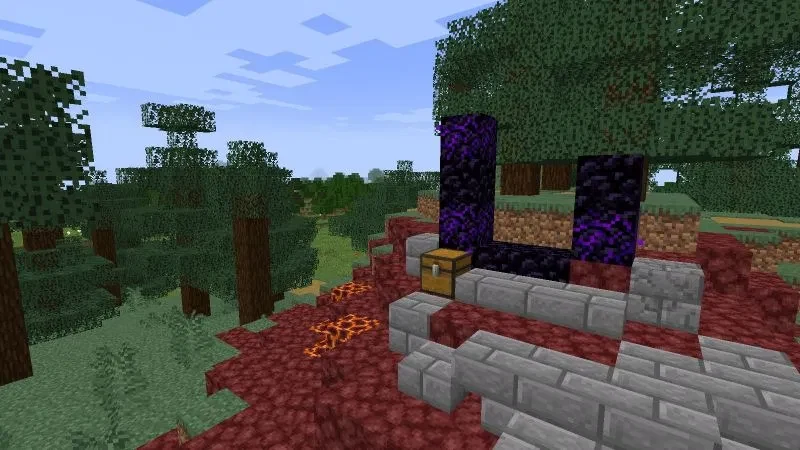
- Dig out any buried parts so you can see the whole frame.
- Replace any crying obsidian sitting in a frame spot with regular obsidian, since crying obsidian won't activate the portal. For help telling block types apart, see the full list of blocks in Java Edition.
- Fill each missing frame spot with regular obsidian, either mined with a diamond or netherite pickaxe or cast using the lava method above.
- Check the chest beside the portal. It sometimes holds 1 or 2 obsidian, but don't count on it to finish the frame.
- Light the completed frame with flint and steel or a fire charge.
How to Travel Through a Nether Portal in Survival
Once the portal is lit, step into the opening and stay there. In Survival, you need to stand in the portal for 4 seconds to travel. If you walk out before the animation finishes, the trip is cancelled, so step back in and wait the full 4 seconds.
Does a Nether Portal Work Differently on Bedrock Edition?
Building and lighting the portal work the same on both editions. The difference is who can travel. On Bedrock, a Nether portal moves players only. On Java, it can also move most other entities, such as mobs.