


The quickest early money in Farming Simulator 25 comes from contracts, which are paid jobs that neighboring farms offer, like harvesting a field or hauling crops to a delivery point. Once you can spare about 36,000 and have a water source nearby, a Large Tarp Greenhouse growing lettuce is the strongest steady earner, paying back its cost in about five months on Normal difficulty. Treat every figure as an estimate, since prices shift with difficulty, map, and where you sell.
| Option | When it fits | Upfront cost | Return (estimate) |
|---|---|---|---|
| Contracts | From the start | Lease fee only if you borrow equipment | Set per job, shown on the contract screen |
| Large Tarp Greenhouse (lettuce) | Once you have 36,000 and a water source | 36,000 | About 7,151 profit a month, 5-month payback (Normal) |
| Wheat, barley, or canola | Early, with basic grain machines | Machines and seed | About 18,000 to 21,000 gross per hectare |
| Kimchi chain | Later, once lettuce income is coming in | 180,000 | About 13,188 profit a month, 14-month payback (Normal) |
Take Nearby Contracts for Quick Early Cash
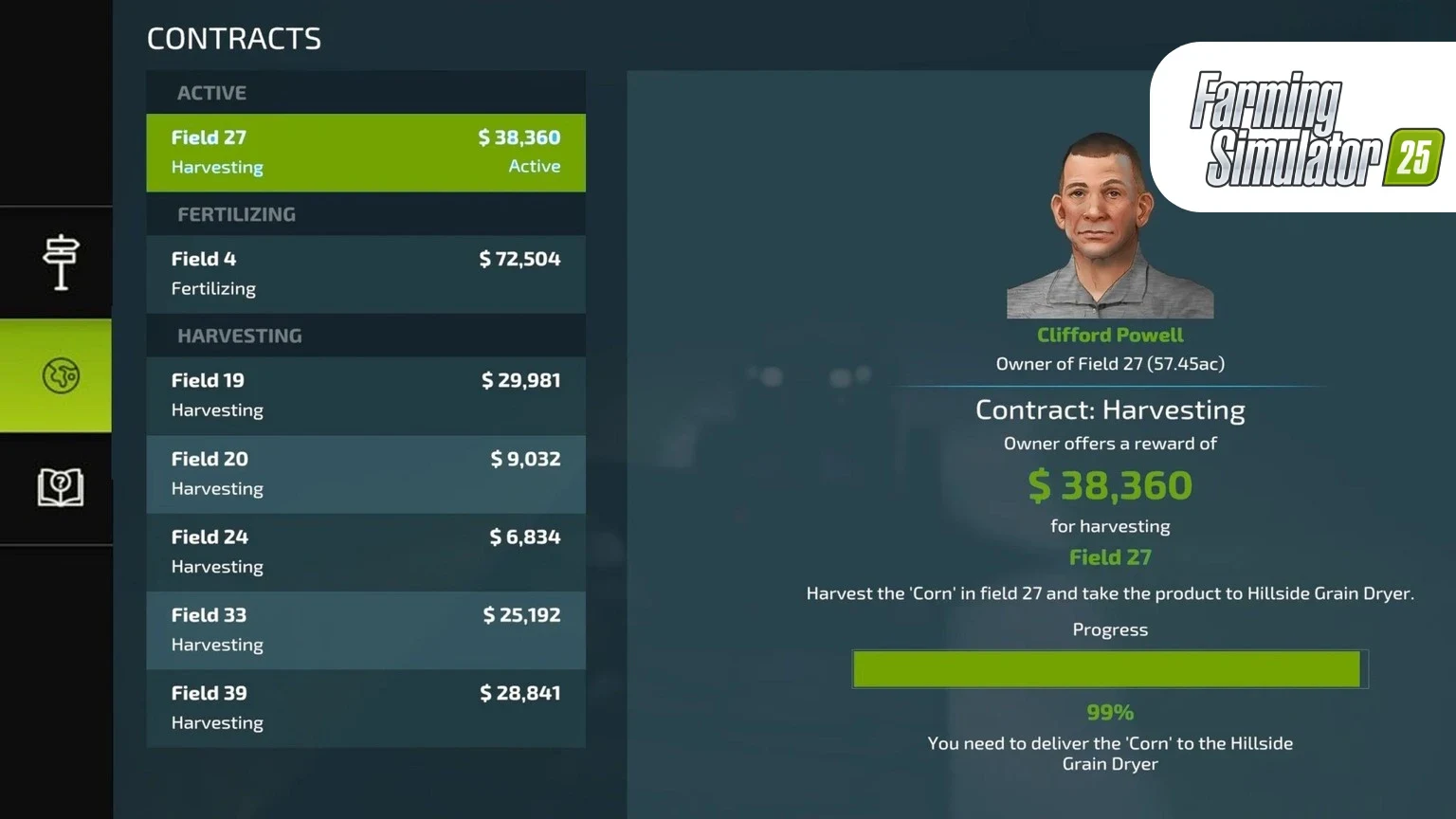
Contracts are the fastest way to earn before your farm is built up. Other farms on the map are always short on help, so check the contract screen in the menu and talk to your neighbors directly. Jobs cover harvesting, sowing, and forestry work like cutting or moving trees. They also let you test machines and crops you don't own yet. If you started in Start from Scratch mode, you'll likely need contract work to build cash before you can afford land and machines.
To get the most out of them:
- Open the contract screen and look at jobs near your farm first. Shorter trips leave more of your time for the paid work.
- Compare the reward with the lease cost. Each job shows its payout and any equipment fee, and both change from job to job and map to map.
- Borrow equipment instead of buying it. Contracts let you use your own machines or lease the ones a job needs, so you can take work before you own a full setup.
- Chain similar jobs in the same area. Several harvests or sowings in one spot cut travel time and keep the same equipment working.
- Deliver harvests to the point the contract names. A harvest contract tells you both the crop and where it has to go.
Pay varies so much from job to job that there's no standard amount to plan around. A big reward can still earn less than a smaller nearby job once you add the lease fee and the drive. Think of each reward as the value of that one job, not a rate you can count on for every contract.
Build a Large Tarp Greenhouse for Steady Lettuce Income
Once contracts are paying, a greenhouse adds income without any field work. The Large Tarp Greenhouse grows lettuce from water alone, so you don't need to buy seed or fertilizer for it. Among the production options, it has the quickest payback, which makes it a strong first build.
Here's how to set it up:
- Buy a Large Tarp Greenhouse for 36,000 from the build menu and place it on land you own.
- Get it water. Greenhouse crops need fresh water, which you can carry in a water trailer from a nearby lake or river. A water tank placed from the build menu is the other option.
- Sell the lettuce at a selling point, or process it further for a higher value.
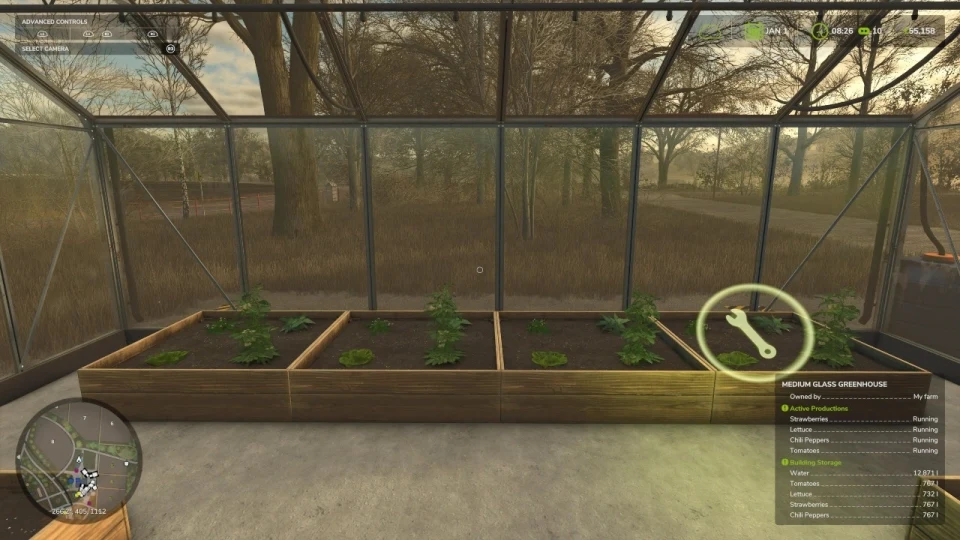
Water is the reason this setup pays back so quickly. Greenhouses stand out because the water they use costs nothing when it comes from a lake or river. The greenhouse uses about 8,064 L of water a month and earns about 7,151 a month after running costs, which covers the 36,000 in roughly five months.
Those figures come with conditions. They assume Normal difficulty and average yearly prices, and they leave out the time spent hauling water and the cost of the land. A greenhouse far from a water source can take longer to pay off, and so can a stretch when lettuce sells below its yearly average.
Lettuce is the quickest crop for this building. Tomatoes and garlic come next at about 10 months to pay back, and other crops grown in the same greenhouse take 11 to 14 months.
Choose Field Crops by Gross Return Per Hectare
Field crops are the heart of arable farming, and the game lists each crop's yield and average selling price. Multiply the two and you get gross return per hectare, which is the money a field brings in before you pay for seed, fertilizer, fuel, wages, land, and equipment. That makes it a useful way to compare crops, but it isn't profit.
Easy difficulty and New Farmer average prices. Gross per hectare before costs.
| Crop | Yield per ha | Price per 1,000 L | Gross per ha | Plant | Harvest |
|---|---|---|---|---|---|
| Wheat | 17,800 L | €1,011 | about €17,996 | Sep–Oct | Jul–Aug |
| Barley | 19,200 L | €938 | about €18,010 | Sep–Oct | Jun–Jul |
| Canola | 11,600 L | €1,808 | about €20,973 | Aug–Sep | Jul–Aug |
| Sugarcane | 226,800 L | €357 | about €80,968 | Mar–Apr | Oct–Nov |
| Sugar beet | 115,600 L | €516 | about €59,650 | Mar–Apr | Oct–Nov |
| Potatoes | 82,600 L | €666 | about €55,012 | Mar–Apr | Aug–Oct |
| Rice | 13,200 L | €3,300 | about €43,560 | Apr–May | Aug–Sep |
| Cotton | 9,940 L | €3,755 | about €37,325 | Feb–Mar | Oct–Nov |
Wheat, barley, and canola are the easiest starters because they all work with basic grain machinery. That means a tractor, cultivator, seeder, weeder, fertilizer spreader, trailer, and a combine with a grain header, which can harvest many crops. Canola earns the most per hectare of the three, while wheat and barley land close to each other.
The higher figures further down the table come with more work. Sugarcane needs 12,000 L of seed per hectare, compared with 308 L for wheat, and sugar beet and potatoes need plowing after harvest or you lose profit. Rice needs paddy fields set up for it, so it isn't a starter crop. Sugarcane has the biggest gross figure in the table, but that number doesn't include its seed or the extra work.
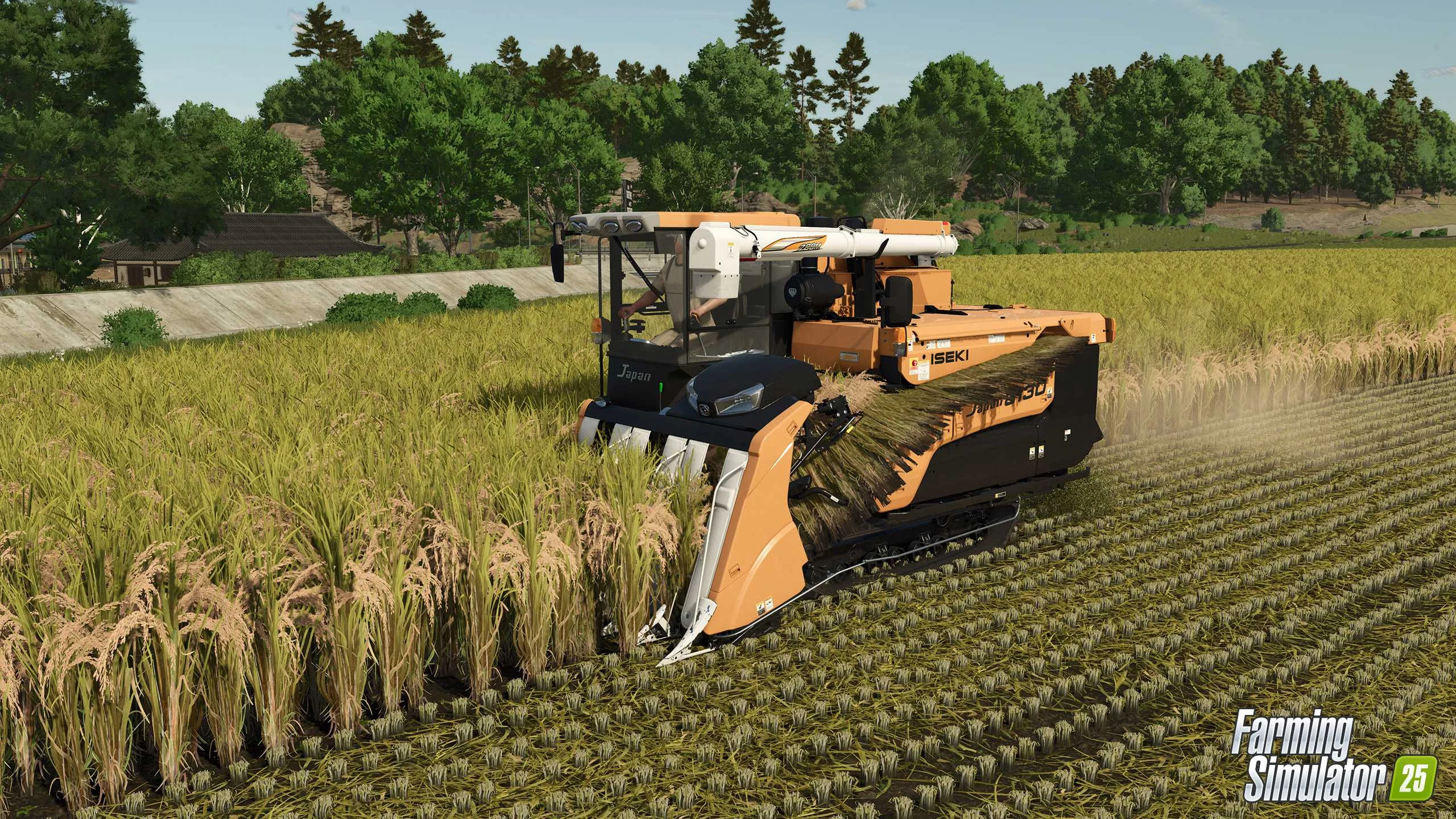
Whichever crops you pick, fertilize at least once per crop cycle and clear weeds early, since both protect your yield. Those inputs cost money, so count them in your planning. Planting and harvest windows only matter while seasonal growth is on, and you can turn it off in the game settings if you'd rather plant at any time. Prices also change by map, difficulty, and where you sell, so use these numbers to compare crops rather than to predict your exact income.
Store Crops and Sell When Prices Are Better
Crop prices move through the year, so the day you harvest isn't always the best day to sell. Some crops can go into a silo, which holds them until you're ready to sell. The Prices screen shows what each business will pay for your goods, so it's the best place to decide.
- Check the Prices screen before you harvest and note what each business pays for that crop.
- Place a silo on your farmland in build mode if the crop can be stored.
- Put the harvest in storage when prices are low, and keep an eye on how they move.
- Sell from the silo when a business pays more than you'd get at harvest.
The best selling point and the best month depend on your map, crop, and save, so don't plan around one peak month. Look at the price graph for your crop and check how much room your silo has before you commit. A full silo can't take the next harvest, so plan the timing along with the price.
Scale Up to a Kimchi Chain in Farming Simulator 25
Once lettuce income is coming in, a bigger chain is the next step. Four Large Tarp Greenhouses, each growing one of chili peppers, spring onion, garlic, and napa cabbage, feed a small Preserved Food Factory that turns them into kimchi. The full setup costs 180,000 and uses about 22,368 L of water a month, so plan your water supply before you build.
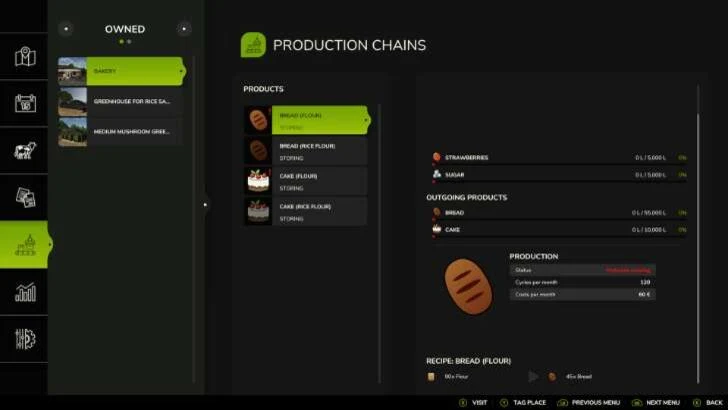
Under the same conditions, the chain earns about 13,188 a month and pays back in 14 months. That's more monthly profit than lettuce alone, but it needs five buildings, much more cash, and a longer setup, so treat it as a second-stage project. Bigger chains take longer again. A bread chain, for example, costs about 438,000 and pays back in 55 months, so it's a long-term build rather than a quick return.
Animals can add income later, too. Chickens are easy to look after and produce eggs, and goats produce milk that can be processed into goat cheese. Both need regular feed and care before their products sell, so treat them as a second-phase option rather than a fast start.
Borrow Money Only for a Short Gap
The mode you started in decides how much cash you begin with. New Farmer gives you machines and some land from the start, while Farm Manager comes with a loan you have to pay back. If you need money for a greenhouse or a machine before income arrives, you can take extra loans from the bank.
Loans cost interest, and that interest is charged at the end of each month. The longer a loan sits, the more it eats into what you earn, so pay it back as quickly as you can. Check the finance screen first, since it shows your income, expenses, and any loan.
A loan that's cleared fast can help you build sooner. One that sits for months can cancel out the gains it was meant to fund.