


Your first seed purchases in Grow a Garden 2 should fix cash flow before they chase rarity. Carrot gets the farm moving, but Strawberry and Blueberry are the first real buys because they keep producing after the first harvest. Once those are planted, Tomato, Apple, Corn, and Cactus are the early upgrades that make more sense than buying every single-harvest seed as soon as it appears.
For exact seed prices and obtainment routes, keep the Grow a Garden 2 seeds list nearby. The route below is about what to grab first, what to delay, and when defensive plants start mattering.
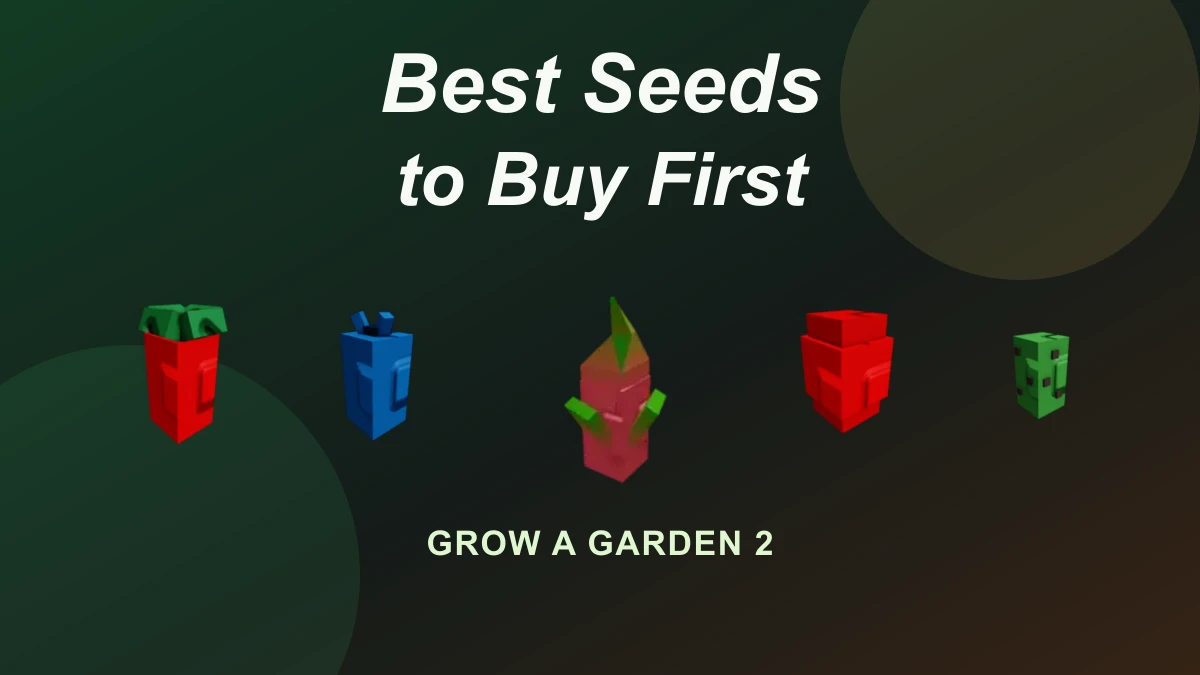
The short first-buy route
Start with the cheapest multi-harvest seeds, then climb into stronger plants once your plot can keep earning while you save. If the shop stock changes, use the same rule: buy the best affordable multi-harvest option before saving for expensive plants.
| Stage | Buy first | Why it works |
|---|---|---|
| Opening money | Carrot only until you can switch | It costs almost nothing, but it is single-harvest, so do not stay there longer than needed. |
| First steady income | Strawberry, then Blueberry | Both are cheap multi-harvest seeds, which makes them better early cash-flow picks than Tulip. |
| First upgrades | Tomato, then Apple | They cost more, but they stay multi-harvest and give your plot a cleaner income base. |
| Early mid-game | Corn, then Cactus | Both are multi-harvest. Cactus also starts introducing defensive value once night stealing matters. |
| Bigger savings | Dragon Fruit and stronger high-rarity plants | Save for these after your garden already earns steadily. They are not the first step out of starter seeds. |
If you want the simplest answer, buy Strawberry and Blueberry as soon as you can, then work toward Tomato and Apple. Corn and Cactus are the next practical jump when you are earning thousands of Sheckles instead of counting every small sale.
Why cheap multi-harvest seeds come first
Multi-harvest seeds are easier to build around because the plant keeps producing after the first pickup. A single-harvest crop can still be useful, but it asks you to replant every time. Early on, that means more interruptions and more chances to spend your small budget on a plant that does not keep working.
That is why Strawberry and Blueberry beat Tulip as first upgrades. Tulip costs more than Blueberry and looks like progress because it is Uncommon, but it is still single-harvest. Blueberry is cheaper, keeps producing, and gives you a steadier path toward Tomato.
The same idea applies later. Bamboo and Pineapple can be fine when you are experimenting, but they are not the cleanest first buys because both are single-harvest. A new farm usually wants repeat production before it wants one-time plant flips.
What to buy at each early budget
When you are near 10 to 25 Sheckles, switch from Carrot into Strawberry and Blueberry. Keep enough of them planted that you are not waiting on one harvest to decide your next move.
When you reach the 200 to 400 Sheckles range, Tomato and Apple become the next comfortable upgrades. They are still simple Seed Shop buys, and their multi-harvest behavior makes them better long-term plot fillers than Tulip.
When you are saving in the thousands, look at Corn and Cactus. Corn is the cleaner income bridge. Cactus is especially useful once your crops are valuable enough that night stealing becomes more than background noise, because its defensive role gives it a second job beyond selling fruit.
After that, stop thinking only in price order. Dragon Fruit is a strong target because it is multi-harvest and sits below several huge late-game prices, but it still makes more sense after you already have a plot earning reliably. If buying one expensive seed leaves the rest of your garden empty, you moved too early.
Seeds to avoid buying too early
Not every seed that costs more is a better first purchase. Early Sheckles should go into plants that keep the farm producing.
- Skip Tulip as an early priority unless you want it for collection or variety. Blueberry is cheaper and multi-harvest.
- Delay Bamboo and Pineapple if your goal is steady income. They are single-harvest and can slow the climb if you buy them before multi-harvest options are stable.
- Treat Mushroom as a later single-harvest option, not the first thing to save for. It can be useful, but it does not solve early cash flow the way repeat producers do.
- Do not plan your first route around Ghost Pepper Pack plants. They come from a separate pack route, so they are not normal Seed Shop stepping stones.
- Do not wait for ultra-expensive defensive plants before building income. Dragon's Breath, Moon Bloom, Venus Fly Trap, Poison Apple, and similar high-rarity plants belong after your farm can afford misses and restock luck.
The common trap is buying the next higher rarity because it feels like progress. In the first stretch, harvest type matters more than the color of the rarity label.
When defensive plants become worth it
Grow a Garden 2 mixes farming with night stealing. The Roblox description calls out that stealing starts at night, and that changes how valuable your plot becomes once better fruit is growing. Early on, though, defense should not beat income. A weak garden with one expensive defensive plant still has a weak money loop.
Cactus is the first seed where defense can start making sense because it is still within an early mid-game budget and remains multi-harvest. Stronger defensive plants are exciting, but their prices and rarity make them long-term targets. Buy them when your garden can keep earning while you wait for shop stock, not when you are still trying to afford Tomato.
If you are splitting money between seeds and protection, keep the order simple: income first, basic defense second, rare defensive plants later.
Final early seed priority
For most new players, the first-buy order should look like this:
- Use Carrot only to start earning.
- Buy Strawberry as soon as you can.
- Add Blueberry for better cheap multi-harvest income.
- Move into Tomato, then Apple.
- Save toward Corn and Cactus when your income reaches the thousands.
- Start chasing Dragon Fruit and stronger high-rarity plants only after the farm already earns without constant replanting.
That route keeps the early game boring in the right way. A steady plot gives you more chances to buy pets, sprinklers, crates, and later seeds without getting stuck after one flashy purchase. For the broader game setup around seeds, night stealing, pets, and upgrades, use the Grow a Garden 2 wiki. For bonus rewards, use the Grow a Garden 2 codes page without replacing the seed-buying route.