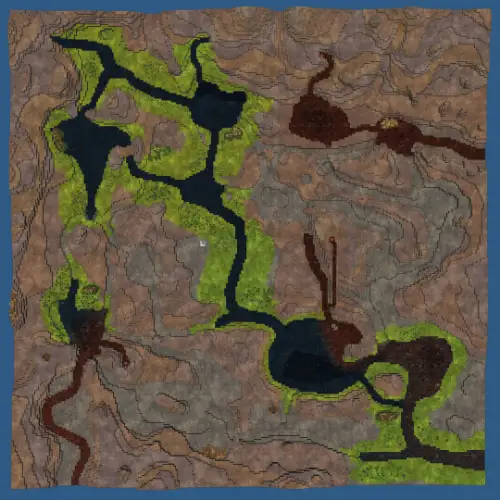

Timberborn is a city builder where you lead a colony of beavers through land where rivers can run dry. Buildings are how your beavers get what they need: water, food, a place to sleep, power and science. Each one has a job, and the colony only holds together when they work as a set. Learning how buildings fit together is what gets a small camp through its first drought.
Showing 82 of 211 items.
Category
Housing
Advanced Breeding Pod
- Faction
- Iron Teeth
- Science Unlock
- 1,000 Science Points
- Construction Cost
- 5 Treated Planks, 2 Metal Blocks
- Footprint
- 1 × 1 tile
- Capacity
- -
Barrack
- Faction
- Iron Teeth
- Science Unlock
- Available at start
- Construction Cost
- 40 Logs
- Footprint
- 3 × 2 tiles
- Capacity
- 10 beds
Breeding Pod
- Faction
- Iron Teeth
- Science Unlock
- Available at start
- Construction Cost
- 10 Logs
- Footprint
- 1 × 1 tile
- Capacity
- -
Double Lodge
- Faction
- Folktails
- Science Unlock
- 150 Science Points
- Construction Cost
- 20 Logs
- Footprint
- 2 × 2 tiles
- Capacity
- 6 beds
Large Barrack
- Faction
- Iron Teeth
- Science Unlock
- 400 Science Points
- Construction Cost
- 70 Logs
- Footprint
- 3 × 3 tiles
- Capacity
- 16 beds
Large Rowhouse
- Faction
- Iron Teeth
- Science Unlock
- 600 Science Points
- Construction Cost
- 35 Logs
- Footprint
- 2 × 1 tiles
- Capacity
- 8 beds
Lodge
- Faction
- Folktails
- Science Unlock
- Available at start
- Construction Cost
- 12 Logs
- Footprint
- 2 × 2 tiles
- Capacity
- 3 beds
Mini Lodge
- Faction
- Folktails
- Science Unlock
- 50 Science Points
- Construction Cost
- 5 Logs
- Footprint
- 1 × 2 tiles
- Capacity
- 1 bed
Rowhouse
- Faction
- Iron Teeth
- Science Unlock
- 180 Science Points
- Construction Cost
- 20 Logs
- Footprint
- 2 × 1 tiles
- Capacity
- 5 beds
Triple Lodge
- Faction
- Folktails
- Science Unlock
- 250 Science Points
- Construction Cost
- 35 Logs
- Footprint
- 3 × 2 tiles
- Capacity
- 9 beds
Category
Food
Aquatic Farmhouse
- Faction
- Folktails
- Science Unlock
- 150 Science Points
- Construction Cost
- 30 Logs, 10 Planks
- Footprint
- 2 × 3 tiles
Bakery
- Faction
- Folktails
- Science Unlock
- 160 Science Points
- Construction Cost
- 15 Logs, 15 Planks, 10 Gears
- Footprint
- 3 × 2 tiles
Beehive
- Faction
- Folktails
- Science Unlock
- 400 Science Points
- Construction Cost
- 10 Logs, 15 Planks, 20 Paper
- Footprint
- 1 × 1 tile
Coffee Brewery
- Faction
- Iron Teeth
- Science Unlock
- 500 Science Points
- Construction Cost
- 10 Gears, 25 Treated Planks, 15 Metal Blocks
- Footprint
- 2 × 3 tiles
- Power Use
- 200 HP
Efficient Farmhouse
- Faction
- Folktails
- Science Unlock
- Available at start
- Construction Cost
- 25 Logs
- Footprint
- 3 × 2 tiles
- Power Use
- -
Farmhouse
- Faction
- Iron Teeth
- Science Unlock
- Available at start
- Construction Cost
- 20 Logs
- Footprint
- 2 × 2 tiles
- Power Use
- -
Fermenter
- Faction
- Iron Teeth
- Science Unlock
- Available at start
- Construction Cost
- 25 Logs
- Footprint
- 1 × 3 tiles
- Power Use
- 50 HP
Food Factory
- Faction
- Iron Teeth
- Science Unlock
- 300 Science Points
- Construction Cost
- 40 Planks, 15 Gears, 10 Metal Blocks
- Footprint
- 3 × 3 tiles
- Power Use
- 120 HP
Gatherer Flag
- Faction
- Both
- Science Unlock
- Available at start
- Construction Cost
- -
- Footprint
- 1 × 1 tile
- Power Use
- -
Grill
- Faction
- Folktails
- Science Unlock
- Available at start
- Construction Cost
- 25 Logs
- Footprint
- 2 × 2 tiles
- Power Use
- -
Gristmill
- Faction
- Folktails
- Science Unlock
- 180 Science Points
- Construction Cost
- 40 Logs, 20 Planks, 20 Gears
- Footprint
- 3 × 2 tiles
- Power Use
- 60 HP
Hydroponic Garden
- Faction
- Iron Teeth
- Science Unlock
- 200 Science Points
- Construction Cost
- 20 Planks, 10 Gears, 5 Metal Parts
- Footprint
- 3 × 3 tiles
- Power Use
- -
Oil Press
- Faction
- Iron Teeth
- Science Unlock
- 120 Science Points
- Construction Cost
- 40 Logs, 10 Metal Parts
- Footprint
- 2 × 2 tiles
- Power Use
- 50 HP
Category
Water
Aquifer Drill
- Faction
- Both
- Science Unlock
- 400 Science Points
- Construction Cost
- 40 Planks, 25 Gears, 15 Metal Blocks
- Footprint
- 3 × 3 tiles
- Power Use
- 400 HP
Badwater Dome
- Faction
- Folktails
- Science Unlock
- 1,000 Science Points
- Construction Cost
- 100 Planks, 200 Gears, 100 Metal Blocks
- Footprint
- 3 × 3 tiles
- Power Use
- -
Badwater Pressurizer
- Faction
- Iron Teeth
- Science Unlock
- 4,000 Science Points
- Construction Cost
- 300 Gears, 200 Metal Blocks, 50 Explosives
- Footprint
- 3 × 3 tiles
- Power Use
- -
Badwater Pump
- Faction
- Folktails
- Science Unlock
- 250 Science Points
- Construction Cost
- 20 Logs, 10 Gears, 5 Metal Blocks
- Footprint
- 2 × 3 tiles
- Power Use
- -
Badwater Rig
- Faction
- Folktails
- Science Unlock
- 4,000 Science Points
- Construction Cost
- 400 Gears, 200 Treated Planks, 150 Metal Blocks
- Footprint
- 3 × 3 tiles
- Power Use
- -
Centrifuge
- Faction
- Both
- Science Unlock
- 600 Science Points
- Construction Cost
- 60 Planks, 40 Gears, 30 Metal Blocks
- Footprint
- 3 × 3 tiles
- Power Use
- 200 HP
Compact Mechanical Pump
- Faction
- Both
- Science Unlock
- 4,000 Science Points
- Construction Cost
- 50 Gears, 25 Treated Planks, 25 Metal Blocks
- Footprint
- 1 × 1 tile
- Power Use
- 700 HP
Deep Badwater Pump
- Faction
- Iron Teeth
- Science Unlock
- 250 Science Points
- Construction Cost
- 20 Logs, 10 Gears, 5 Metal Blocks
- Footprint
- 2 × 3 tiles
- Power Use
- -
Deep Mechanical Pump
- Faction
- Iron Teeth
- Science Unlock
- 2,500 Science Points
- Construction Cost
- 50 Gears, 25 Treated Planks, 25 Metal Blocks
- Footprint
- 3 × 3 tiles (plus-shaped)
- Power Use
- 700 HP
Deep Water Pump
- Faction
- Iron Teeth
- Science Unlock
- Available at start
- Construction Cost
- 12 Logs
- Footprint
- 2 × 3 tiles
Discharge
- Faction
- Both
- Science Unlock
- 250 Science Points
- Construction Cost
- 10 Logs, 10 Planks
- Footprint
- 2 × 1 tiles
Large Water Pump
- Faction
- Folktails
- Science Unlock
- 400 Science Points
- Construction Cost
- 20 Logs, 5 Gears, 10 Treated Planks
- Footprint
- 3 × 4 tiles
Mechanical Pump
- Faction
- Folktails
- Science Unlock
- 2,000 Science Points
- Construction Cost
- 50 Gears, 15 Treated Planks
- Footprint
- 3 × 3 tiles
- Power Use
- 500 HP
Water Pump
- Faction
- Folktails
- Science Unlock
- Available at start
- Construction Cost
- 12 Logs
- Footprint
- 2 × 3 tiles
- Power Use
- -
Category
Wood
Forester
- Faction
- Both
- Science Unlock
- 30 Science Points
- Construction Cost
- 10 Logs, 7 Planks
- Footprint
- 2 × 2 tiles
- Power Use
- -
Gear Workshop
- Faction
- Both
- Science Unlock
- 100 Science Points
- Construction Cost
- 15 Logs, 25 Planks
- Footprint
- 3 × 2 tiles
- Power Use
- 120 HP
Industrial Lumber Mill
- Faction
- Iron Teeth
- Science Unlock
- Available at start
- Construction Cost
- 20 Logs
- Footprint
- 2 × 3 tiles
- Power Use
- 75 HP
Lumber Mill
- Faction
- Folktails
- Science Unlock
- Available at start
- Construction Cost
- 15 Logs
- Footprint
- 3 × 2 tiles
- Power Use
- 50 HP
Lumberjack Flag
- Faction
- Both
- Science Unlock
- Available at start
- Construction Cost
- -
- Footprint
- 1 × 1 tile
- Power Use
- -
Paper Mill
- Faction
- Folktails
- Science Unlock
- 250 Science Points
- Construction Cost
- 40 Logs, 40 Planks, 15 Gears
- Footprint
- 3 × 2 tiles
- Power Use
- 80 HP
Printing Press
- Faction
- Folktails
- Science Unlock
- 400 Science Points
- Construction Cost
- 50 Logs, 30 Gears, 30 Metal Blocks
- Footprint
- 4 × 2 tiles
- Power Use
- 150 HP
Tapper's Shack
- Faction
- Both
- Science Unlock
- 500 Science Points
- Construction Cost
- 20 Logs, 20 Planks, 10 Gears
- Footprint
- 2 × 2 tiles
- Power Use
- -
Wood Workshop
- Faction
- Both
- Science Unlock
- 800 Science Points
- Construction Cost
- 20 Logs, 40 Planks, 40 Gears
- Footprint
- 4 × 2 tiles
- Power Use
- 250 HP
Category
Metal
Efficient Mine
- Faction
- Iron Teeth
- Science Unlock
- 4,000 Science Points
- Construction Cost
- 300 Logs, 450 Gears, 300 Treated Planks
- Footprint
- 5 × 5 tiles
Metalsmith
- Faction
- Iron Teeth
- Science Unlock
- 150 Science Points
- Construction Cost
- 30 Planks, 10 Scrap Metal
- Footprint
- 2 × 2 tiles
Mine
- Faction
- Folktails
- Science Unlock
- 4,000 Science Points
- Construction Cost
- 250 Logs, 350 Gears, 200 Treated Planks
- Footprint
- 5 × 5 tiles
Scavenger Flag
- Faction
- Both
- Science Unlock
- Folktails: 250 Science Points; Iron Teeth: Available at start
- Construction Cost
- -
- Footprint
- 1 × 1 tile
- Power Use
- -
Smelter
- Faction
- Both
- Science Unlock
- 300 Science Points
- Construction Cost
- 50 Planks, 20 Gears, 30 Scrap Metal
- Footprint
- 2 × 4 tiles
- Power Use
- 200 HP
Category
Power
Clutch
- Faction
- Both
- Science Unlock
- 400 Science Points
- Construction Cost
- 2 Gears, 6 Metal Blocks
- Footprint
- 1 × 1 tile
- Power Output
- -
Compact Water Wheel
- Faction
- Iron Teeth
- Science Unlock
- Available at start
- Construction Cost
- 25 Logs
- Footprint
- 3 × 1 tiles
- Power Output
- 120 HP per m³/s of flow
Geothermal Engine
- Faction
- Both
- Science Unlock
- 160 Science Points
- Construction Cost
- 50 Logs, 30 Planks
- Footprint
- 3 × 3 tiles
- Power Output
- 400 HP
Gravity Battery
- Faction
- Both
- Science Unlock
- 400 Science Points
- Construction Cost
- 40 Planks, 40 Gears, 10 Metal Blocks
- Footprint
- 1 × 2 tiles
- Power Output
- Stores up to 62,000 HPh, depending on available drop
Impermeable Power Shaft
- Faction
- Both
- Science Unlock
- 300 Science Points
- Construction Cost
- 12 Logs, 6 Gears, 10 Metal Blocks
- Footprint
- 1 × 1 tile
- Power Output
- -
Large Power Wheel
- Faction
- Iron Teeth
- Science Unlock
- Available at start
- Construction Cost
- 50 Logs
- Footprint
- 3 × 3 tiles
- Power Output
- 300 HP base, up to 510 HP with movement-speed bonuses
Large Water Wheel
- Faction
- Iron Teeth
- Science Unlock
- 200 Science Points
- Construction Cost
- 70 Logs, 80 Planks
- Footprint
- 5 × 2 tiles
- Power Output
- 540 HP per m³/s of flow
Large Wind Turbine
- Faction
- Folktails
- Science Unlock
- 1,400 Science Points
- Construction Cost
- 40 Planks, 20 Gears, 30 Paper
- Footprint
- 3 × 3 tiles
- Power Output
- Up to 300 HP, depending on wind strength
Power Shaft
- Faction
- Both
- Science Unlock
- Available at start
- Construction Cost
- 1 Log
- Footprint
- 1 × 1 tile
- Power Output
- -
Power Wheel
- Faction
- Folktails
- Science Unlock
- Available at start
- Construction Cost
- 20 Logs
- Footprint
- 3 × 1 tiles
- Power Output
- 50 HP base, up to 85 HP with movement-speed bonuses
Steam Engine
- Faction
- Iron Teeth
- Science Unlock
- 400 Science Points
- Construction Cost
- 20 Logs, 25 Gears, 40 Metal Parts
- Footprint
- 3 × 3 tiles
- Power Output
- 400 HP
Vertical Power Shaft
- Faction
- Both
- Science Unlock
- 40 Science Points
- Construction Cost
- 2 Logs, 2 Planks, 1 Gear
- Footprint
- 1 × 1 tile
- Power Output
- -
Water Wheel
- Faction
- Folktails
- Science Unlock
- Available at start
- Construction Cost
- 50 Logs
- Footprint
- 3 × 2 tiles
- Power Output
- 270 HP per m³/s of flow
Wind Turbine
- Faction
- Folktails
- Science Unlock
- 120 Science Points
- Construction Cost
- 20 Logs, 20 Planks
- Footprint
- 3 × 3 tiles
- Power Output
- Up to 150 HP, depending on wind strength
Category
Landscaping
Contamination Barrier
- Faction
- Folktails
- Science Unlock
- 400 Science Points
- Construction Cost
- 5 Planks, 1 Metal Block
- Footprint
- 1 × 1 tile
- Power Use
- -
Dam
- Faction
- Both
- Science Unlock
- Available at start
- Construction Cost
- 20 Logs
- Footprint
- 1 × 1 tile
- Power Use
- -
Dirt Excavator
- Faction
- Both
- Science Unlock
- 2,000 Science Points
- Construction Cost
- 100 Gears, 100 Treated Planks, 50 Metal Blocks
- Footprint
- 5 × 6 tiles
- Power Use
- 200 HP
Double Dynamite
- Faction
- Both
- Science Unlock
- 900 Science Points
- Construction Cost
- 1 Explosive, 1 Extract
- Footprint
- 1 × 1 tile
Double Floodgate
- Faction
- Both
- Science Unlock
- 250 Science Points
- Construction Cost
- 20 Logs, 10 Planks
- Footprint
- 1 × 1 tile
Dynamite
- Faction
- Both
- Science Unlock
- 600 Science Points
- Construction Cost
- 1 Explosive
- Footprint
- 1 × 1 tile
Explosives Factory
- Faction
- Both
- Science Unlock
- 400 Science Points
- Construction Cost
- 30 Planks, 30 Gears; Folktails: 30 Metal Blocks; Iron Teeth: 60 Metal Parts
- Footprint
- 4 × 2 tiles
- Power Use
- 150 HP
Fill Valve
- Faction
- Both
- Science Unlock
- 300 Science Points
- Construction Cost
- 5 Planks, 5 Metal Blocks
- Footprint
- 1 × 2 tiles
- Power Use
- -
Floodgate
- Faction
- Both
- Science Unlock
- 150 Science Points
- Construction Cost
- 10 Logs, 5 Planks
- Footprint
- 1 × 1 tile
- Power Use
- -
Impermeable Floor
- Faction
- Both
- Science Unlock
- 200 Science Points
- Construction Cost
- 1 Metal Block
- Footprint
- 1 × 1 tile
Irrigation Barrier
- Faction
- Iron Teeth
- Science Unlock
- 400 Science Points
- Construction Cost
- 10 Logs, 5 Treated Planks
- Footprint
- 1 × 1 tile
Levee
- Faction
- Both
- Science Unlock
- 120 Science Points
- Construction Cost
- 12 Logs
- Footprint
- 1 × 1 tile
Terrain Block
- Faction
- Both
- Science Unlock
- 1,000 Science Points
- Construction Cost
- 4 Dirt
- Footprint
- 1 × 1 tile
Throttling Valve
- Faction
- Both
- Science Unlock
- 500 Science Points
- Construction Cost
- 5 Treated Planks, 5 Metal Blocks
- Footprint
- 1 × 2 tiles
Triple Dynamite
- Faction
- Both
- Science Unlock
- 1,200 Science Points
- Construction Cost
- 1 Explosive, 2 Extract
- Footprint
- 1 × 1 tile
Triple Floodgate
- Faction
- Both
- Science Unlock
- 500 Science Points
- Construction Cost
- 30 Logs, 15 Planks
- Footprint
- 1 × 1 tile
Tunnel
- Faction
- Both
- Science Unlock
- 2,000 Science Points
- Construction Cost
- 6 Planks, 1 Explosive, 1 Extract
- Footprint
- 1 × 1 tile
What Buildings Do in Timberborn
Buildings are the structures you place to keep a beaver colony running, and they fall into groups by job. Some make goods like food, logs, planks and metal, and others store them. Some make power or handle water, some house beavers, and some run science or keep beavers content with leisure and decorations. Paths and platforms count as buildings too, since they hold the whole layout together.
The game has two factions, Folktails and Iron Teeth, and both need water, food and shelter, so the jobs stay the same from one to the other. Many buildings are open to both factions, while others come in a separate version for each. A Folktails house and an Iron Teeth house look different, but they do the same job for their beavers.
How Buildings Get Built
To build something, pick it from the build menu and place it on the map. Builders from a Builders' Hut do the work of putting it up, and each hut employs up to four of them. A site waits until its materials are available in its district, and a site the builders can't reach gets passed over, so run paths out to every new site.
When several projects compete for builders, you can set priorities. The priority tool reorders the builders' to-do list. Use it to move whatever you need first, like a water tank before a dry spell, to the top of the list.
Unlocking Buildings With Science Points
Most buildings are locked at the start and have to be unlocked with Science Points. Timberborn has no tech tree with prerequisites, so every unlockable building shows up in your menu from the start, and you can buy any of them once you have enough points. That freedom makes choosing the real skill. The best rule is to unlock whatever solves your biggest problem right now, such as a water shortage or a lack of planks, rather than whatever looks most impressive.
The Inventor is the usual first step, since it's available from the start and gives you your first Science Points. Bigger science buildings, such as the Observatory for Folktails and the Numbercruncher for Iron Teeth, produce far faster, so they're worth unlocking once your water and food are stable. Keep them running, because the points they make decide how quickly you can afford everything else on your list.
Which Buildings to Build First
Water comes first, because beavers need a drink every day. Get a Water Pump running early, and rely on the Small Tank, which is available from the start, until you can unlock a larger one. Unlock that bigger tank before your first drought, since it holds far more water.
Food is next. A Gatherer Flag is available from the beginning, but berries run out quickly and grow back slowly, so move to farms before they do. Folktails gather berries, chestnuts and dandelions, while Iron Teeth gather mangrove fruit and coffee beans.
Housing comes next, since every beaver needs an assigned bed. The housing section below explains what each faction uses. Wood comes after that. Keep at least two lumberjack flags and a forester, since each lumberjack flag only cuts trees inside its marked area and the forester plants new ones. A Lumber Mill turns logs into planks, which many mid-level buildings need, but it runs on power, so plan a power source alongside it.
Water and Power in Droughts
A drought stops water from flowing out of every water source on the map, and any crop on land without irrigation withers and dies. Farms farthest from a reservoir fail first, since the water beside them drops first. Droughts also tend to run longer each time they return, so it pays to prepare well before the first one arrives.
The main defense is keeping water where it is. Players usually dam rivers so reservoirs stay full long after the river stops moving, and floodgates let you close off those reservoirs before a dry spell hits. Floodgates also help manage the water levels that feed your irrigation. Tanks keep your beavers drinking through a dry spell, and they come in Small, Medium and Large sizes.
Build up your food stores before a drought too, since your beavers still need to eat while the fields are dry. Quick crops like carrots mature fast, which helps if you're caught short. Power has its own challenge, and that starts with knowing which sources survive a dry spell.
Folktails power their colony with water wheels, wind turbines and the Power Wheel, which a beaver works to generate power. Iron Teeth use water wheels, the Large Power Wheel and steam engines that burn logs. Power travels along shafts, and a building connects automatically when a shaft reaches it. A gap in the shaft network leaves everything beyond it without power, so check your shafts whenever a building seems dead.
The big difference is what keeps running through a drought. Water wheels need river flow, so they stop when the river dries up. Wind turbines run on wind and keep going through a drought, though they produce nothing in calm weather. A steam engine runs for as long as it has logs, and a Power Wheel keeps going while a beaver is working it.
Housing for Folktails and Iron Teeth
Every beaver needs a bed, and housing is how you give them one. Folktails live in the Lodge family, which runs from the Mini Lodge up to the Triple Lodge, with the Lodge and Double Lodge in between. Iron Teeth start with the Barrack and later unlock the Large Barrack, Rowhouse and Large Rowhouse.
Housing alone won't grow the Iron Teeth population, though. They need Breeding Pods, which turn water and food into new kits on a set schedule. Filling your beds doesn't add new beavers on its own, so plan for pods if you want your Iron Teeth population to grow.
Building Up With Platforms and Stairs
Platforms let you build upward. Each one fills a single tile and raises the ground by one level, and they cost planks. You can stack them as high as you like, as long as each one sits on something solid, such as the ground or another platform. Buildings, paths and more platforms can sit on top of them as well.
Beavers can't climb or jump, so stairs are how they reach upper levels. Spiral stairs take up one tile per level and can be stacked on each other, which makes a compact tower. Iron Teeth can also use Vertical Tubeways to carry their tube network between levels.
Removing a lower platform or building also removes anything above it that loses its support, so plan your upper floors before you tear anything out below. Start with a few levels and add more as production allows. Several stairways spread across a district work better than one very tall tower with a single staircase, because beavers at the top end up far from the services they need.
Districts and Connected Buildings
A District Center starts a self-contained district with its own population, resources and path network. Each district tracks its own population, well-being and resource stores, so a new district needs its own water, food and housing to work on its own. Beavers only use the buildings and resources inside their own district unless you connect them.
To link districts, build a District Crossing, which joins the path networks of two districts. Goods move across it according to each district's import settings, so you decide what crosses. Hauling Posts supply the haulers that move goods between storage and production buildings within a district.
Automation and Bots
Automation buildings let you set things up so they run on their own, reacting to conditions in your colony. Sensors read water depth, flow, contamination, weather, stock levels and the time of day, and relays and logic gates combine those readings into decisions. A common setup pairs a Depth Sensor with a floodgate, so reservoirs fill and drain without you touching them. Timers work the same way, and a Chronometer reads the in-game clock so it can switch things on during work hours, leisure hours or a window you choose.
Start with one small circuit, test it, and add more only when you need it. As the colony grows, automation takes a lot of routine checking off your plate. Bots are a separate kind of help. They're mechanical workers that take on simple jobs alongside the beavers. Folktails build Timberbots and Iron Teeth build Ironbots, and both are assembled in a chain: a Bot Part Factory makes the heads, chassis and limbs, and a Bot Assembler, run by a beaver, puts them together.
Bot workplaces also have to be unlocked with Science Points. Bots don't need food, water, housing or leisure, so they don't need well-being buildings to stay content. They're best at basic labor. They can't run every type of building, so beavers still handle much of the colony's work.
Well-Being Buildings and Happy Beavers
Each beaver has a well-being score that rises with every need it meets, and the colony's overall score is the average of them. Higher scores bring bonuses to work speed, movement speed and more, so it pays to manage this from the start. The basics come first, since beavers need water, food and a bed,. Missing one of these causes negative effects instead of just a lost bonus, so leisure buildings can't make up for a missing bed.
Variety matters too. Each different food covers its own nutrition need, so a mix of foods adds up. Processed food from a Grill or Bakery counts for more than raw ingredients, so cooking adds real value.
Once the basics are covered, other needs lift the score. Social time comes from places like the Campfire and the Rooftop Terrace, and Folktails also have the Agora, a shared meeting place. Fun comes from recreation buildings that beavers visit in their free time, and it's worth placing social and fun buildings within easy reach of housing.
Spirituality comes from faction-specific buildings, usually unlocked partway through the game with Science Points. Decorations such as statues, shrubs and fences add a passive boost, especially along busy paths. Monuments add Awe to the beavers living nearby.
FAQ
How do I get Science Points without power?
The Inventor is the answer. It needs no power at all, only one beaver worker, who adds a steady trickle of points every hour. That's modest next to later science buildings, but it works even in a colony with no power grid. The Observatory and Numbercruncher need power, and they produce far more.
What do bots run on?
Timberbots run on Biofuel, which a Refinery makes from crops and water. When one runs out, it stops until it reaches a Biofuel Tank, so a drought that halts crop growth can eventually leave your Timberbots without fuel. Ironbots recharge at Charging Stations, which run on power. A Control Tower boosts every Ironbot within its range without using any resources.
Why are my crops dying even though my tanks are full?
Tank water keeps your beavers drinking, but it doesn't reach your fields. Irrigation depends on the water level right next to a farm, so farms far from a reservoir lose their water first as levels fall, even when your tanks are full. Place farms beside a reservoir or river that can hold up through a dry spell.
How much do Monuments cost, and where should they go?
Monuments are late-game buildings that add Awe for the beavers nearby. They cost from about 1,000 up to about 20,000 Science Points, depending on the tier, so the largest ones take a long time to earn. Higher tiers also reach farther, so the biggest cover a wide area. Put them near the middle of your colony to bring the most beavers into range.