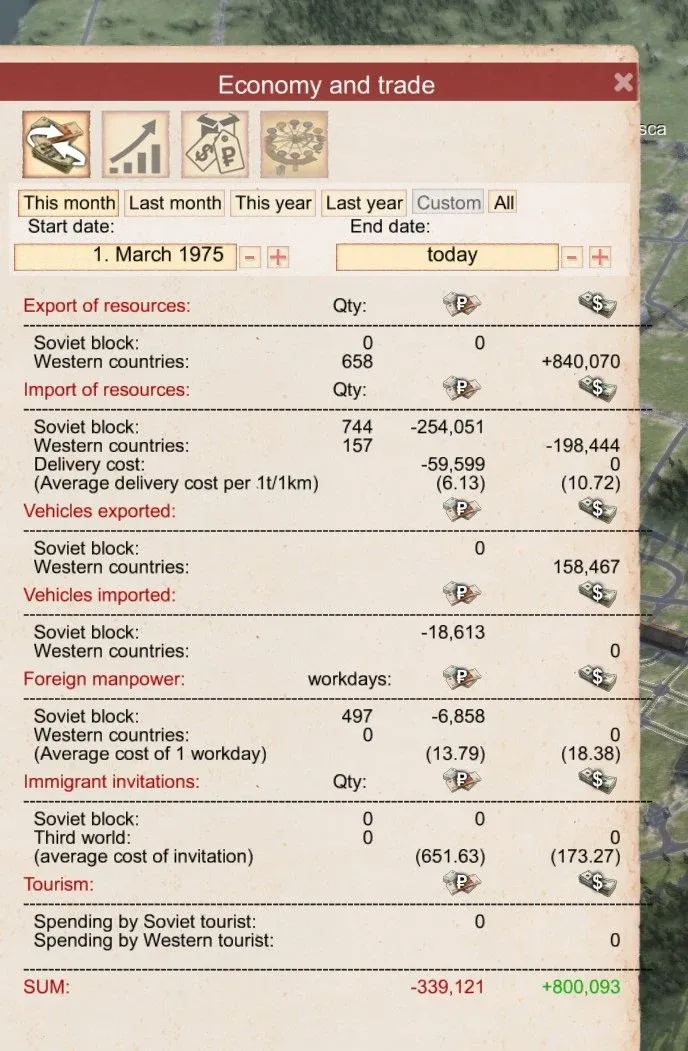


To grow your population in Workers & Resources: Soviet Republic, you need two things: invite citizens into finished residential buildings, and make sure your citizens can have children of their own. Invitations cost money in rubles or dollars, and births depend on health, food, and housing. Relocation only moves people between buildings, so it won't raise your total, and the real goal is to keep births ahead of deaths and escapes.
| Invitation | Group size | Currency | Who arrives |
|---|---|---|---|
| Invite from Soviet countries | 10 | Rubles | Mixed education levels, no uneducated citizens |
| Soviet experts | 5 | Rubles, 2.5x the cost per person | Guaranteed university education |
| Invite from third world | 10 | Dollars | Uneducated and often unhealthy, but cheaper to invite |
How to Invite Citizens Into Finished Housing in Soviet Republic
Invitations are the main way a new republic fills its first homes, and they only work once a residential building is finished. Get the basics ready before you invite anyone. New residents need food and warmth from the moment they arrive, and unmet needs pull down their happiness and health.
- Finish a residential building. Invitation options appear only after construction is complete.
- Set up nearby services. Citizens look for stores and other services within about 400 meters of home, so a stocked grocery store and a medical facility nearby make a big difference.
- Click the residential building. Its window opens with the invitation options.
- Choose an invitation. Select "Invite from Soviet countries" to spend rubles, "Invite from third world" to spend dollars, or the Soviet experts option when you need university-educated residents.
- Check the building after they arrive. Red remarks in the building window point to unmet needs, such as a room that's too cold, no access to a doctor, or not enough food. Fix those before you bring in another group.
If a building has fewer open slots than the group you chose, only the people who fit will arrive, and you pay only for them. That means you can invite into a nearly full building without paying for people who never move in.
Choosing the Right Invitation Type
Soviet immigrants are the simplest way to fill homes. None of them arrive uneducated, so most can take on most jobs as soon as they move in. Because they cost less per person than experts, they're the group you'll bring in most often.
Soviet experts are the right choice when a job needs a degree. Citizens with university education tend to go after jobs that require it, such as teachers, doctors, and researchers. Experts cost far more per person, so bring them in to fill a specific gap rather than to grow your numbers.
Third-world immigrants are the budget option, but they come with a trade-off. They start with poor health and no education, and uneducated citizens can't work any job until they finish school. If you choose this group, plan for schools and healthcare early so the lower price doesn't turn into lost workers.
How Births Grow Your Population Over Time
Births are how your population keeps growing once it's established. Citizens aged 21 or older who have their own apartment can have babies at random, and each newborn has a single parent. Children live with that parent and don't take up an apartment slot until they turn 21 and move out.
Growth builds on itself. Every new citizen can become a parent later, so bigger republics add people faster. The catch is that growth can stall once new adults can't find an apartment, which makes housing the most common limit.
Several things affect how often births happen:
- Health: Food and healthcare are crucial to births, and citizens with lower health are less likely to have babies.
- Satiety: Stores need to stay stocked so citizens stay fed.
- Happiness and loyalty: Both feed into the birth rate, so the care that keeps citizens content also helps your numbers.
- Research: Research can raise the birth rate.
Leave room for the adults you already have. When a child turns 21, they need a flat of their own. If none is free, they stay in the population as a 21+ citizen who still lives with their parents, and they take happiness penalties that make them highly likely to leave. It's worth keeping at least one empty residential building in each city so those adults have somewhere to move.
Keeping Citizens Alive and Happy So They Stay
Your population shrinks in two ways: deaths and escapes. In both cases the citizen simply disappears from your republic, so every loss cancels out a birth or an invitation. Protecting the people you already have matters as much as adding new ones.
Deaths happen when a citizen reaches the end of their lifespan. Lifespan depends mainly on health, and citizens with health at 90% or above can live to about 80. A health crisis can end a life early if health drops far enough. Older citizens feel it first when heating fails in winter.
Escapes happen when happiness falls to a critically low level. High satiety and loyalty can make a citizen reconsider, even when they're unhappy, so they act as a buffer. Happiness drops whenever needs or free-time demands go unmet.
What keeps citizens healthy:
- Keep grocery stores stocked, and offer meat when you can, since it adds more health and happiness than plain food.
- Provide medical facilities so citizens can see a doctor when they need one.
- Control pollution, keep the water clean, and make sure homes have heat in winter.
What keeps citizens from leaving:
- Give citizens things to do in their free time, such as sport, church, pubs, and culture. Each day they pick one, leaning toward the ones they enjoy most, and unmet demands lower happiness.
- Raise loyalty. Monuments placed near busy buildings help, up to 50%, and radio and TV propaganda or personal cars can push it further.
- Keep clothing stocked, especially before winter, since a shortage hurts happiness and health.
When Relocation Helps and When It Doesn't
Relocation moves citizens from one residential building to another. It doesn't add anyone to your republic, so it's a tool for spreading people around rather than growing. It's useful when you're starting a new city and want to pull people from an older one. On maps with pre-generated villages, moving villagers into a growing city is a quick way to fill it.
The catch is happiness. Relocation causes a large happiness penalty, so use it when you need the people more than you need their comfort.
To move citizens:
- Click the building you want to move citizens out of.
- Click "Relocate citizens."
- Click the building you want them to move into.
The "Get citizens" autobuy setting controls how finished housing fills up. It's turned on by default in non-realistic autobuy settings, and when it's on, new homes are filled automatically by invitation or random relocation. If you'd rather young adults from your own republic move into finished homes, turn it off.
Tracking Population Growth in the Statistics Screen
The population statistics screen shows whether your plan is working. Open it from the Advanced information menu on the left side of the screen. Hover over the menu, then click the button with workers standing side by side.
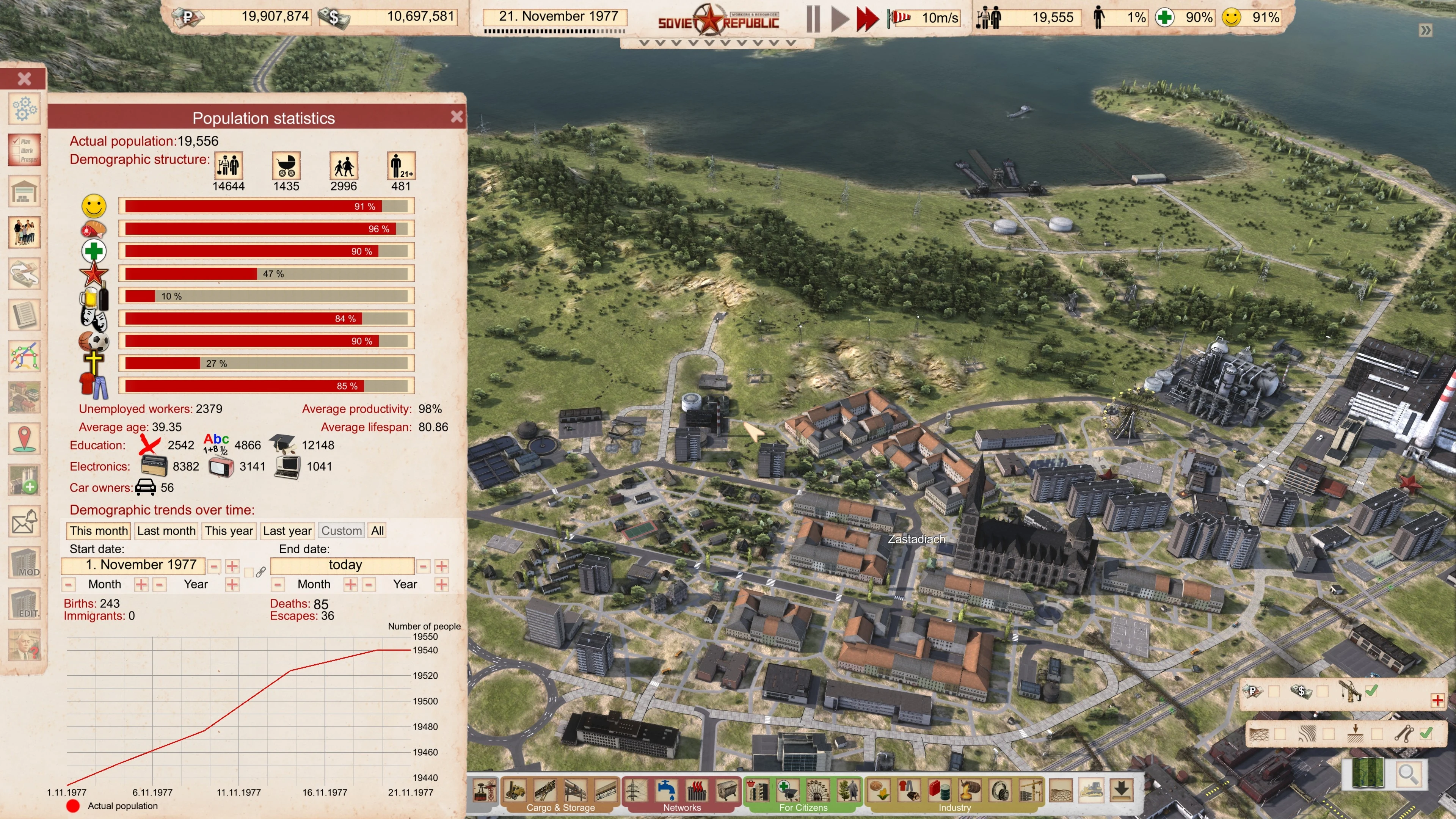
- Pick a time range. You can choose This month, Last month, This year, Last year, All, or a custom range. Use the same range each time you check so the numbers are easy to compare.
- Hover over the four trend items. Births, Immigrants, Deaths, and Escapes each show their own trend in the graph.
- Compare births against losses. If deaths and escapes are climbing faster than births, focus on health and happiness before adding more people.
- Check the 21+ still living with parents count. If it keeps climbing, you're short on housing for your young adults.
- Open a struggling building. Read its red remarks to find the specific unmet need behind the problem.