
Last Epoch doesn't have one best class for beginners, because the right pick depends on how you like to fight. You start by choosing one of five base classes, and each one branches into three masteries. For a first campaign, Sentinel is the forgiving melee pick, Necromancer is the simplest way to let minions do the work, and Sorcerer is the clearest direct ranged option.
| Class | Masteries | Good fit if you want | Trade-off to know |
|---|---|---|---|
| Sentinel | Void Knight, Forge Guard, Paladin | Melee that holds up when a fight goes wrong | Warpath builds need mana management |
| Mage | Runemaster, Spellblade, Sorcerer | Direct spells from range | Mana to manage, plus health and defenses to build |
| Rogue | Bladedancer, Marksman, Falconer | Quick attacks and room to reposition | Depends on dodging hits and good positioning |
| Primalist | Shaman, Beastmaster, Druid | Nature themes, pets or shapeshifting | Pet upkeep, forms and totems add layers |
| Acolyte | Necromancer, Lich, Warlock | Minions that keep fighting while you move | Endgame setups grow with support skills and gear |
Base Class and Mastery: What You Lock In and What You Can Change
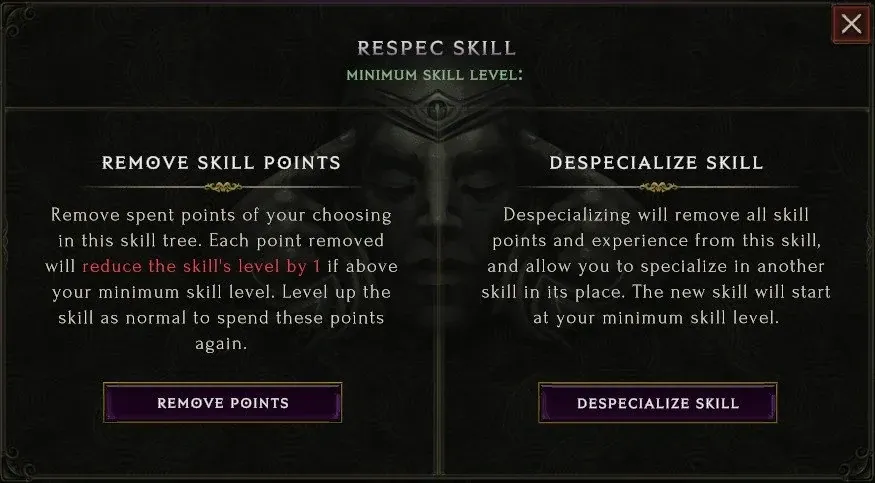
Your base class is chosen when you create the character, and it stays with that character. Mastery is the specialization you pick after that, and it isn't locked for good. You can change it for gold at Chronomancer Lerinne in The End of Time, but doing so resets the passive points you've spent, so you'll need to place them again. Skill and passive points can be respecced too, and the cost depends on what you're changing.
The Four Questions That Decide a Beginner Class
Raw power tells you little on a first run. These four questions show whether a class will feel manageable while you learn the game.
- Can it survive mistakes? Some builds can take a hit and keep going. Others depend on you dodging everything, while minions can soak up attention that would otherwise land on you.
- How many buttons does the damage loop need? A build that repeats one attack asks less of you than one that juggles skills, conditions, forms or totems.
- Does it work with ordinary drops? Some builds need a specific unique or seasonal item before they run well. That can be a fine goal later, but it makes a rough first campaign harder.
- Does it clear regular packs consistently? A good starter handles ordinary enemy groups without needing perfect timing.
Hold every class up against those four questions.
Sentinel: The Forgiving Melee Start for New Players
Sentinel is the family to start with if you want melee and don't want every mistake to end a fight. Its masteries are Void Knight, Forge Guard and Paladin. Paladin leans toward defense and utility, so it suits players who want more tools to stay alive.
If you want something even simpler, pair Warpath with Void Knight for a spin attack that doesn't take much to get going. Warpath does need mana management, so it isn't hands-off.
Mage: Direct Spells From Range, With Mana to Manage
Mage is the ranged spellcasting family, with Runemaster, Spellblade and Sorcerer as its masteries. Sorcerer is the clearest fit for a first run. Lightning Blast and Fireball are good spells to open with, and Flame Ward and Teleport give you defensive buttons for when enemies get close.
Mage has strong defensive buttons, but it still asks you to build up health and defenses and to watch your mana. Runemaster adds more decisions, because its rune combinations take some planning. Spellblade is a melee path, so it carries more close-range risk than the other two.
Rogue: Quick Ranged Attacks That Reward Good Positioning
Rogue is the bow-and-blade family, with Bladedancer, Marksman and Falconer as its masteries. Marksman is the clearest ranged option. Puncture and Heartseeker are two of the most common skill picks for it, and Shift and Smoke Bomb help you reposition or slip out of trouble.
The catch is that Rogue relies more on avoiding hits than on soaking them, so positioning matters. A common Marksman setup leans on a version of Shuriken that needs a specific item, but a simpler alternate slot is available. Falconer adds traps and a companion, and Bladedancer adds close-range movement and Shadow mechanics, so both ask for more attention than Marksman.
Primalist: Nature and Pets With More Moving Parts
Primalist draws on nature, animals and shapeshifting, with Shaman, Beastmaster and Druid as its masteries. Beastmaster is the pet route. Summon Wolf and companion skills let your animals take attention while you stay back, but pets scale with your minion stats and need upkeep, so the play is less direct than a single spell button.
Druid can be sturdy in its Werebear form, though switching forms adds one more thing to track. Shaman brings totems and minions, which means more pieces to manage in every fight.
Acolyte: Minions That Keep Working While You Move
Acolyte is the minion and curse family, with Necromancer, Lich and Warlock as its masteries. Necromancer is the most straightforward of the three. Start with Summon Skeleton, then add a defensive or utility skill such as Transplant as it unlocks, and your minions keep dealing damage while you reposition.
A full endgame Necromancer setup adds several support skills and gear that boosts minion stats, so the build grows over time. Lich trades away some health, which means more risk to manage. Warlock stacks curses and damage over time, so it takes more setup before the damage builds up.
Season 5 Skills Are Worth Trying but Aren't Automatic Starter Picks
Season 5 added three mastery skills, and they're fun to try. A new skill doesn't make a class easier to start, though. Dreamslash, for Bladedancer, unlocks at 10 points in its mastery tree. It's a low-cost attack you can spam, with high mobility, and it dashes through a line of enemies without depending on specific unique items the way some Season 5 options do.
Radiant Lance, for Paladin, unlocks at 15 points, and its strongest version needs specific gear. It's better saved for a second character or for when you can gather those items. Summon Tide Elemental, for Shaman, unlocks at 30 points in the Shaman tree and isn't available on day one of a new character. The Tide Elemental builds tie the minion into several totems and storm skills, and they often need specific items, so they're a project more than a first run. Pick these up once you know your class, rather than as your opening choice.
How to Choose Your Starting Class in Last Epoch
If you don't have a preference, start with Sentinel. It's the forgiving melee path, and it gives you room to learn the campaign while you stay alive. If you lean another way, use these three choices to narrow it down:
- You want to stay in melee. Pick Sentinel, with Paladin for defensive tools or Void Knight for Warpath.
- You want minions doing the fighting. Pick Acolyte and start with Necromancer.
- You want direct ranged spells. Pick Mage and start with Sorcerer.
Pick by how you want to fight rather than by which class looks strongest on paper, because the way you play is what you'll live with for the whole campaign.