


Rust is a multiplayer survival game with one simple goal: stay alive. You wake naked on a mysterious island with only a rock and a torch, so you start by gathering food and materials, since everything else depends on them. Heat, cold, thirst and hunger wear you down over time, and wildlife and other players can end your run just as quickly. You can play solo or team up with friends, and there is no story to follow, so your run is what you make of it.
Early on, you make tools, a sleeping bag and a small base, then lock it with doors and a Tool Cupboard so you have somewhere to store what you gather. Scrap and loot come from roads and monuments, the old settlements and landmarks spread across the island. You use those materials at workbenches and in research to improve your gear, so you can handle more of the island. With better gear, you decide how to play: explore, trade, team up, defend your base or raid someone else's.
Over time, you work toward a base that holds up, better gear and control over the island's resources. Each server sets its own wipe rules, and a wipe can reset some or all of your progress. A run comes down to protecting what you can while the map lasts, then starting over when it resets.
- Developer
- Facepunch Studios
- Publisher
- Facepunch Studios
- Release
- Full release (Steam): 2018-02-08
- Platforms
- Windows PC, macOS (Apple Silicon)
Game data
Weapons
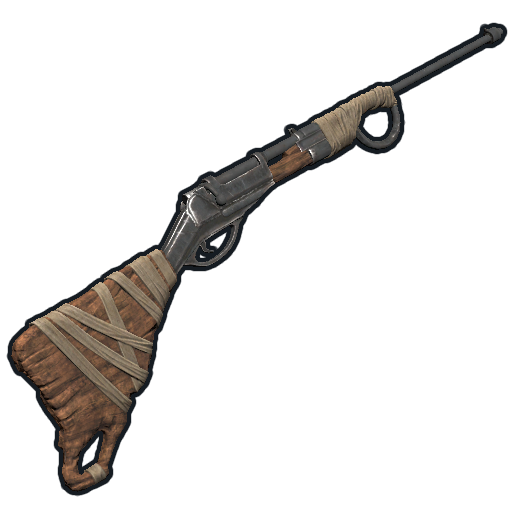
Rust's weapons span guns, bows and crossbows, launchers, flamethrowers and siege machines. Some are crafted at a workbench, others are unlocked with scrap or blueprints, and many of the strongest can only be found as loot. Damage, magazine size, fire rate and ammo decide where each one fits, from a fresh wipe to a late-game raid.



Monuments
Monuments are named locations spread across Rust's maps, ranging from small roadside stops and quarries to large military sites, offshore oil rigs, and Deep Sea ships, islands and floating cities. Most offer loot, puzzles, facilities or resources, and many puzzles run on colored keycards and fuses. Safe zone monuments are the exception, offering trading, missions and transport rather than standard loot runs, and they protect players from combat.


Rust gameplay tips
- Start with Tutorial Island. If the server offers it, take the tutorial before you head into the main island. An NPC walks you through the first half hour on a separate island other players cannot reach, covering crafting, base building, combat, cooking, workbenches and vehicles. Look for servers tagged "tut" in the server browser.
- Place your Tool Cupboard before you chase the best loot. Once your shelter is locked, place the Tool Cupboard and check the upkeep shown in its interface. It marks your building privilege and holds the resources used for upkeep, so keep it secure and stocked to protect your base.
- Protect progress, not every item. Deposit useful loot at your base often instead of hauling everything you own around the island. A respawn point, the blueprints you have learned and a base you can afford to maintain are worth more than any single component you are carrying. Avoid upgrading faster than you can maintain the structure.
- Pick one short loop for scrap and loot. Choose a route between your base, a nearby recycler and a low-risk monument, and stick with it. Roads, safe zones such as the Outpost and Bandit Camp, monuments, terrain and the coastline all shape how risky travel is. A short loop keeps you from crossing the island with everything you own.
- Spend scrap at the Research Table and blueprint items on the tech tree. The Research Table uses scrap, while the tech tree spends blueprint fragments, blueprint pages and blueprint books. Workbench crafting doesn't need blueprint fragments, so save them for the tech tree.
- Check barrels and boxes for the lowest blueprint tier. Common loot like barrels and boxes can hold the lowest tier, and you can upgrade it into the next one. When you want to move up faster, try puzzle rooms and harder content, which are the quickest route through the tiers.