

CS2 has two main ranked modes, and Premier is the one that gives you a single number. That number is your CS Rating. It follows you across the Active Duty maps, the map pool Premier draws from, and its color shows which band it falls in, from Gray at the bottom to Gold at the top. You need to win 10 Premier matches before the number appears, and every match after that raises or lowers it.
| Color | CS Rating |
|---|---|
| Gray | 0 to 4,999 |
| Light Blue | 5,000 to 9,999 |
| Blue | 10,000 to 14,999 |
| Purple | 15,000 to 19,999 |
| Pink | 20,000 to 24,999 |
| Red | 25,000 to 29,999 |
| Gold | 30,000 and up |
What Each Premier Color Band Means
Every band covers 5,000 points, except Gold, which starts at 30,000 and has no upper limit. The color changes when your rating crosses one of those lines, so it's a quick way to see where you sit without reading the exact number. The number is still the real measure, though, and it's the one that decides your place on regional and world leaderboards.
Crossing a line into a higher or lower band can trigger a promotion or relegation match. These only happen at the color boundaries, so small swings inside a band won't trigger one. Reaching a new band doesn't unlock anything by itself.
How to Unlock Your Rating in CS2 Premier
Premier doesn't show a number straight away. You have to work through a few steps first:
- Get Prime Status. Ranked queues require it, and Premier is one of them. Without Prime, you can't queue.
- Win 10 Premier matches. Until you do, your rating shows as "Unrated." Losses and draws don't count toward the 10, so only wins move the count.
- Read your new CS Rating. Once the tenth win is in, your number appears and you can start tracking it.
How Each Match Changes Your CS Rating
Premier uses an Elo-style rating, a common way to rate players based on who they beat and who they lose to. After each match, your CS Rating goes up if you win and down if you lose. The size of the change depends mainly on the rating gap between the two teams. Beating a team rated higher than yours gains you more than beating a weaker one, and losing to a weaker team costs you more than losing to a stronger one.
Premier tries to match teams with similar ratings. That keeps games more even, but it can make queues longer. Valve hasn't published the exact formula or the point amounts for each win and loss, so there is no fixed number of wins that takes you to the next band.
How Map Selection Works in Premier
Unlike Competitive, you don't choose the map yourself in Premier. The map is picked in four steps:
- Team 1 picks one map.
- Team 2 picks two maps.
- Team 1 picks a final map.
- One of those four maps is chosen at random, and the match starts on it.
You can't count on a particular map, so it pays to know the maps your team is likely to pick. Learn each map's callouts, common smokes and the way both bomb sites play, and you'll be comfortable on whichever one comes up.
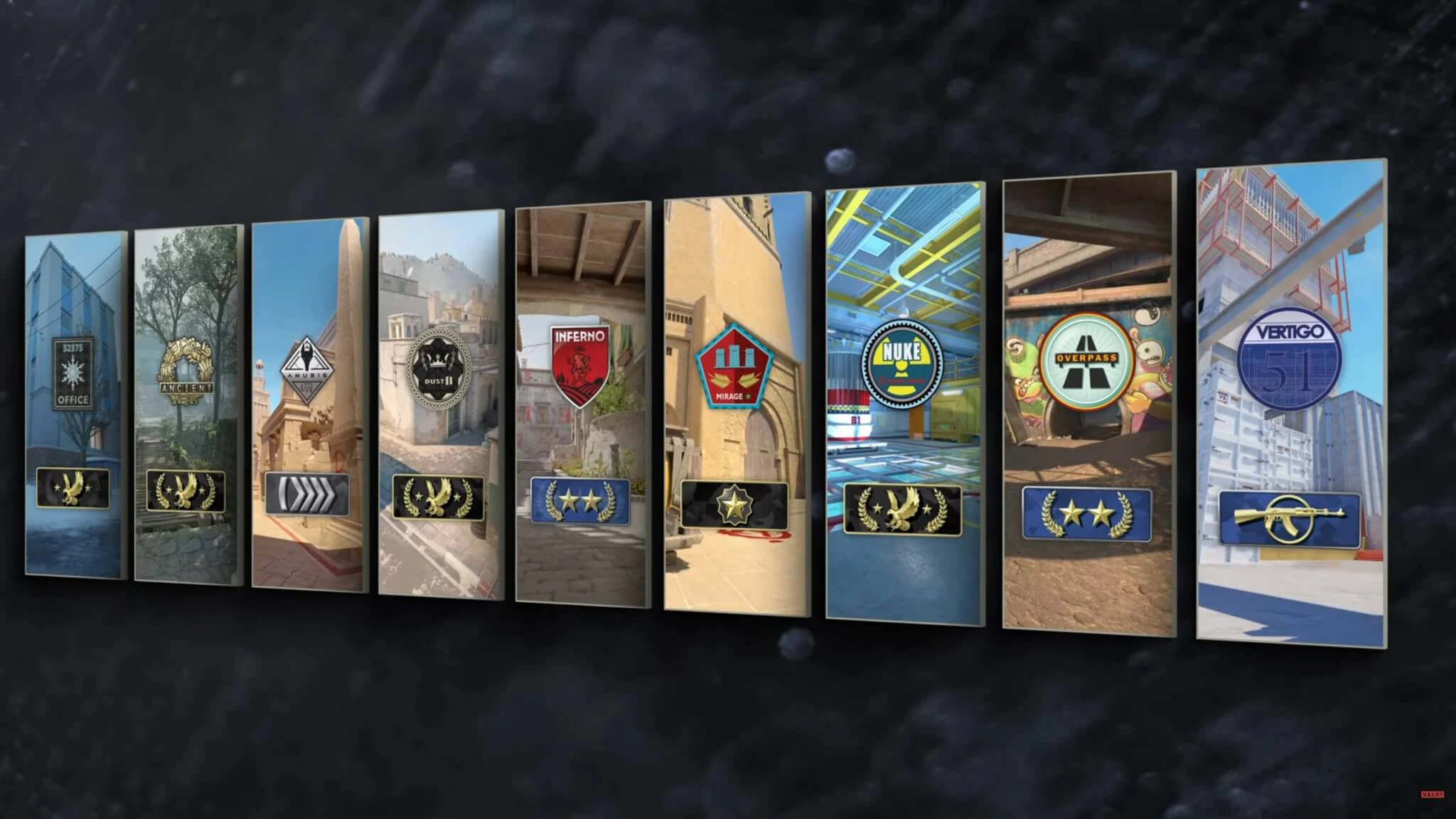
The Active Duty pool is Ancient, Anubis, Cache, Dust II, Inferno, Mirage and Nuke. The pool changes from season to season, so check the list when a new season starts. Overpass, Vertigo and Train are no longer in the Premier pool, but they're still playable in Competitive. For the layout of each one, all 19 maps in the game is the place to start.
Premier Seasons, Recalibration and Season Medals
Premier runs in seasons that last several months, and there's no weekly reset. Between seasons, Premier is offline for about a day while ratings are recalibrated based on how you played in the season before. You then need to win 10 Premier matches again before a new CS Rating appears.
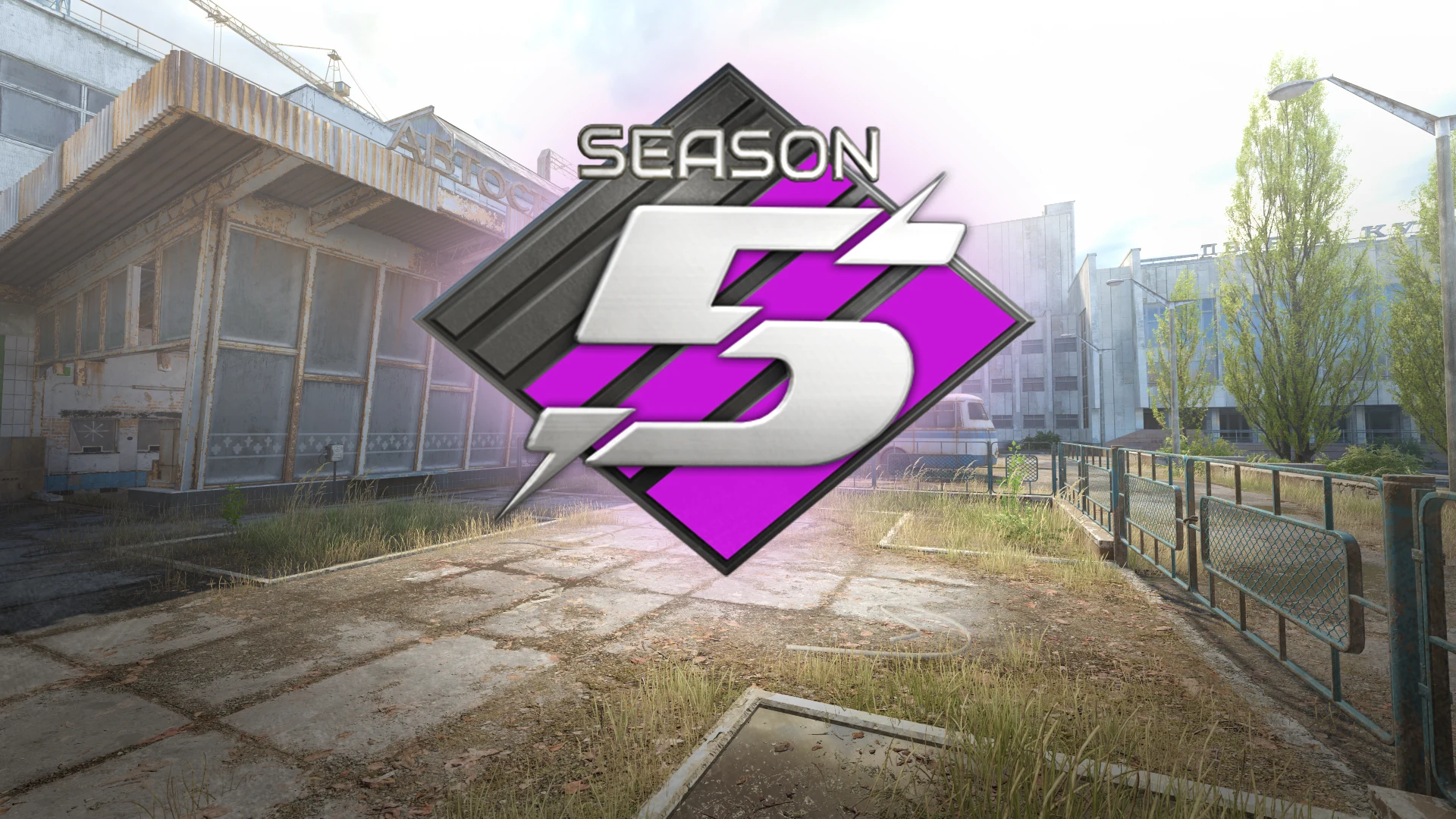
The season medal is the only ranked reward in Premier. To earn one, you need:
- 25 Premier match wins in the season
- An active CS Rating at the end of the season
- An account in good standing
The medal's color matches the highest band you reached during the season, not the band you finished in. A short spike into Red still earns a Red medal, even if you drop back to Purple by the end. The bars show your total wins, with one bar for every 25 wins, up to five bars at 125 wins or more.
Competitive Skill Groups and Per-Map Ranks
Competitive uses the 18 skill groups from Silver I up to The Global Elite. Your rank is tracked separately on each map, so you can hold a high group on Mirage and a lower one on Ancient. You pick the map yourself when you queue, and a map's badge stays hidden until you've won a couple of matches on it.
- Silver: Silver I, Silver II, Silver III, Silver IV, Silver Elite, Silver Elite Master
- Gold Nova: Gold Nova I, Gold Nova II, Gold Nova III, Gold Nova Master
- Master Guardian: Master Guardian I, Master Guardian II, Master Guardian Elite, Distinguished Master Guardian
- Top groups: Legendary Eagle, Legendary Eagle Master, Supreme Master First Class, The Global Elite
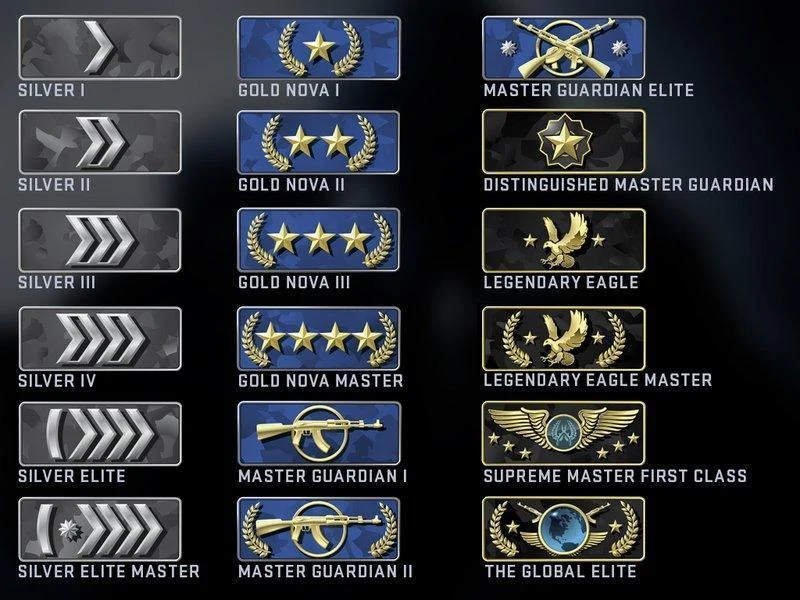
Because each map is ranked on its own, Competitive is a good place to learn a new map. Your results there won't affect your standing on the maps you already know.
How to Climb Faster in CS2
Since wins are what move your rating, these habits all aim at winning more of your matches.
- Know two maps well. Your team picks the map, so the ones you know best give you the most chances to play on your strengths. Focus on default smokes, common angles and how to retake each site.
- Cut the rounds you give away. Many lost rounds come from the same habits: buying before the team has the money for a full setup, dying in bad trades, and getting picked off without telling your team where the enemy is. Fixing these costs no aim at all. Knowing what each weapon does also helps you make better buy calls.
- Warm up before you queue. A few minutes of deathmatch and one grenade lineup get your aim and utility ready. Jumping straight into ranked matches cold is an easy way to start every round behind.
- Review your demos after a loss. CS2 lets you replay ranked matches, so you can watch the rounds where you died. Look for the same mistake showing up more than once, since that's usually where the lost rating comes from.
- Queue with the same teammates. Regular teammates know your calls and trust your trades, which tends to keep results steadier than random lobbies.